
Categories
E2E: 20/20

Communicating During a Crisis

Five Actions from the Frontline of Entrepreneurial Leadership

For many entrepreneurs, the last month has been the most challenging time in their careers. Having to balance health concerns for everyone in their personal and professional vicinity, along with a crushing change in the economy, has pushed business leaders to the edge.

But it’s also a time when employees, customers, and colleagues are looking to company founders for leadership and guidance. What should you say to people who are concerned about their jobs and their future? I’ve been talking with leaders and founders at companies both large and small over the past few weeks about how to communicate in a crisis. After hearing their concerns and constraints, I’d like to offer some suggestions based on years of work with more than 500 companies.

1. Find Your North Star

One of the first things to recognize is that not everyone has this figured out. Big companies may battle with a lot of input for various business units. Meanwhile, smaller companies may struggle to establish a position of calm leadership while feeling like waves are crashing around them.

Nearly everyone’s first reaction is that more communication is better than less. Not so. The most important aspect is to be in alignment around communication at all leadership levels. Decide, “What are the things that matter for the future of our business?” Identifying those non-negotiable things that you will always stand for—ethics, values, how you treat others (both team members and customers)—as a starting point will allow you to communicate from a position of clarity, strength, and sincerity.

2. Recognize Generational Differences In Communication

The current global pandemic is an unprecedented time for everyone. Some of your team members and customers have been through deeply challenging times before: wars, recessions, the dotcom bust, and terrorism. Other team members may have just taken their first job with your company and never experienced a macro-economic event like this while in the workforce. As a leader, it’s important to be sensitive to the views, perspectives, and experiences of other generations if you want to drive trust and engagement in your communication.

“As a leader, it’s important to be sensitive to the views, perspectives, and experiences of other generations if you want to drive trust and engagement in your communication.”

At CGK, our generational research and strategy center, we call this Generational Context. Without this context, the way you approach and communicate may not line up with your audience—both younger or older. The more you can put yourself in their mindset and perspective, the better you can serve and support them.

Generational Context is especially important when communicating with your team members. We find it helpful to step back and ask yourself, “What are their fears and concerns right now?” For some, it will be that they’re going to get laid off or lose their health insurance. Some may not be sure how to pay their rent, car payment, or help out another family member.

Great leaders realize that their top priorities and the top priorities of those on their team may not be the same. In times of crisis, people often move towards what’s most important to them, both in terms of overcoming fear and providing security. It helps to understand that not everyone is aligned and moving in the same direction as the organization’s leaders, but they can be with the right communication and leadership.

3. Choose the Right Medium for Your Message and Audience

What works with one group of team members may not work well with others, yet everyone must get the message you’re sending. A Zoom video or Slack channel may be efficient, but if the information you share in that video would also be of interest to an employee’s spouse or significant other, include another way to share that information outside the organization, such as an email or post on your company intranet.

Choosing the communication method is particularly important because people are afraid and anxious right now with so much uncertainty swirling around. That makes it hard to hear a message, remember the message, and then accurately repeat it to someone else who wasn’t there. FAQ pages and other mobile-friendly resources are effective ways to reinforce messages that are delivered internally by video, chat or email.

4. Don’t Fall into The Trap That Crushes Trust

Because we’re all under stress, you may feel additional pressure to fall into the trap of reassuring people by telling them what they want to hear. Resist this temptation. If you don’t know whether everybody will keep their job, don’t go out and tell people that they’re all going to get to keep their job. Because if you end up having to do layoffs two weeks later, you’ve significantly hurt your trust and credibility with those who stay on. As a leader, you must decide the key points that you can message based on the best information you have.

When it comes to communicating with customers, there can be a sense that your product or service is just what they need right now to deal with the current pandemic. It’s critical not to come off as an opportunist and sound tone-deaf to the difficult reality facing so many people and organizations. That’s one of the fastest ways to lose trust and credibility and ultimately lose customers. People don’t want opportunistic sales pitches or marketing pitches right now.

“It’s critical not to come off as an opportunist and sound tone-deaf to the difficult reality facing so many people and organizations. That’s one of the fastest ways to lose trust and credibility and ultimately lose customers.”

Instead, people want a resource they can trust and want to know that you have their back. Let them know that you’re there for them, working on their behalf, and ready to jump on the phone or on Zoom to talk. You understand it’s tough, and you’re there to help.

People will remember if you took the time to reach out and check on them—even if it’s just to say hello and that you’re thinking of them. You don’t have to mention your brand, product, or the latest sales pitch. They know where you work, and they’ve received 87 sales pitches in the last week, all with COVID-19 in the email subject line—so be different and connect with them as a human. If you have resources that might be helpful, make them easy and free to access. We’re all in this together. The more you show you are there for them, the more they’ll buy when they’re ready because they know they can count on you.

5. Deliver Bad News With Empathy

Even if you do everything right, circumstances may still force you to deliver bad news. Layoffs, furloughs, and unfulfilled commitments are in the headlines every day and will likely stay there for a while.

Keep in mind that when you deliver bad news, it’s not the only bad news your audience has received in the past few weeks. That makes it more critical than ever that you deliver the news with empathy and candor, and remain available to answer any questions. How you deliver bad news not only impacts those you are delivering the news to, but also word will travel to everyone else about how you handled the situation.

The worst thing you can do for company culture, trust, and buy-in right now is to deliver bad news in a generic email because that makes people feel like you don’t care about them. I would go so far as to say that if you have the choice of sharing bad news by email or Zoom, share it by Zoom. Show people you took the time to talk with them personally whenever possible. Hiding behind a mass email makes it easier for them to have a very negative response versus actually seeing you, talking with you, and getting treated with dignity.

Most of All—Remember That We’re All In This Together

It’s okay if your communication isn’t perfect. People are more forgiving right now, whether for a child walking into the background of a Zoom meeting or memos that are not grammatically perfect. We all are in this health and economic tornado together. When in doubt, lean on your own humanity, candor, and desire to get your message across quickly, honestly, and clearly.

Last but not least, it’s always good to remember that effective communication is two-way, so avoid making your message one-directional. Let them know who they can talk to, whether that is you, their direct leader, HR, or another person who can answer their question or respond to their comment. People appreciate being in conversation, not just being told what is going to happen and what to do.

Remember, in times of crisis, often the most effective message is not just what you say, write, or send, but what you do that shows your humanity, integrity, and that we’re all in this together.

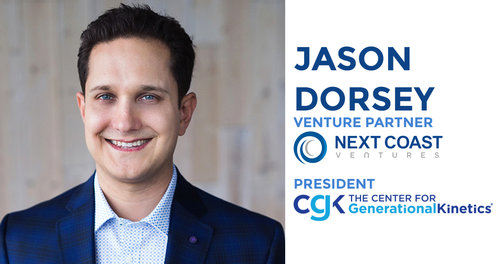
Jason Dorsey is a member of the Next Coast Ventures’ Entrepreneur Council. He is president of The  Center for Generational Kinetics, a Gen Z and Millennial research and strategy firm. Dorsey has served on the board of directors of both public and private technology companies and is passionate about helping leaders scale companies.


Categories
E2E: News

Leading Through Difficult Times

Clear Direction and Consistency with Strong Values Can Build Enduring Cultural Advantages

In 2008, I was running a travel technology company called VacationRoost when the Financial Crisis absolutely crushed the tourism market that we served. Seemingly overnight our revenues were cut in half and our break-even operation became a loss generator. Our growth ambitions and strategy were quickly shelved for the necessity of survival planning. Cutting costs through operational retrenchment, pay-cuts, and painful layoffs was miserable. It was during this challenging time, however, that we built strong cultural foundations that helped us not only survive, but thrive during the recovery and later growth stages.

I remember huddling with our management team in the war room making these difficult decisions. Many of us wondered if it was even worth it. None of us had joined the Company with the expectation of shrinking operations and the hardships that went along with it both financially and psychologically. Wouldn’t it just be easier to admit defeat and go pursue opportunities in different companies or industries? “Hey, good idea, good effort. This slowdown isn’t our fault, and there is nothing we can do to change it in the short term. Let’s cut our losses and call it a day.” Some of my more courageous team members shared these thoughts with me. I knew everyone was thinking about it – heck, even I was at times. I remember wanting to assure our team that everything would be ok. That if we pushed through these difficult times, we’d survive and thrive as a Company and everyone would do really well professionally and financially. But the truth was that we had no assurance of that. Maybe we would….but there was also a very good chance that we would not.

After many sleepless nights, I decided to focus the team on what we could control. I brought the leadership team together and shared a vision for success that was attractive while remaining honest about our chances and the things that were out of our control. Then I challenged our team to do something that was completely in our control: Let’s build a Team, a Culture and a Company that we are proud to be a part of. Win or lose in the long term, we are going to create an organization that we are proud of—one that’s worth fighting for every day. We weren’t going to wait until we got through the crisis, had more resources or had more time. We were going to do it immediately so that every day moving forward would be spent in an environment we could take pride in.

After many sleepless nights, I decided to focus the team on what we could control. I brought the leadership team together and shared a vision for success that was attractive while remaining honest about our chances and the things that were out of our control. Then I challenged our team to do something that was completely in our control: Let’s build a Team, a Culture and a Company that we are proud to be a part of. Win or lose in the long term, we are going to create an organization that we are proud of—one that’s worth fighting for every day. We weren’t going to wait until we got through the crisis, had more resources or had more time. We were going to do it immediately so that every day moving forward would be spent in an environment we could take pride in.

Formation

And so began one of the most surprising transitions of my professional career. We worked as a group to create a Vision for what we wanted to become as a Company and how we wanted to impact our industry. After a lot of debate, we agreed to the Core Values that would define how we behaved, how we would recruit team members of certain character and how we would hold each other accountable. We then inserted a Strategy element that would tie the practical plans of the Company to both the Vision and Values.

Getting Started

I can remember to this day the awkward feeling I had trotting out our new Vision-Strategy-Values framework at an all-company meeting during the downturn. We had just laid off 40%+ of our team. These were friends and colleagues that we were close to and were concerned about. Our team was scared for their own security and the future of the Company. My self-conscious “little voice” sat on my shoulder whispering in my ear saying: “Really Mr. MBA dude… people are worried about survival here and you choose now to bring out the MBA 101 Mission/Vision/Values BS??” “Really? That’s the best you’ve got? People are going to roll their eyes. They want to hear that they’re safe, that there won’t be more layoffs. A better leader might give them that assurance.” I pushed beyond the inner voice and gave the presentation. I wasn’t sure how it was received.

Consistency of Communication

One of the practices that we put in place during the downturn was more frequent and consistent communication with the entire Company. We implemented monthly company-wide meetings and weekly leadership team meetings that included a broader group beyond the executive team. I remember making a point to start every presentation with my 4 slides which included the framework and a slide on: Vision – This is Where We Want To Go- This Doesn’t Change; Values – This is How We Behave – This Also Doesn’t Change; Strategy – This is how we are going to move towards our Vision – This year, this quarter, this month – This changes based on what the world throws at us. I recall changing the order of the slides to re-position the framework as Vision-Values-Strategy as it flowed better that way. Then we would go on with our briefing.

I started making analogies comparing our journey to a trip. The Vision is our Destination. We are all going to drive from NY to CA, for example. Arriving in CA is our Vision. Our Values are the ground rules regarding how we are going to go about doing this. They represent agreed-upon behaviors like: we are going to drive, we will obey the speed limit, we will make sure to stop to see something interesting at least once per day, we won’t spend more than 8 hours driving per day, etc… The Strategy is how we navigate each stage of the journey. We are going to take Route 80, We expect it to take 8 days, We will stop in Chicago overnight, etc… This may indeed change. If we see Route 80 closed for construction, we will change the Strategy and take a different road. If the weather is bad, we may alter driving times. If we discover an incredible attraction along the way, we may stop to enjoy it and drive some additional hours the next day, etc… This helped everyone understand how our Vision and Values don’t change – we are going to arrive in CA and we are going to drive in a responsible manner to get there. Within this framework, it was logical that the Strategy might change to accommodate new information, or any new challenges, but it always provided the path towards the Vision/Destination and didn’t conflict with our Values/Ground Rules.

I eventually got more comfortable with the flow of kicking off each meeting with this 5-minute overview of our framework. A key driver to the company-wide success of the framework was asking each manager to start doing the same with their teams—both to hold weekly meetings and to start each meeting with the Vision-Values-Strategy framework. After a while it became routine, and eventually… we started working out of the economic downturn and began to grow again.

The Unexpected

As time went on, our Vision-Values-Strategy routine continued and we slowly started growing again as the market improved. The little voice on my shoulder, however, returned. “Hey, buddy…. Give this Values stuff a rest. It was a nice tool to help you get out of a jam, but we are really busy now. The team is growing again, we have tons to do, and you are starting to sound like a broken record up there. Besides, you even painted the Values and Vision on the wall! We get it already!” (What would we do without our little voices!) Well it finally got to me. I recall one meeting when we were starting late and had a packed agenda. I jumped past my first 4 pages on Vision-Values-Strategy and gave the floor to one of my colleagues to get started. As I looked on, a hand raised in the back of the room. I was annoyed. Doesn’t this person know that we are in a rush here?

“Hey, what happened to our Vision/Values discussion? Me – Ahhh… well, we are short on time today so I skipped it. Colleague – Well, I was really looking forward to it today. In fact, I wanted to share a story about our Values. One of my team members did an extraordinary thing for a client last week. They really went above and beyond to fix an issue to ensure that our client had a great experience, and they didn’t even ask me permission to spend the money doing so. When I asked them why they hadn’t come to me, they answered by reciting a couple of our Values – Customer Service and Accountability. They said – “doesn’t this mean that we’re always supposed to try to live up to these values in our day to day jobs?”

I was floored during the brief silence that followed. Here I was thinking that my team had endured enough of my MBA mumbo-jumbo and that I should give it a rest. In actuality, the consistent Vision-Values-Strategy intros might have been the most important things that I had been saying as a leader. I thanked my colleague for sharing the story, and then looked around the table and asked the question: “Does anybody else have a similar story?” 3-4 hands shot up immediately. The stories were powerful. The alignment was awesome. Then more hands went up. Everyone had a story. The impact at the table was palpable. Eyes teared up. More stories were shared. Management members started explaining how sharing the values had given them something to take pride in and lean on during the difficult times, and now was being noticed by people outside the organization. Recruits came to interviews citing our values as a reason why they wanted to work with us. Partners complimented us on it and chose to work with us because of it. It had happened, and I hadn’t even noticed it. Our team was taking pride in their workplace, their colleagues and the values of the Company. Our managers were proudly sharing the values and reporting on their stories. Our team was getting stronger and the shared values were building a powerful culture. We were in no way ”in the clear” financially, but we were well on our way towards our goal of building a company that our team was proud to be a part of.

This post focuses on building culture as a key strategy for difficult times and is the first of three blog posts on the topic of culture. Here are a few other things to consider when leading your team through difficult times.

Honesty – This is non-negotiable as a leader. Be honest with your team, even when you desperately want to make them feel better. You’ll never build trust without it.

Speed – Move quickly and take action. You may be tempted to wait for more information or to defer difficult decisions, but that costs valuable time. Bite the bullet, figure out what is best for the company and take action. Your team will appreciate it.

Create Your “Burn the Boats” Plan – You will undoubtedly be evaluating multiple scenarios and response plans. Build the worst scenario first. Rather than agonizing over layer after layer of cuts, start with nothing. Then determine what the minimum amount of resources you would need to keep the operation afloat in order to weather the storm while “burning all the other boats”. You may not need to go to this plan right away, but having it built will give you comfort that there is always a safety plan to go to in the next worst scenario.

What Can You Control – You can’t control markets and external events, but you can control your response. This is your move, make it count. Event + Response = Outcome!

Forge Your Steel in the Heat of Adversity– Like our story above, many companies develop core competitive advantages and strengths through the decisions they make during difficult times. What will yours be? Choose your Steel Weapons wisely.

Categories
E2E: News

NCV’s Top 9 of ‘19

1. Closed our Second Fund: NCV II

In November we were incredibly proud to announce the closing of our second fund, which brings $130 million in new capital to NCV. We are thrilled to have assembled a great group of investors – a strong combination of investors from our first fund and new investors who believe in our ambitious goal to become one of the best firms providing early and growth-stage capital in what we call ‘Next Coast markets.’ Like any fundraising effort, it took time, travel and a lot of hard work. But truth be told, this fund was really made possible by the hard work of all the entrepreneurs we have had the privilege to work with since we founded Next Coast Ventures over four years ago. Learn more about NCV II here.

2. Made our First NCV II Investments

In July we were proud to announce that, as our first investment from NCV II, we led the $12.5M Series C in TrustRadius, the leading software review platform. This was a great moment for the Austin ecosystem: Two experienced, local entrepreneurs creating a differentiated product supported by a great Texas syndicate. We’ve been following TrustRadius’ progress since we started NCV in 2015 and are thrilled to have the chance to officially partner with them during this new phase of growth. Learn more about TrustRadius here.

Since July, we’ve made additional NCV II investments in other portfolio companies that are in stealth mode. More to come on these soon!

3. Added Six New Portfolio Companies

We know we are only as good as the founders we back. In 2019, we added six more incredible teams to our portfolio. We were thrilled to announce that we led the $10M Series B in Montana-based Submittable, the leading submission review platform – it was one of the top-10 largest Series B rounds in the state’s history and our first deal in Montana. We were also proud to announce that we participated in the $8M Series A in Enboarder, an experiential employee onboarding platform that was founded in Sydney, Australia – we were especially excited to bring the company to Austin. We also invested in Backtracks, the Austin-based podcast analytics and hosting platform that helps businesses of all shapes and sizes understand their audience and monetize their podcasting content. Our other new portfolio companies of 2019 are TrustRadius and two stealth mode companies mentioned above.

4. Had Two Portfolio Exits: Finery and Brava

Our portfolio companies Finery, the wardrobe operating system, and Brava, the smart countertop oven, were both acquired in 2019. Finery was acquired by online fashion styling service Stitch Fix. We are so proud of Whitney Casey and Brooklyn Decker and the innovation they bring to the world of fashion technology. Brava was acquired by kitchen equipment manufacturer Middleby. The smart countertop oven will continue to cook delicious home-cooked meals alongside Middleby’s existing residential and commercial kitchen appliance portfolio. Congratulations to the Finery and Brava teams!

5. Doubled our Entrepreneurs Council

We are always looking for new and innovative ways to support our portfolio leadership. This year, we doubled the size of our Entrepreneurs Council, which consists of industry-leading entrepreneurs in Next Coast markets who directly advise and mentor our portfolio leadership. We were so thrilled to announce that we added iconic entrepreneurs Cotter Cunningham (founder of RetailMeNot), Brian Sharples (founder of HomeAway) and Julian Castelli (former CEO of LeisureLink and VacationRoost) as the newest members of our Entrepreneurs Council. Learn more about our Entrepreneurs Council here.

6. Grew our Investment Team with Zaz Floreani as Principal

After years of running business and corporate development at various startups in Austin, Zaz joined our deal team this fall and immediately became an integral contributor. She helps execute our strategy in our early stage investments, with a focus on sourcing entrepreneurs and identifying investment prospects in markets outside the coasts. Zaz also supports our portfolio companies by providing advice and introductions around potential hires, investors, customers and strategic partnerships. Learn more about Zaz here.

7. Added Sarah Puil as Entrepreneur-in-Residence

It has always been important to our firm’s culture to have a strong entrepreneur in our office to bring their unique perspective on emerging market trends and work with them to discover their next project. Hence we were so excited to announce that we added experiential marketing and podcasting expert Sarah Puil as our Entrepreneur-in-Residence. Learn more about Sarah here.

8. Brought on Jonathan Kaplan as Chief Operating Officer

We mean it when we say that we are building out a firm for the long term. We were excited to finally announce the addition of Jonathan Kaplan as our COO. He brings an incredible wealth of startup experience to NCV and our portfolio. Jonathan is responsible for all operations of our firm and the firm’s diversity and inclusion efforts. He is also integral in the formulation and execution of our investment strategy and supporting NCV’s portfolio companies by providing advice regarding operations, corporate development and compliance. Learn more about Jonathan here.

9. Austin VC Investment Reached Two-Decade High

While we know we can’t credit for Austin’s record-breaking year of VC investment, we couldn’t be more thrilled about the incredible growth we’ve seen in Austin and our other Next Coast markets. As investors focused on rising innovation hubs, we know that we wouldn’t be able to invest in our incredible founders without the support of these booming ecosystems. We’re very proud to be Austin-based investors and are committed to continuing to give back to the entrepreneurial markets we serve – we look forward to seeing what other records Austin’s investment ecosystem breaks in 2020. We have a feeling it will be plenty.

Categories
E2E: News

Announcing: Next Coast Ventures II

Today, we are proud to announce the closing of our second fund, which brings $130 million in new capital to Next Coast Ventures. We are thrilled to have assembled a great group of investors – a strong combination of investors from our first fund and new investors who believe in our ambitious goal to become one of the best firms providing early and growth-stage capital in what we call ‘Next Coast markets.’ Of note, just like in our first fund, this investor group includes a substantial amount of capital from our own team – simply put: we are putting our money (literally) where our mouth is.

Like any fundraising effort, it took time, travel and a lot of hard work. But truth be told, this fund was really made possible by the hard work of all the entrepreneurs we have had the privilege to work with since we founded Next Coast Ventures over four years ago. The portfolio we have been able to assemble and the progress these Founders and CEOs have made with our capital has been nothing short of extraordinary. So, NCV II is really a testament to their hustle and the incredible potential that we continue to see across the markets we serve.

And we are just getting started…

When we founded Next Coast Ventures the strategy was simple: We wanted to build a firm that was ‘built by entrepreneurs, for entrepreneurs’ to back hard-working teams that were looking to build disruptive companies outside the coasts. We wanted to help where we could by applying what we simply call ‘Company Building,’ which for us means providing practical, real-world advice and resources to our founders without ever overstepping our role.

We had big goals from the start and have already seen some indicators of success. We have doubled the size of our team, had four exits from our debut fund and have invested in over 30 companies in our key markets. But we – like the entrepreneurs and companies we back – are relentless in our pursuit of excellence, and candidly we feel like we have a long way to go from here. In this next phase of NCV, we continue to believe more than ever that we have the opportunity of a lifetime to build a firm that we can be truly proud of, and we are going to continue to keep our heads down and work tirelessly to make this vision a reality.

So, no major celebration. It is much too early and we have a lot more work to do before reaching our goal. Rather, we simply want to say thank you to our investors, our team and all of those in our extended ecosystem that have helped us get to this next phase of growth. With NCV II officially in the books, we will now have over $215 million in capital under management – an exciting moment for our entire, expanding team and the ecosystems we serve.

But most importantly, we want to tip our hat to all of the entrepreneurs that are a part of Next Coast Ventures. Without your hard work and fortitude, none of this would be possible. Or more appropriately: We are lucky to be standing on the shoulders of giants.

Categories
E2E: News

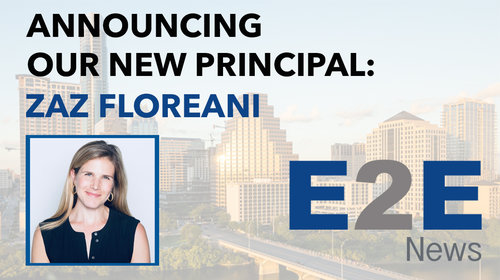
Announcing Our New Principal: Zaz Floreani

Today we are proud to announce that we are adding Zaz Floreani to the team as a Principal.

As you can see below, Zaz has the perfect background to join our team as our first Principal. In short: she hustles, works hard, knows how to get “stuff” done and truly understands what it means to be an entrepreneur.

Next Coast Ventures tagline is:

“Built by entrepreneurs, for entrepreneurs.”

This means that everyone on our investment team has lived the life – and the ups and downs – that come with being an entrepreneur. Zaz has dedicated her career to helping startups build growth-generating relationships with enterprises as well as creating M&A playbooks for fast-growing technology companies. That’s the exact type of focus and drive we want as part of our team.
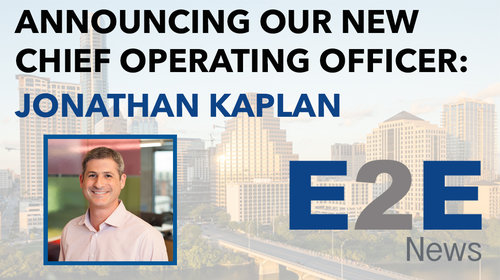
“I was fortunate enough to see Tom and Michael build this fund and investor base from the beginning, and I knew right away that they were creating a firm dedicated to supporting entrepreneurs in Austin and rising innovation hubs and that was going to have a substantial impact on these entrepreneurial ecosystems. I have been invested in NCV’s mission since the beginning and am thrilled to now be part of the team helping to source and support the best entrepreneurs in these markets.”

- Zaz Floreani

Zaz is going to be an integral member of our deal team. She will help execute our strategy in our early stage investments, with a focus on sourcing entrepreneurs and identifying investment prospects in markets outside the coasts. Zaz will also support our portfolio companies by providing advice and introductions around potential hires, investors, customers and strategic partnerships. As an operator and investor with deep ties to the Austin entrepreneurial ecosystem, she is uniquely qualified to support our founders and help them scale great companies.

On a personal note, Zaz has been invested in our Entrepreneurs Fund – a group of 100+ established entrepreneurs in Next Coast markets – since the beginning of NCV, and is married to renowned Texas entrepreneur and FloSports Co-Founder Mark Floreani. She is the mother of two small children and runs a small real estate empire in her spare time (talk about entrepreneurship!). Finally, and equally important, Zaz is a lot of fun to be around, has an incredible intellect and her influence will be a great addition to our team and our firm’s culture.

We look forward to working with her as we continue our relentless search for the best and the brightest entrepreneurs in Next Coast markets.

Please join us in welcoming Zaz to NCV!

About Zaz

Zaz has spent nearly a decade as a leader of business and corporate development at Austin technology companies and at Austin Ventures. Most recently, Zaz worked at our portfolio company Dropoff where she led their Corporate Development initiatives. She was responsible for creating and overseeing strategic relationships with Fortune 500 companies and ran their M&A practice. Prior to Dropoff, she helped build the business development practice at Spredfast (formerly Mass Relevance), coordinating their M&A efforts and launching and managing social network partnerships. She was previously the director of business development at Austin Ventures, where she identified and evaluated hundreds of early-stage investment opportunities in the greater Southwest region. She earned an MBA from the McCombs School of Business and an MA in Middle Eastern Studies from the University of Texas, and a BA from the University of California, Los Angeles.

Categories
E2E: News

Announcing Our New Entrepreneur-in-Residence: Sarah Puil

We are proud to announce that we are adding Sarah Puil as our Entrepreneur-in-Residence as part of our mission to partner with the most innovative entrepreneurs creating companies in our key investment themes.

Sarah comes to Next Coast Ventures with a dynamic 20-year experience as an entrepreneur, public company executive and innovator in the fast-evolving fields of digital media, online education, workforce training and development, social media and strategic marketing. During Sarah’s residency, she will focus on incubating ideas and solutions centered around the changing nature of digital assets and their consumption – a core investment theme for NCV – and how these shifts in the marketplace can be leveraged to generate massive value for personal and professional development.

Our co-founder Michael Smerklo collaborated with Sarah on a podcast and knew she would be a great fit for NCV’s EIR: “It has always been important to our firm’s culture to have a strong entrepreneur in our office to bring their unique perspective on emerging market trends and discover their next project. Sarah shares our beliefs around the increasing influence of ubiquitous connectivity and digital-first consumers and her significant operational expertise in our core investment themes will be an incredible addition to our firm’s investment approach.”

Sarah has worked at Silicon Valley start-ups, media agencies, and publicly-traded education companies. Across all of these companies, Sarah has uniquely focused on creating innovative new growth platforms built to improve organizational culture and human capital systems. Most recently, she was a Senior Vice President at Civic Entertainment, a Seacrest Global Company, working with Airbnb, Quibi, Elmhurst1925, Argo AI and SYFY Wire among other brands to develop growth strategies through experiential marketing.

Prior to Civic, Sarah served as senior vice president of product development at Strayer Education where she conceived and built Strayer’s first product innovation lab, designing workforce development products to drive frontline employee retention and new customer lead generation. Sarah also developed and launched ‘Education Nation,’ a five-year platform with NBC News that became one of the most impactful educational media events in the country. In the last two years, Sarah has applied her entrepreneurial skills to podcasting, where she has worked with Suze Orman as a co-host and business partner on her show ‘Women & Money,’ as well as on the show ‘Self Made’ with Jessica Herrin. Sarah holds a bachelor’s degree in marketing from The University of San Francisco, and after 22 years in San Francisco, she is looking forward to calling Austin home with her husband Kevin and daughter Charlie.

We’re thrilled to have Sarah as part of the team and know she is eager to start her work exploring the untapped potential of premium audio and digital content: “I couldn’t be more excited to join the team at Next Coast and have the chance to work with the firm and its portfolio on these incredibly impactful emerging trends in digital assets and consumption. I have seen firsthand the benefits of iterating on a project in an entrepreneurial environment and was very drawn to the innovative atmosphere Next Coast has fostered both in their firm’s culture and its investment approach – I think it will be the perfect place to explore what these digital shifts in the marketplace mean for the future of technology in education, marketing and the workplace.”

Welcome to NCV, Sarah!

Categories
E2E: News

NCV’s Top 10 of Summer

“New deals, new exits and new team members. Needless to say summer slowdown is not a thing for Next Coast Ventures.”

10. Summer Kickoff Meat-Up

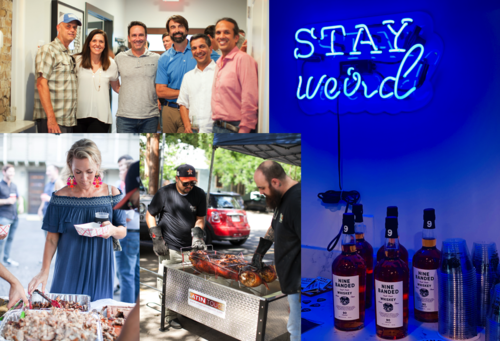
We love any opportunity to bring Austin’s entrepreneurial ecosystem together, and we are firm believers that it shouldn’t take an industry conference or panel of experts to do it – that’s why we founded our series of ‘Meat-Ups’ in 2018. We have truly enjoyed bringing Austin’s founders, investors and service providers together in our backyard for great BBQ. We can’t think of a better way to kick off summer.

9. Three Entrepreneurs Council additions

We were so thrilled to announce that we added iconic entrepreneurs Cotter Cunningham (founder of RetailMeNot), Brian Sharples (founder of HomeAway), and Julian Castelli (former CEO of LeisureLink and VacationRoost,) as the newest members to our newly-branded Entrepreneurs Council, which advises and mentors our portfolio leadership. Learn more about our Entrepreneurs Council here.

8. New Chief Operating Officer

We were excited to finally announce the addition of Jonathan Kaplan as our COO and couldn't be more excited for what he'll bring to NCV and our portfolio: “I was drawn to the opportunity to join Next Coast Ventures because of its differentiated commitment to supporting entrepreneurs in markets throughout the United States and the quality of the firm’s investments to date." Learn more about Jonathan here.

7. Led the $12.5M Series C in TrustRadius

We were proud to announce that we led the $12.5M Series C in TrustRadius, the leading software review platform. This was a great moment for the Austin ecosystem with two experienced, local entrepreneurs creating an a differentiated product supported by a great Texas syndicate.

6. Led the $10M Series B in Submittable

We were so psyched to announce that we led the $10M Series B in Montana-based Submittable, the leading submission review platform. It was one of the top-10 largest Series B rounds in the state’s history and our first deal in Montana. It was right up our alley: an entrepreneur with deep domain expertise creating a full-stack business model in a Next Coast market that solves a big pain point for numerous industries.

5. Added Enboarder to our portfolio

We were proud to announce that we participated in the $8M Series A in Enboarder, an experiential employee onboarding platform that was founded in Sydney, Australia. We’re especially excited to bring the company to Austin to open its U.S. headquarters and grow its team as they continue to change the HR game for companies big and small.

4. Phlur raised Series A, acquired Texas Beauty Labs

We were thrilled to be follow-on investors in Phlur, the leading sustainable fragrance and beauty brand that acquired fellow Texas-based clean beauty manufacturer Texas Beauty Labs to expand their offerings from fragrance and candles to now include a line of clean beauty and deodorant products. And yes, they smell just as fabulous.

3. Added Backtracks to our portfolio

We were proud to announce that we are investors in Backtracks, the Austin-based podcast analytics and hosting platform that helps businesses of all shapes and sizes understand their audience and monetize their podcasting content.

2. Added an Entrepreneur-in-Residence

It has always been important to our firm’s culture to have a strong entrepreneur in our office to bring their unique perspective on emerging market trends and discover their next project, which is why were so excited to announce that we added Sarah Puil as our Entrepreneur-in-Residence. She’s an experiential marketing and podcasting expert that’s going to explore the changing world of digital assets. Learn more about Sarah here.

1.Had a portfolio exit

Our portfolio company Finery, the wardrobe operating system, was acquired by online fashion styling service Stitch Fix. We are so proud of Whitney Casey and Brooklyn Decker and the fashion technology they have created to empower both consumers and female founders in the tech community. Congratulations to the Finery team!

Categories
E2E: News

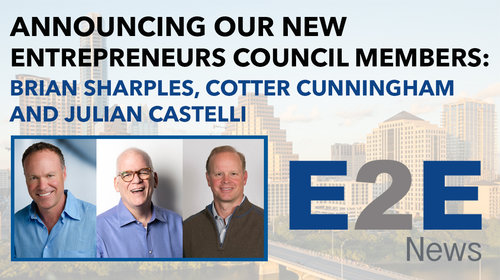
Announcing the Addition of Brian Sharples, Cotter Cunningham and Julian Castelli to our Entrepreneurs Council

We are so excited to announce that we are adding Brian Sharples, Cotter Cunningham and Julian Castelli to our Entrepreneurs Council. NCV’s addition of these iconic entrepreneurs underscores our mission to assemble a dynamic team of the highest-performing industry experts to source and support the best entrepreneurs outside the coasts.

Since day one, NCV has been ‘built by entrepreneurs for entrepreneurs’ and the Entrepreneurs Council is a direct result of that mission. Our Entrepreneurs Council is made up of carefully chosen experts, with a wide array of entrepreneurial backgrounds and industry verticals, all sharing one thing in common: they are all thought leaders and pillars of their entrepreneurial community.

Brian previously co-founded and served as chairman and chief executive officer of HomeAway, Inc., a global online marketplace for the vacation rental industry, where he led the company's successful public offering in 2011 and its $3.9 billion acquisition by Expedia in 2015. Prior to HomeAway, Brian was president and chief executive officer of IntelliQuest Information Group, Inc., a supplier of marketing data and research to technology companies that went public in 1996 and was sold to WPP Group in 2000. In addition to his operational leadership, Brian has served on the boards KAYAK and RetailMeNot, Inc., which was founded by Cunningham, and helped oversee their successful acquisitions by Priceline and Harland Clarke Holdings, respectively. Brian currently serves on the boards of Yelp, GoDaddy, RVShare and Ally Financial Group, and as chairman of private-equity backed Fexy Media. Early in his career, Brian founded I Motors, an event-based marketplace for used cars, and served as a consultant at Bain & Co. He holds an MBA from the Stanford Graduate School of Business.

Former Co-Founder, CEO and Chairman of HomeAway
Brian Sharples

Cotter founded and served as CEO of RetailMeNot, Inc., a leading consumer savings destination that enables brands to engage active shoppers and saves millions of consumers billions of dollars in the process. As CEO, he guided RetailMeNot through more than 15 acquisitions while raising more than $300M in venture capital, and ultimately took the company public in 2013. In 2017, the company was acquired by MacAndrews & Forbes. Cotter was also an entrepreneur-in-residence at Austin Ventures, where he worked closely with NCV co-founder and managing director Tom Ball. Prior to founding RetailMeNot, Cotter served as COO of Bankrate, Inc., taking it public in 1999, and has extensive operational experience from his work as general manager at VML and assistant vice president at H&R Block. He now serves as chairman of RetailMeNot as well as a managing partner at M&F Ventures. Cotter is based in Austin and has continued to be personally invested in NCV’s mission, investing alongside the firm in numerous portfolio companies including Phlur and 101 Commerce. He holds an MBA from Vanderbilt University.

Former Founder and CEO of RetailMeNot
Cotter Cunningham

From our co-founder Tom Ball:

“I was the first investor in RetailMeNot and had a front row seat watching Brian grow HomeAway when Austin Ventures was the first investor, so I’ve seen firsthand Cotter and Brian’s innovativeness, relentless focus and give-back attitudes propel them to truly iconic status in the Texas entrepreneurial community and beyond. As entrepreneurs ourselves, we have carefully selected every member of this Entrepreneurs Council to bring the best and the brightest in the country to mentor our founders and Cotter and Brian are perfect examples of the incredible caliber of resources we have to offer our portfolio leadership. They have been invested in NCV’s mission and its entrepreneurs since day one, and they have an acute understanding of founders’ potential to successfully scale a business in these markets outside the coasts.”

Julian is chief financial officer of Utah-based Voxpopme and chairman of Utah-based NCV portfolio company Chargeback. He was previously executive-in-residence at Bessemer Venture Partners, where he focused on B2B SaaS and technology companies in Utah – a core Next Coast market. Prior to Bessemer, Julian was the chief executive officer of VacationRoost and LeisureLink, companies that led the charge for integrating ecommerce into the vacation rental industry. Previously, Julian was the chief financial officer and chief growth officer of Primedia, a $300M media company, and PageNet, a $1B public telecom company. Julian holds an MBA from Harvard Business School and resides in Park City, Utah.

CFO of Voxpopme and Chairman of Chargeback
Julian Castelli

From our co-founder Michael Smerklo:

“Julian is the definition of a glass-eating, butt-kicking entrepreneur who shares our vision for what is possible outside the coasts. Julian is intimately familiar with the ups and downs of the entrepreneurial journey and has successfully scaled numerous technology companies in rising innovation hubs like Salt Lake City and Atlanta. At NCV, we are steadfast in our commitment to sourcing and supporting the best entrepreneurs in these rising markets and the addition of Julian to our Entrepreneurs Council is at the core of that mission, as well as our commitment to expanding our footprint on the ground in these markets.”

Brian, Cotter and Julian’s track records and reputations as incredible mentors to entrepreneurial ecosystems on the ‘Next Coast’ make them perfect additions to our Entrepreneurs Council. This growing team represents the best entrepreneurs in their field and will continue to be critical to our ability to provide the most comprehensive and cutting-edge resources on all parts of the entrepreneurial journey from fundraising to product-market fit to leadership development. This Council also serves as a hands-on extension of our Entrepreneurs Fund, which consists of 100 respected entrepreneurs building companies in Next Coast markets. These additions to the team will further the our developing advisory network, which we plan to continue to grow vigorously and thoughtfully over the next year as part of their pledge to company building.

We also recently added Sarah Puil as our Entrepreneur-in-Residence where she will be working alongside our Entrepreneurs Council members to advise our portfolio and firm leadership. Learn more about Sarah here.

Please join us in welcoming Brian, Cotter, Sarah and Julian to the team!

Categories
E2E: News

Announcing Our New Chief Operating Officer: Jonathan Kaplan

We are proud to announce that we have added Jonathan Kaplan to our team as Chief Operating Officer, a newly-created position for our firm.

Our Co-Founder Thomas Ball has known Jonathan for nearly a decade here in Austin and has seen how his diligence and focus on operations have been game changing for entrepreneurs and companies. We are building out a firm for the long term and have been very thoughtful about creating an infrastructure that best serves our mission, our investors and our portfolio. We believe that Jonathan will be a highly accretive addition and we look forward to leveraging his extensive scaling expertise from an administrative perspective to grow NCV.

Jonathan previously served as chief legal officer and general counsel of Austin-based RetailMeNot, guiding the company in the public markets and through its $630 million acquisition by Harland Clarke Holdings. Jonathan also was the founding executive sponsor of RetailMeNot’s diversity & inclusion (D&I) program and will help NCV with its continued implementation of the Diversity Pledge and other D&I programs. Prior to RetailMeNot, Jonathan was an attorney at leading international law firms based in California and Austin including DLA Piper and Latham & Watkins. His practice focused on the emerging growth ecosystem, supporting entrepreneurs and the investors that finance them through the full business life cycle, including equity and debt financings, public offerings, mergers and acquisitions and strategic transactions. Jonathan has a JD order of the coif from the University of California, Davis, where he was the editor in chief of the UC Davis Law Review, and a BA from the University of California, Santa Barbara.

Jonathan is excited to start his new role at NCV and about working with our portfolio: “I was drawn to the opportunity to join Next Coast Ventures because of its differentiated commitment to supporting entrepreneurs in markets throughout the United States and the quality of the firm’s investments to date. I am delighted to join Next Coast Ventures, and I look forward to working with Michael, Thomas and the talented team to evolve the firm’s operational infrastructure to benefit entrepreneurs, portfolio companies, investors and our communities.”

Jonathan will be responsible for all operations of our firm, including financial planning and reporting, investor relations, legal, HR, compliance and the firm’s diversity and inclusion efforts. He will also be integral in the formulation and execution of our strategy and supporting NCV’s portfolio companies by providing advice regarding operations, corporate development and compliance.

Since day one, our mission has been to provide our portfolio with the best resources in the industry and Jonathan’s addition to the team is a prime example of that. As entrepreneurs ourselves, we understand how immensely additive operational and legal expertise are to a company and its leadership as they scale, and we know Jonathan’s experience and hands-on approach are going to be invaluable tool for our portfolio as they ramp up their growth. Please join us in welcoming Jonathan to the team!

Categories
E2E: News

Announcing Our New Portfolio Company: TrustRadius

Today, Next Coast Ventures is proud to announce that we have led the $12.5M Series C round in Austin-based TrustRadius, an enterprise software review platform. This is a big moment for us and for the Austin ecosystem. TrustRadius’ Series B was led by Austin-based LiveOak Ventures, who will be returning in this round alongside Mayfield Fund.

Vinay Bhagat, TrustRadius’ co-founder and CEO, and his team have built an incredible product by focusing on quality and the customer experience. We are always first and foremost looking for the very best entrepreneurs building disruptive businesses in Next Coast markets, and Vinay and his team couldn't fit the bill any better.

At least half of the TrustRadius team – including the founders – have worked at companies we’ve been investors in or served on their board before. Our co-founder Thomas Ball has worked with Vinay and TrustRadius co-founder Scott Miller for over a decade. He served on Vinay’s board at Convio, which resulted in an IPO, and he’ll be joining TrustRadius’ board as part of this investment. We’ve been following TrustRadius’ progress since we started NCV in 2015 and are thrilled to have the chance to officially partner with them during this new phase of growth.

So what exactly does TrustRadius do?

TrustRadius is the most trusted platform for software and technology reviews with high-quality, in-depth reviews across thousands of products. The reviews are written solely by verified contributors and average 5x longer than other industry platforms. They’re optimized for complex purchase decisions and focus on describing use cases, clarifying product differences and providing comprehensive discussions on pros and cons of the software. Outlining the cons are critical: 71% of buyers say knowing the cons of a software are vitally important and that sharing them is the #1 thing a vendor can do to speed up the sales cycle.

Why are the need for in-depth and verified reviews so important? 56% of B2B buyers use reviews as a key resource before making a purchase decision and 67% of consumers reported reading four or more online reviews to determine whether or not they can trust a business. Additionally, only 11% of buyers say vendor reps are trustworthy, and only 19% find vendor marketing useful (for scale, 18% of Americans believe in Bigfoot). So trusted reviews have become an extremely effective gatekeeper for any software looking to gain market share.

The enterprise software business is also massive: it’s worth nearly half a trillion dollars worldwide. Each industry vertical has a long list of providers to choose from, making competition fierce and differentiation difficult. TrustRadius is at the center of it, cutting through the noise and providing customers with best-in-class content to empower them to make fully-informed purchase decisions. Nearly half of the traffic on their platform is from enterprise users with more than 1,000 employees and many of them have formally integrated TrustRadius’ platform into their sales and marketing processes.

And they are really stepping on the gas: The company currently has 59 employees in its Austin headquarters and plans to double that in the next year. Our co-founder Michael Smerklo scaled his own B2B-focused company ServiceSource from 35 employees all the way to IPO, so he has highly-relevant perspective of how to put in place the sales infrastructure and scaling model for a B2B-focused product. He’s been incredibly impressed with their progress and is really looking forward to continuing to work with the team as they ramp up their growth.

The investment opportunity was also right in the intersection of two of our investment themes: a full-stack business model and software version 3.0. We believe that full-stack business models have the ability to radically improve the customer experience and TrustRadius’ platform is a prime example of that. In addition to providing reviews, the platform also has cutting-edge industry research and competitive analysis, as well as significant marketing and sales benefits for software providers. We also believe that this proliferation of enterprise software has led to completely new dynamic between the buyers and sellers in the marketplace. TrustRadius is right at the center of this changing dynamic, providing the highest quality content and constantly adapting its platform to the rapidly-changing enterprise software market.

But, most importantly to us and our founding mission, this opportunity was a great fit for our ‘built by entrepreneurs, for entrepreneurs’ motto. We look to find the very best entrepreneurs who are building disruptive business in huge markets and try and help them in any way we can. Vinay truly fits the model of one of the most innovative entrepreneurs in the market and a true pioneer of the Austin entrepreneurial ecosystem. He and his team have worked tirelessly to build a great company the old-fashioned way: by maniacal focus on the customer experience. At Next Coast, we look to help our entrepreneurs just like this with every tool at our disposal – and we are proud to have been selected to partner with Vinay and the TrustRadius team for the next phase of their journey.

Categories
E2E: News

Announcing Our New Portfolio Company: Submittable

Today, Next Coast Ventures is proud to announce that we have led the $10M Series B round in Missoula-based Submittable, an application management platform. This is a pretty big deal for us and the Montana startup ecosystem -- this funding is one of the top-10 largest Series B rounds in the state’s history.

Michael Fitzgerald, Submittable’s co-founder and CEO, has built a really intelligent company with market-leading technology, and has surrounded himself with an incredibly strong team of executives. We are always first and foremost looking for the very best entrepreneurs building disruptive businesses in big markets, and Michael and his team couldn't fit the bill any better.

Submittable hits at the very heart of what is happening on the Next Coast of innovation: a graduate of Y Combinator with smart, geographically diverse early investors (True Ventures, Next Frontier Capital and Flywheel Ventures) that is building a multi-use SaaS product while keeping its employees and their quality of life top of mind. Here are just some of the ways that Submittable is building a company and a brand that prides itself on recruiting and retaining the best talent:

  • 10% of its employees have relocated from coastal markets to work at the headquarters, citing a high quality of life
  • Over 15% of employees have become first-time home buyers since starting at the company and more than a third walk or bike to work every day
  • The company is opening a privately run in-office childcare center for employees
  • Employees are also given annual personal development stipends, discounted health memberships and sabbatical opportunities for long-time employees

The picturesque headquarters, employment perks and dynamite leadership team aside, what exactly does Submittable do?

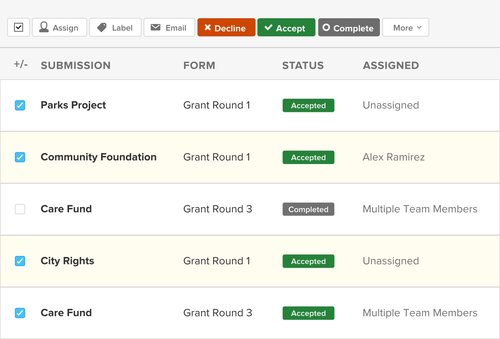
Submittable is a ‘CRM for documents’ allowing organizations of all sizes to accept, review, collaborate and rank thousands of submissions efficiently. These submissions can be from almost any industry including corporate giving, grants, contests and publishing. With the flexibility of its software, Submittable has expanded its platform offerings across 16 unique solutions and use cases, with the potential to further disrupt the billions spent on application submission management. But the submission platform isn’t the only reason it’s such a great product. Submittable ALSO has AI-enabled matching technology that allows users to actually match these submissions to appropriate opportunities in its marketplace -- empowering customers to match a submission in days instead of weeks. Two business models with one SaaS solution applicable to almost any industry. This is what we call nirvana.

The platform currently boasts over 10k organizations using the platform with nearly three million users submitting over 10 million submissions from over 150+ countries. So yeah, it’s a huge market and it’s only growing. Current customers include AT&T, NBC, HBO, ESPN, NPR, Conde Nast, The New Yorker, Harvard, MIT, TEDx, National Geographic and thousands of others...just to name a few.

And they are really stepping on the gas: The company plans to double its staff at its Mountain-based headquarters in the next year, hiring seven people a month through 2020. That is a growth rate typically seen with startups on the coasts, but it’s happening in a city that sits at the convergence of five mountain ranges and boasts over 5,000 acres of conserved open space. This is exactly what we mean when we say the Next Coast of innovation is here in these non-coastal markets -- and shows no signs of slowing down. Our co-founder Michael Smerklo, formerly a CEO of a fast-growing SaaS company, will be joining the board as part of our investment.

Our excitement about Submittable wasn’t just about the great product they had developed or their emphasis on healthy company culture. The investment opportunity was also right in the intersection of two of our investment themes: marketplaces making business models more efficient and software version 3.0. We believe that the digital renaissance has catalyzed a proliferation and dispersal of buyers and sellers, creating more options for applicants and new targets for companies. Marketplaces create growth opportunities for just about every industry and Submittable’s marketplace is a perfect example of that connectivity, matching millions of applications with opportunities in over 150 countries. We also believe that the power of AI and machine learning is completely breaking the mold of what traditional enterprise applications have to offer. Submittable’s dual solutions -- the submission management AND the matching marketplace -- are a prime example of that.
But, most importantly to us and our founding mission, this opportunity was a great fit for our ‘built by entrepreneurs, for entrepreneurs’ motto. We look to find the very best entrepreneurs who are building disruptive business in huge markets and try and help them in any way we can. Michael truly fits the model of one of the most innovative entrepreneurs in the market and a true pioneer of the Mountain entrepreneurial ecosystem. He and his team have worked tirelessly to build a great company the old-fashioned way: by maniacal focus on the customer. At Next Coast, we look to help our entrepreneurs just like this with every tool at our disposal – and we are proud to have been selected to partner with Michael and the Submittable team for the next phase of their journey.

Categories
E2E: 20/20

NCV’s Top 8 in ’18

We are so incredibly grateful to have so many great milestones in our short history — and 2018 was no different. We founded NCV on the idea that the best entrepreneurs are building companies outside the coasts, and with the support from our great investors who believe in our mission, we have found that to be even truer than we imagined. Through numerous strong additions to our portfolio, expanding our Venture Partner program and ramping up our E2E programming, we couldn’t be prouder of our entrepreneurs’ accomplishments in 2018. In no particular order, here are some of the highlights.

8. Meat-Ups

We love any opportunity to bring Austin’s entrepreneurial ecosystem together, and we are firm believers that it shouldn’t take an industry conference or panel of experts to do it. That’s why we founded our series of ‘Meat-Ups’ in 2018 — with pig roasts, grilling demos and fresh meat from Austin’s finest ranches courtesy of Rosso & Flynn. Whether it’s kicking off summer or discussing the rapid developments in the world of eCommerce, we have truly enjoyed bringing Austin’s founders, investors and service providers together in our backyard for great BBQ, and even better conversations.

7. SXSW

SXSW has always played a large role in Austin’s innovation ecosystem and has done a tremendous job putting the Texas capitol at the forefront of people’s minds when they think about startups and entrepreneurship. That’s why we were so thrilled to put on our first-ever SXSW panel featuring our portfolio CEOs Julia Cheek of EverlyWell and Eric Korman of Phlur, as well as Localeur CEO Joah Spearman. Our panel focused on one of our major investment themes: digital natives disrupting time-honored industries. The panel’s great turnout and lively Q&A showed us that this shift in consumer behavior isn’t going anywhere anytime soon.

6. First Annual Meeting

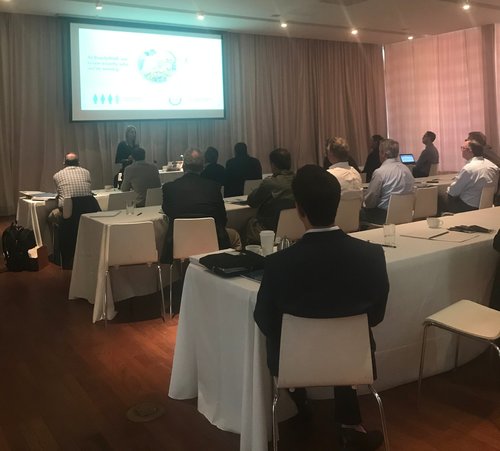
One of the more never-wracking parts of 2018 was our first-ever Annual Meeting. Our mission is to source and support the best entrepreneurs in Next Coast markets, and none of it would be possible without our incredible investors. We were so pleased to have the opportunity to share our firm’s progress over the past year and give our investors the chance to hear directly from out portfolio CEOs. Their enthusiasm for our founders’ business ideas and development as leaders makes our whole mission possible, so our first-ever — and successful! — Annual Meeting was certainly a highlight of 2018.

5. New Venture Partner Jason Dorsey

At NCV, one of our main goals is to leverage our network and industry expertise to provide our portfolio with the best resources to scale their businesses, and our Venture Partner program is a key part of that. This year, we added an atypical Venture Partner, bringing on Jason Dorsey to advise our portfolio on consumer trends, brand building and customer acquisition. Jason is an expert on digital natives and generational behavior, and he has helped us refine our investment themes and evaluate big trends that impact our investment decisions. Jason is not a garden variety Venture Partner, and we’ve already seen his incredible impact on our firm and our portfolio.

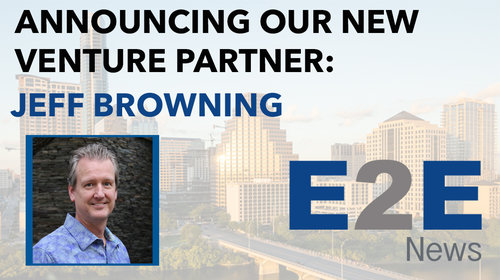
4. New Talent Venture Partner Jeff Browning

As early-stage investors we know that one of the key parts to successfully scaling is having a strong and well-suited executive team at the helm. That’s why we brought on Jeff Browning as a Talent Venture Partner in 2018. Jeff has helped our portfolio companies with all aspects of organizational design, talent acquisition and executive development — as well as helping our founders round out their executive teams. He has 30 years experience in executive talent acquisition and spent 15 years as the Recruiting Partner for Austin Ventures. He’s already been an invaluable resource to our portfolio companies as they rapidly scale their companies.

3. Clarity Money Acquisition

We were absolutely thrilled to have our first exit in our short history from our portfolio in 2018. Clarity Money, a fintech startup that helps consumers manage their personal finances, was acquired by Goldman Sachs. Clarity Money’s sticky traction with digital natives and intuitive UI made it an incredible addition to Goldman Sachs offerings as they seek to reach Millennials and Gen Z with modern banking platforms. Founder Adam Dell created an intuitive product that’s disrupting a massive market, and we were so excited to be a part of his journey.

2. OnRamp Acquisition

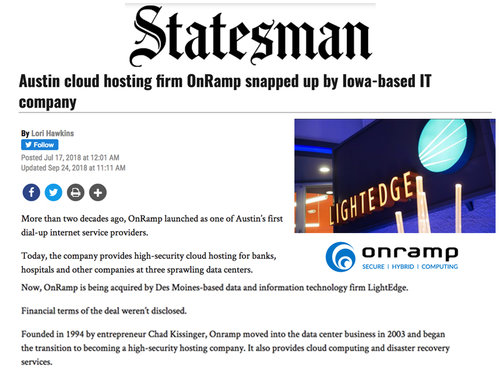
We had not one, but two exits in 2018. Our portfolio company OnRamp, an Austin-based data center and cloud computing company, was acquired by Des Moines-based IT company LightEdge. LightEdge now runs one of the largest interconnected data centers outside the coasts in key Next Coast markets. OnRamp didn’t just have a great suite of products, it was also led by two great entrepreneurs: CEO Lucas Braun and President Ryan Robinson. Helping them through the acquisition process and their excitement around thinking big made an exhilarating liquidity moment even greater — and reminded us of why do exactly what we do.

1. 11 New Portfolio Companies

There were so many great milestones in 2018, but to us one of the greatest has been expanding our portfolio with the top founders in Next Coast markets that are building innovative companies disrupting massive markets. Investing in these types of entrepreneurs is exactly why we founded this firm. This year, we added 11 new companies to our portfolio in everything from SaaS to at-home health testing to blockchain platforms. Our collaborative approach has allowed us to source some of the best glass eaters in a wide variety of industries, and we couldn’t be more excited to help them scale and grow as leaders in 2019.

Categories
E2E: 20/20

10 Things Our Founders Are Grateful for this Year

The holiday season is often about taking time away from work to spend with family and friends, but as entrepreneurs ourselves, we know that is no easy feat for a founder. The entrepreneurial journey is 24/7, and with all the ups and downs, it can be an isolating experience fraught with burnout. But with the right support system, being an entrepreneur and scaling a company can be an incredibly rewarding experience. So we decided to speak with our portfolio leadership to see where they get their support from, and what they’re grateful for this holiday season.

“I’m most thankful for the entire EverlyWell team this year — which has grown from 13 to 50 since last holiday season. As a solo founder, I’m so grateful for colleagues who will run alongside me and who care deeply about our mission. It’s been a great transition to watch this year!”

“I am extremely thankful to NCV for allowing 101 to incubate in their offices for many months. Not having to worry about an office or rent allowed us to focus and blast off quickly. Perhaps just as importantly, the daily casual collisions with the NCV team also helped us solve problems and form our own thoughts - super helpful value add. The second thing I am extremely thankful for: NCV allowing us to completely overstay our welcome - helped us solve even more problems and form more thoughts!! Thanks NCV!”

“I could not be more thankful and appreciative for the amazing people on the AlertMedia team. Everyone here, some of them taking great risk to join us when we were small/early, has been an absolute pleasure to work with, and each has contributed meaningfully to AlertMedia’s success. Finding the best people has been our focus from the very beginning, and it remains our focus. That approach has resulted in a surprising and spectacular level of productivity, efficiency, customer success, and employee happiness (#3 on ABJ’s Best Places to Work!!). I’m thankful every morning I come to our office, because the people at AlertMedia are making my job so enjoyable and rewarding!”

“Just last week, we had 8 new employees start on the same day. It was our biggest new hire group to date, and we had to get a little creative with seating arrangements. We started the year out with 30 employees and could fit into a corner of our office space. Now, our office is bursting at the seams. Moments like this, when we’re compelled to look up from the work and take stock of our growth, inspire a lot of gratitude. This team we have built is amazing and I’m thankful to be their leader.”

“I'm incredibly thankful for my new wife (as of September) and all her support during the highs and lows of leading a high-growth startup. Her patience, perspective, and unwavering backing let me tackle each challenge with confidence. Beyond her… I'm thankful for a very long list of people.. including Next Coast for supporting us last Winter and the incredible partnership consistently demonstrated by Mike and Tom.”

“I’m grateful for my collective team - and that means our investors, employees, advisors partners, and families. It’s very challenging to go through a pivot, especially when you have raised capital and your profile to run after something else. To keep your team intact, and then to execute against a different set of goals, takes a tremendous effort and I’m lucky enough to be surrounded by the best people I could be associated with.”

“This year we are most thankful that Gen Z has finally(!) become the emerging “hot” topic when it comes to consumer and employee trends. We’ve been talking about Gen Z – and leading original research – on the generation as consumers and employee trendsetters for several years. Our new book on Gen Z comes out next year. Seeing this new, fast-emerging generation finally starting to get the buzz and attention we believe they deserve is very exciting for us as researchers and strategists, and we’re thankful for the interest because we believe this new generation will change the world. The sooner and more accurately we can share our understanding of this new generation, the sooner leaders can better unlock the generation’s tremendous potential.”

“My team as a whole. They are fantastic and their hard work and dedication make it much easier for me to sleep at night than if I didn’t have them.”

Categories
E2E: News

Announcing Our New Portfolio Company: Navegate Logistics

Today, Next Coast Ventures is proud to announce that we invested in Minneapolis-based Navegate Logistics. This is an exciting moment for Next Coast: not only is it our first investment in Minneapolis – a hot Next Coast Market – but the investment hits on TWO of our focus macro trends, has an incredibly strong leadership team at the helm and a unique product that is well-positioned to disrupt a massive market. Essentially, it’s the exact type of investment we sought out when we started our firm.

So before we get into all the reasons why we love the logistics space, the new CEO Nathan Dey and the city of Minneapolis, we’ll explain what exactly Navegate does. Navegate is an integrated logistics platform that helps facilitate global supply chains through their software platform and global network of logistics experts. With a single, cloud-based platform, the technology manages every aspect of the freight logistics process – and this is a process ripe for technological improvements. The freight forwarding industry is a massive, $160B+ market – and it’s only growing (thank you booming eCommerce industry!). Right now, the freight forwarding industry is extremely fragmented: the largest industry participant only has 1.5% market share. So it’s a huge, growing market that requires global coordination and its current management tools are antiquated. Enter, Navegate!

Their proprietary software, numerous local branches for on-site support and understanding of the pain points of the freight forwarding industry makes them a true, full-stack business changing the future of work – both of which we are VERY excited about. They have been in business for 49 years, so they have the deep domain expertise in the freight industry, some of their clients have been with them for over a decade. With a large portion of of the logistics industry still in need of a technological overhaul, that means there is still incredible upside for customer acquisition both domestic and abroad. They have an extensive network of international offices, but are quarterbacking this excellent product from Minneapolis – a Next Coast Market! We have been eyeing Minneapolis for a while and think this innovation hub is only going to become larger and more innovative. We are very eager to be on the ground at headquarters working with Nathan and the Navegate team to help scale the business.

While this is a Core investment for Next Coast, it’s a little different for us as it is not a traditional venture round, but a search fund deal. At Next Coast, we are all about sourcing and supporting the best entrepreneurs in Next Coast Markets, and Nathan fits the bill – his search fund was waiting for a timely and uniquely-positioned company like Navegate, and they found the perfect fit. Nathan is the Managing Partner at Saltspring Capital and will be taking over as CEO and Chairman of Navegate, he has extensive experience in the worlds of investment banking and M&A and will bring a deep financial background to the business. His fresh perspective will be combined with the institutional knowledge of industry veterans like Chad Bickett, who will become COO, and Joe Pelletier who will stay on as President – both have 20+ years experience in logistics and supply chain management. We’re also excited about our first search fund deal because we get to join Operand Group and Relay Investments, a great group of syndicate partners focused solely on search funds that understand the entrepreneurial spirit and how to support it.

But, most importantly to us and our founding mission, this opportunity was a great fit for our “Built by entrepreneurs, for entrepreneurs” motto. We look to find the very best company builders in Next Coast Markets who are building disruptive business in huge marketplaces and try and help them in any way we can. The Navegate team has worked tirelessly to build a product that is revolutionizing the freight logistics space in a way that is in tune to the pain points of the industry, but innovative in how it solves them. Nathan is extremely passionate about Navegate’s mission, and his determination combined with a great product and industry veterans on the leadership team mean they’re poised for great things. We are proud to have been selected to partner with Nathan and the Navegate team for the next phase of their journey!

Categories
E2E: Scale

Are You a Glass Eater?

By Next Coast Ventures

We often get asked what an ideal investment looks like for us. What metrics do we look at to assess a business model? What’s our sweet spot? What makes us write the check?

Listen to our co-founder Michael Smerklo’s full breakdown of what makes us write the check:

We joke that we have a highly proprietary secret formula, unique to us, that’s been developed in a lab after years of trial and error. We joke because so much of venture investing relies on going with your gut and focusing more on the people you choose to work with than on the business ideas you choose to work on.

But when we get asked about what makes our firm write a check, we reveal that our “secret formula” boils down to: Is it a big market? Is their solution disruptive? Is it a business play or sector we know about? And most importantly: is the entrepreneur a glass eater?

This is where the gut part comes in. If the business model is disruptive, the market is huge and the margins are great, none of that matters if the entrepreneur is not relentless about improving and growing the business. We spend a lot of time on entrepreneur-to-market fit, more than other firms in our opinion, and that means more than just determining if the entrepreneur well-positioned to build a great business.

“Glass · eat·er (noun): an entrepreneur that simply will not quit”

We have that term that we call a glass eater. If you’ve ever met an entrepreneur that will not quit, where he or she is committed day in and day out to building an amazing business, that’s a glass eater. It’s almost maniacal. But frankly, that’s the type of mentality you HAVE to have because the odds are so stacked against you in this business.

Just think of how many panels have you sat through where you hear CEOs talk about how “tough” it is to be a founder and the “challenges” and “difficulties” of starting a business. And those are the people who have had great success! Those are glass eaters that have reaped the benefits of swallowing all that glass and have tasted success. Imagine what it takes to keep swallowing all those hardships and sacrifices when you still haven’t gotten to that point. And to wake up every morning and it all over again.

That’s the commitment and the drive we’re looking to partner with. That’s what makes us write the check. So before you make the decision to quit your job, you have to do a gut check to make sure you’re ready for the glass-eating level of commitment entrepreneurship will ask of you.

Categories
E2E: Scale

The Dos and Don’ts of Working with the Media if You’re a Startup

At Next Coast, we believe that working with local press can be a great way to increase awareness about your startup. It can help with fundraising, hiring, customer acquisition and overall company and product awareness. For technology reporters covering busy markets like Austin, there’s an overwhelming amount of information for them to sort through, so it’s crucial to know how to approach the press. In our experience helping our portfolio with press relationships, there are some highly practical tips of building relationships with the media. So we went straight to the source and spoke to three of Austin’s top technology reporters to compile a list of the dos and don’ts of working with the media. If you’re a growing startup, here’s what you need to know.

Press Releases:

Pitching Stories:

Your Website:

Building Relationships with the Media:

SXSW:

Topics and Trends of Interest:

About the Reporters:

Mike Cronin covers technology, startups and finance in Central Texas for the Austin Business Journal. His more than two decades in journalism has included working with Bill Moyers and at Minnesota Public Radio, The Arizona Republic and Texas Watchdog. He can be reached at mcronin@bizjournals.com.

Lori Hawkins writes about business for the Austin American-Statesman and 512tech.com. She focuses on entrepreneurs, high-tech startups and the venture capital industry. She can be reached at lhawkins@statesman.com.

Brent Wistrom is the founding writer of Austin Inno, which provides in-depth coverage of the Austin tech and startup ecosystem through its website and its daily newsletter, The Beat. Austin Inno, which launched in 2015, is part of a network of American Inno publications in nine metro areas across the country. Brent works closely with Atlanta Inno, one of the newest Inno markets. He can be reached at bwistrom@americaninno.com.

Categories
E2E: News

Announcing Our New Portfolio Company: 101 Commerce

Today, Next Coast Ventures is proud to announce that we have led the Series A round in Austin-based 101 Commerce, a multi-brand ecommerce platform targeting the ‘Fulfillment by Amazon’ (FBA) marketplace. We founded Next Coast on the premise that we believe in outstanding entrepreneurs with business ideas that will disrupt large marketplaces, and 101 Commerce is a true testament to that mission.

Richard Jalichandra, Founder and CEO of 101 Commerce, saw the rapid growth of Amazon FBA businesses and realized there was even more upside to be captured in the marketplace. Richard has an incredibly strong record as an entrepreneur. Formerly the CEO of BodyBuilding.com, iSocket, MapMyFitness, and Technorati, there is not a better entrepreneur to tackle this new, growing marketplace by working with brands to grow their businesses.

Richard Jalichandra, Founder and CEO of 101 Commerce

The other members of the founding team are in the same league: genuine badasses with very specific domain expertise. Caith Chapman, Chief Marketing Officer and Head of M&A, has over 15 years of experience in the consumer internet space, including product management for Tastemade, MapMyFitness and Demand Media. Chris Duty, VP of Product Management and Operations, has been hands-on with consumer mobile apps for years during his time as head of product at Student.com and RetailMeNot, and lastly helped run an FBA business that sold for seven figures. Mike Farrar, CFO, has worked with Richard three times, where they ran multiple fast-growing operations and executed many M&A transactions and financings together. We always say an investment for us is not just about believing in the business idea, it’s about believing in the founding team, and Richard, Caith, Chris and Mike’s strong track records are a perfect example of why.

We also talk about our Company Building strategy when we discuss new investments, and this is an investment that we’ll get to frequently deploy this strategy. This is a play we know well. Our Co-Founder Thomas Ball was part of the team that were the first and lead investors in RetailMeNot and Jam City, which both ran a similar strategy in their respective industries. Also during his time at Austin Ventures, that firm was also the first investor in HomeAway, another very similar play in the vacation rentals space. 101’s strategy is something we understand both in its beginning stages and the road bumps it can hit over its lifetime, and we’ll be there with our sleeves rolled up working with Richard and his team along the way. The 101 team has even been working from our offices for the past few months, giving us the opportunity to get hands-on with our Company Building efforts as they grow.

But we’re not the only ones that know this play well, our co-investors understand this strategy firsthand and will be invaluable additions to advising 101 along their journey. Brian Sharples, Founder and former CEO of Homeaway, Cotter Cunningham, Founder and CEO of RetailMeNot, and Shawn Colo of 3L Capital (co-founder of Demand Media) have joined this Series A round as well. We’ve known these investors for over a decade and believe nobody has a stronger understanding of starting this type of business in Austin than this group.

So what exactly does 101 Commerce do?

Targeting small and midsize businesses that use FBA, 101 is going to create additional operating leverage by providing technology, supply-chain economies of scale, and big data marketing and analytics – traditionally challenges for niche, ecommerce brands. The beauty of FBA is it allows these small and midsize businesses to outsource the biggest challenges ecommerce companies face: consumer traffic, efficient conversion, online checkout and fulfillment. They also get to enjoy the benefits of being an Amazon Prime offering. Essentially, 101 is going to take the benefits of outsourcing via FBA even further by investing in these private-label brands and leveraging their own expertise and technology to grow their businesses.

True to our founding mantra, this is a big market. In 2017, the number of FBA businesses doing more than $100,000 in sales was 140,000, up from 70,000 in 2015. Last year more than 20,000 FBA businesses did over $1 million in sales. Today, over half of Amazon’s package volume is now coming from marketplace sellers.

So we have a top-notch founding team with a strong track record, a business strategy we understand well, a great group of co-investors and a huge marketplace ripe for disruption. And it gets better, the timing of an idea like this is perfect in our eyes. Two of the market trends we think have huge potential right now are the death of the old way of retail and marketplaces making business models far more efficient. 101 Commerce hits squarely on both of these trends, capitalizing on the digital renaissance connecting buyers and sellers in ways we couldn’t even understand a decade ago.

As we continue to deploy our hands-on Company Building strategy and working with 101 Commerce as they begin their partnerships with growing brands, we are very excited to finally announce that they have joined our growing portfolio. We are proud to have been selected to partner with Richard and the 101 team for the next phase of their journey and look forward to many more exciting updates ahead.

Categories
E2E: News

Announcing Our New Venture Partner: Jason Dorsey

Today, we are very excited to announce that we are adding Jason Dorsey to the team at Next Coast Ventures. Jason is joining our team as a Venture Partner where he will focus on helping Next Coast and its portfolio companies with consumer trends, brand building and customer acquisition.

We have to point out that Jason isn’t your garden variety Venture Partner. He is an expert on digital natives and generational behavior, which means he can help us refine our investment themes and evaluate big trends that impact our investment decisions AND offer invaluable insights to our portfolio companies on their marketing, branding and sales strategies.

Jason’s unique perspective underscores our relentless focus on bringing the best – and outside the box – resources to help our entrepreneurs.

Jason is the president and co-founder of The Center for Generational Kinetics where he leads Millennial and Gen Z research, speaking, and strategy to uncover the hidden, generational drivers that solve tough business challenges. He’s helped reposition global brands to win Millennial customers, advised on billion-dollar acquisitions and taken clients from last to first in employee retention. Last year, the Center worked with 180 clients on four continents in industries ranging from automotive, healthcare, and retail to advertising and technology. Jason wrote his first bestselling book at age 18 and currently serves on the board of directors at Ultimate Software (NASDAQ: ULTI) and continues to advise numerous CEOs and corporate boards.

Jason Dorsey, president and co-founder of The Center for Generational Kinetics

We are thrilled to have Jason as part of our Venture Partner program and can’t wait to introduce him to our growing portfolio of amazing entrepreneurs! His addition underscores how we are constantly pushing ourselves to think of new ways to help our entrepreneurs and make sure we understand big trends in the marketplace and how the world is changing.

Please join us in welcoming Jason to the Next Coast team! We sat down with him to learn more about his expertise and how he will implement them as part of our Company Building initiatives:

What are you looking forward to about working with a VC? How about Next Coast in particular?

I get fired up talking with the team at Next Coast! As entrepreneurs themselves, their passion for helping other entrepreneurs matches perfectly with my own journey and the impact I want to make in the world. I also appreciate how closely they work with portfolio companies to help them adapt, grow, and carry out their bold vision. That is hard to find and even more rare to receive from VC’s with such a great track record as the Next Coast team.

You often work with very large, established brand names, what are you looking forward to about working with early-stage companies that are still figuring out what their brand is?

Working with early-stage companies and their leaders means they can act on our findings and solutions much faster. The early-stage companies we’ve helped have been able to implement and benefit from our solutions almost immediately; whereas, large companies often take longer for approval, budgeting, and implementation. In addition, the feedback loop with early-stage companies is much shorter, so they can learn and adapt much faster, which is key to success when launching a new venture in new and mature markets.

As an entrepreneur yourself, what resources do you wish you would have had access to when you began your business?

I started my first business at age 18 and slept on a floor for two years. The first resource I wish I had was a bed! Candidly, I wish I had known other, more experienced entrepreneurs who had “been there and survived that.” I wish I had a mentor who had taken a business from zero to success who could have given me a candid perspective and advice on each key aspect of my business as well as opened doors. Being an entrepreneur means managing and learning how to do everything—and often the hard way—from surviving cash flow challenges and developing employees to navigating relationships with Global 100 companies. Shortening the learning curve by having experienced help or investors would have enabled me to focus on my strengths and the areas I’m most passionate so we could’ve grown faster. While I still think it’s best to learn by doing, some of the lessons involved in scaling a company are faster learned (and avoided!) through a more experienced entrepreneur sharing their experience.

“com·pa·ny build·ing (noun): a hands-on approach to helping scale businesses were we use our past experience as entrepreneurs to help other entrepreneurs succeed.”

Jason’s obstacles when he began his business ring all too true for us, everybody at Next Coast has sat in the entrepreneur’s seat at one point in their career – and we all wish we had more resources when we first began our businesses. That’s why we implement our Company Building approach and dedicate so much time and resources to making sure it offers effective tools to our entrepreneurs.

How can your research and expertise help entrepreneurs grow their businesses?

Entrepreneurs are generally trying to solve an urgent problem and build a business around their unique solution. Most of the time, the problem is driven, or heavily influenced, by generational differences and emerging trends. We see this in everything from technology adoption and retail experience to changing dynamics in the workplace. Our custom research brings accurate data to the trends that are driving—or limiting—an entrepreneur’s business. We then show them how to make these generational trends their advantage to fast-track growth. Our research-based insights and specific solutions inform new marketing campaigns, drive sales results, improve workplace strategies, and advance innovation—all must-have components for an entrepreneur to quickly scale their business. The way I look at it, entrepreneurs have enough challenges to face, and being wrong or blind to a generation’s hidden drivers or behaviors can crush a great business idea. Our research provides truth and data to entrepreneurs so that they can make smart decisions fast.

What is the most common mistake you see businesses make when it comes to understanding their consumers?

Too often they focus solely on what we term “tracking data.” They look at sales, impressions, employee retention, customer satisfaction, etc. This data is important, but it does not reveal the “why” behind the behavior. In fact, tracking data is by definition a measure of an outcome that happened in the past. If we are to change the outcome going forward, we need to understand the thinking, influences, decision-making, and behavioral drivers that led to the outcome in the first place.

What would you say to an entrepreneur who thinks your research isn’t relevant to growing their business?

We haven’t found an industry that can’t benefit from accurately understanding generations of employees and customers and the drivers underlying their behaviors. Almost everything you and I do on a daily basis is in some way influenced by our own generational experience—from how we communicate and shop to how we work and interact with an experience. By understanding generations in the context of your own business, industry, and marketplace—as well as your own generation–you have the immediate advantage of being able to faster connect with and influence people of different generations. This can make a massive difference in your business’ success or failure as well as in your own leadership results.

Your expertise isn’t typical of a Venture Partner at a VC firm, if you were at a cocktail party, how would you describe The Center for Generational Kinetics and its work?

We separate generational myth from truth. We dive into the headlines and trends that influence executive decisions to see what is right, wrong or just misunderstood. For example, there is a perception that Millennials are using credit cards more than other generations—yet they’re actually using them less. Millennials are also not all “unemployed and living in their parents’ basement;” they are actually the largest generation in the U.S. workforce and the largest percentage of managers. From a consumer perspective, you hear all the time that Millennials are out of money, yet they’ll outspend every other generation this year and drive most major consumer trends. Our research firm has also uncovered that the Millennial generation is splitting in two. In fact, the group most offended by Millennials acting entitled are other Millennials who do not feel entitled. We’ve also discovered that Millennials are not tech savvy; they are tech dependent. And here is a sneak peek from our latest national research: Gen Z could be poised to leapfrog Millennials in the workforce. Plus, they are also proving to be more financially conservative than the previous generation.

Categories
E2E: News

Announcing Our New Venture Partner: Jeff Browning

Today, we are very excited to announce that we are adding Jeff Browning to the team at Next Coast Ventures. Jeff is joining our team as a Venture Partner where he will focus on helping our portfolio companies with all aspects of organizational design, talent acquisition and executive development. Jeff’s addition to our team underscores our relentless focus on building out a firm with a continual thesis around how can we bring the best and brightest minds to the entrepreneurs that we serve.

Jeff Browning

Jeff has 30 years experience in executive talent acquisition across multiple industry sectors and company sizes ranging from startups to the Fortune 100. Most recently, he was a Principal at GTCR Private Equity, recruiting CEO candidates for their prestigious Leaders Strategy Program. Prior to GTCR, Jeff spent 15 years as the Recruiting Partner for Austin Ventures. In that role, he led all the executive talent acquisition programs supporting both the Venture Capital and Growth Equity practice areas.

We are thrilled to have Jeff on our growing team and can’t wait to introduce him to our growing portfolio of amazing entrepreneurs! Building a new business is really hard – we know it from personal experience – and talent acquisition and development is oftentimes the most important part of an entrepreneur’s job. Jeff’s passion and expertise is focused on helping entrepreneurs overcome this exact challenge – and we think Jeff will be a crucial tool for helping our portfolio companies succeed.

Since day one, Next Coast Ventures has been “built by entrepreneurs for entrepreneurs,” and we are hyper-focused on leveraging our network of industry experts to help our portfolio companies reach new levels of growth. Jeff is one more example of this mindset – and his addition will complement the rest of our growing team!

Please join us in welcoming Jeff to the Next Coast team – we are excited to have him and we expect our ass-kicking entrepreneurs will feel the same way!

Categories
E2E: ATXnology

November Dose of ATXnology

As entrepreneurs, we like to share all the content we can’t seem to put down. We send you this content in our Quarterly Dose of ATXnology newsletter, but here’s some monthly content we’re loving as well. This is what we can’t stop obsessing over this month.

Diversity and Inclusion with Erik Larson

As we continue to roll out our new original content platform: E2E, check out one of our latest posts with one of our portfolio CEOs on the effect diversity and inclusion, or lack thereof, can have on ROI.

Thank You for Being Late

Pulitzer Prize-winning author Thomas Friedman writes his “optimist’s guide to thriving in the age of accelerations,” one of the greatest books we’ve read in years. How did we get to where we are? This book seeks to explain.

Know Thyself, Know Thy Leader: Steps To Hiring A Successful Sales Leader

Our co-founder Mike Smerklo writes a piece for Forbes about his experience as a CEO trying to build a well-oiled sales team – and all the roadblocks he hit along the way.

As Silicon Valley Gets ‘Crazy,’ Midwest Beckons Tech Investors

The New York Times wrote a great article that hits on something we already knew to be true: the tech scenes in Texas and the Midwest are booming, and investors are taking note.

Why I Decided to Leave Silicon Valley for Austin

In his ‘Ask Me Anything’ on Reddit, thought leader Tim Ferriss goes through the thought-provoking reasons why he relocated to Austin, sparking a conversation among Reddit users on the trend.

Don't want to miss any of the content we're obsessing over each month?

Categories
E2E: ATXnology

October Dose of ATXnology

Next Coast Ventures

As entrepreneurs, we like to share all the content we can’t seem to put down. We send you this content in our Quarterly Dose of ATXnology newsletter, but we’re going to start sharing some monthly content we’re loving as well. Here’s what we can’t stop obsessing over this month.

The Defiant Ones

A true portrait of what it takes to be a creative genius and a revolutionary businessman – and how it’s a result of hard work, not of genius.

Principles: Life and Work

Narrated by Ray Dalio himself, the entrepreneur shares the unconventional principles he has developed and utilized over his career to make him a successful investor – and a happy human.

On the Shoulders of Giants

The Atlantic started very powerful series on mentorship in the workplace and the crucial role it plays. We especially liked: building mentorship out of trauma and the importance of women mentoring women.

After the End of the Startup Era

Does Silicon Valley think the era of golden startups is dead? “We live in a new world now, and it favors the big, not the small,” says TechCrunch.

Don’t want to miss any of the content we’re obsessing over each month?