
Categories
E2E: News

Leading Through Difficult Times

Clear Direction and Consistency with Strong Values Can Build Enduring Cultural Advantages

In 2008, I was running a travel technology company called VacationRoost when the Financial Crisis absolutely crushed the tourism market that we served. Seemingly overnight our revenues were cut in half and our break-even operation became a loss generator. Our growth ambitions and strategy were quickly shelved for the necessity of survival planning. Cutting costs through operational retrenchment, pay-cuts, and painful layoffs was miserable. It was during this challenging time, however, that we built strong cultural foundations that helped us not only survive, but thrive during the recovery and later growth stages.

I remember huddling with our management team in the war room making these difficult decisions. Many of us wondered if it was even worth it. None of us had joined the Company with the expectation of shrinking operations and the hardships that went along with it both financially and psychologically. Wouldn’t it just be easier to admit defeat and go pursue opportunities in different companies or industries? “Hey, good idea, good effort. This slowdown isn’t our fault, and there is nothing we can do to change it in the short term. Let’s cut our losses and call it a day.” Some of my more courageous team members shared these thoughts with me. I knew everyone was thinking about it – heck, even I was at times. I remember wanting to assure our team that everything would be ok. That if we pushed through these difficult times, we’d survive and thrive as a Company and everyone would do really well professionally and financially. But the truth was that we had no assurance of that. Maybe we would….but there was also a very good chance that we would not.

After many sleepless nights, I decided to focus the team on what we could control. I brought the leadership team together and shared a vision for success that was attractive while remaining honest about our chances and the things that were out of our control. Then I challenged our team to do something that was completely in our control: Let’s build a Team, a Culture and a Company that we are proud to be a part of. Win or lose in the long term, we are going to create an organization that we are proud of—one that’s worth fighting for every day. We weren’t going to wait until we got through the crisis, had more resources or had more time. We were going to do it immediately so that every day moving forward would be spent in an environment we could take pride in.

After many sleepless nights, I decided to focus the team on what we could control. I brought the leadership team together and shared a vision for success that was attractive while remaining honest about our chances and the things that were out of our control. Then I challenged our team to do something that was completely in our control: Let’s build a Team, a Culture and a Company that we are proud to be a part of. Win or lose in the long term, we are going to create an organization that we are proud of—one that’s worth fighting for every day. We weren’t going to wait until we got through the crisis, had more resources or had more time. We were going to do it immediately so that every day moving forward would be spent in an environment we could take pride in.

Formation

And so began one of the most surprising transitions of my professional career. We worked as a group to create a Vision for what we wanted to become as a Company and how we wanted to impact our industry. After a lot of debate, we agreed to the Core Values that would define how we behaved, how we would recruit team members of certain character and how we would hold each other accountable. We then inserted a Strategy element that would tie the practical plans of the Company to both the Vision and Values.

Getting Started

I can remember to this day the awkward feeling I had trotting out our new Vision-Strategy-Values framework at an all-company meeting during the downturn. We had just laid off 40%+ of our team. These were friends and colleagues that we were close to and were concerned about. Our team was scared for their own security and the future of the Company. My self-conscious “little voice” sat on my shoulder whispering in my ear saying: “Really Mr. MBA dude… people are worried about survival here and you choose now to bring out the MBA 101 Mission/Vision/Values BS??” “Really? That’s the best you’ve got? People are going to roll their eyes. They want to hear that they’re safe, that there won’t be more layoffs. A better leader might give them that assurance.” I pushed beyond the inner voice and gave the presentation. I wasn’t sure how it was received.

Consistency of Communication

One of the practices that we put in place during the downturn was more frequent and consistent communication with the entire Company. We implemented monthly company-wide meetings and weekly leadership team meetings that included a broader group beyond the executive team. I remember making a point to start every presentation with my 4 slides which included the framework and a slide on: Vision – This is Where We Want To Go- This Doesn’t Change; Values – This is How We Behave – This Also Doesn’t Change; Strategy – This is how we are going to move towards our Vision – This year, this quarter, this month – This changes based on what the world throws at us. I recall changing the order of the slides to re-position the framework as Vision-Values-Strategy as it flowed better that way. Then we would go on with our briefing.

I started making analogies comparing our journey to a trip. The Vision is our Destination. We are all going to drive from NY to CA, for example. Arriving in CA is our Vision. Our Values are the ground rules regarding how we are going to go about doing this. They represent agreed-upon behaviors like: we are going to drive, we will obey the speed limit, we will make sure to stop to see something interesting at least once per day, we won’t spend more than 8 hours driving per day, etc… The Strategy is how we navigate each stage of the journey. We are going to take Route 80, We expect it to take 8 days, We will stop in Chicago overnight, etc… This may indeed change. If we see Route 80 closed for construction, we will change the Strategy and take a different road. If the weather is bad, we may alter driving times. If we discover an incredible attraction along the way, we may stop to enjoy it and drive some additional hours the next day, etc… This helped everyone understand how our Vision and Values don’t change – we are going to arrive in CA and we are going to drive in a responsible manner to get there. Within this framework, it was logical that the Strategy might change to accommodate new information, or any new challenges, but it always provided the path towards the Vision/Destination and didn’t conflict with our Values/Ground Rules.

I eventually got more comfortable with the flow of kicking off each meeting with this 5-minute overview of our framework. A key driver to the company-wide success of the framework was asking each manager to start doing the same with their teams—both to hold weekly meetings and to start each meeting with the Vision-Values-Strategy framework. After a while it became routine, and eventually… we started working out of the economic downturn and began to grow again.

The Unexpected

As time went on, our Vision-Values-Strategy routine continued and we slowly started growing again as the market improved. The little voice on my shoulder, however, returned. “Hey, buddy…. Give this Values stuff a rest. It was a nice tool to help you get out of a jam, but we are really busy now. The team is growing again, we have tons to do, and you are starting to sound like a broken record up there. Besides, you even painted the Values and Vision on the wall! We get it already!” (What would we do without our little voices!) Well it finally got to me. I recall one meeting when we were starting late and had a packed agenda. I jumped past my first 4 pages on Vision-Values-Strategy and gave the floor to one of my colleagues to get started. As I looked on, a hand raised in the back of the room. I was annoyed. Doesn’t this person know that we are in a rush here?

“Hey, what happened to our Vision/Values discussion? Me – Ahhh… well, we are short on time today so I skipped it. Colleague – Well, I was really looking forward to it today. In fact, I wanted to share a story about our Values. One of my team members did an extraordinary thing for a client last week. They really went above and beyond to fix an issue to ensure that our client had a great experience, and they didn’t even ask me permission to spend the money doing so. When I asked them why they hadn’t come to me, they answered by reciting a couple of our Values – Customer Service and Accountability. They said – “doesn’t this mean that we’re always supposed to try to live up to these values in our day to day jobs?”

I was floored during the brief silence that followed. Here I was thinking that my team had endured enough of my MBA mumbo-jumbo and that I should give it a rest. In actuality, the consistent Vision-Values-Strategy intros might have been the most important things that I had been saying as a leader. I thanked my colleague for sharing the story, and then looked around the table and asked the question: “Does anybody else have a similar story?” 3-4 hands shot up immediately. The stories were powerful. The alignment was awesome. Then more hands went up. Everyone had a story. The impact at the table was palpable. Eyes teared up. More stories were shared. Management members started explaining how sharing the values had given them something to take pride in and lean on during the difficult times, and now was being noticed by people outside the organization. Recruits came to interviews citing our values as a reason why they wanted to work with us. Partners complimented us on it and chose to work with us because of it. It had happened, and I hadn’t even noticed it. Our team was taking pride in their workplace, their colleagues and the values of the Company. Our managers were proudly sharing the values and reporting on their stories. Our team was getting stronger and the shared values were building a powerful culture. We were in no way ”in the clear” financially, but we were well on our way towards our goal of building a company that our team was proud to be a part of.

This post focuses on building culture as a key strategy for difficult times and is the first of three blog posts on the topic of culture. Here are a few other things to consider when leading your team through difficult times.

Honesty – This is non-negotiable as a leader. Be honest with your team, even when you desperately want to make them feel better. You’ll never build trust without it.

Speed – Move quickly and take action. You may be tempted to wait for more information or to defer difficult decisions, but that costs valuable time. Bite the bullet, figure out what is best for the company and take action. Your team will appreciate it.

Create Your “Burn the Boats” Plan – You will undoubtedly be evaluating multiple scenarios and response plans. Build the worst scenario first. Rather than agonizing over layer after layer of cuts, start with nothing. Then determine what the minimum amount of resources you would need to keep the operation afloat in order to weather the storm while “burning all the other boats”. You may not need to go to this plan right away, but having it built will give you comfort that there is always a safety plan to go to in the next worst scenario.

What Can You Control – You can’t control markets and external events, but you can control your response. This is your move, make it count. Event + Response = Outcome!

Forge Your Steel in the Heat of Adversity– Like our story above, many companies develop core competitive advantages and strengths through the decisions they make during difficult times. What will yours be? Choose your Steel Weapons wisely.


Categories
E2E: 20/20

Turning Thought Leadership Content Into Company Change with Matt Cain

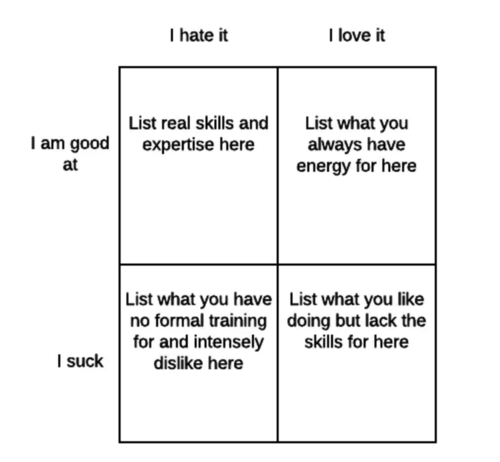
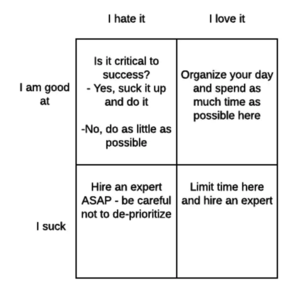
Matt Cain is the CEO of Couchbase, a data management platform based in Mountain View, California. He read Michael Smerklo’s E2E post on time management and used it to construct an exercise for his leadership team during his company’s most recent offsite. Michael’s piece focused on using an Eisenhower Matrix to help CEOs learn to manage their time more wisely. Matt walks us through how he turned this thought leadership piece into actual company change.

How do you approach thought leadership exercises with your team?

I am constantly in pursuit of new approaches that can help us get better as a team and as a company. The timing of this particular exercise worked well because we were in the midst of our annual planning process – tackling important issues and building a new multi-year plan. I’m a big fan of multi-day leadership offsites because they give us the time and space to attack important issues in a meaningful way and go deep. We wanted to ensure that we were aligned on what really mattered to us, and how best we could achieve success. We are fortunate to be growing and scaling very rapidly, but ensuring we are tackling priorities in an aligned and efficient way is crucial. Michael’s framework was a simple, but creative way to start that exercise – exploring my personal priorities, initiatives, strengths and weaknesses. It was a really convenient way to allow me to personally demonstrate and model vulnerability while discussing what we want to accomplish as a group.

Matt Cain, CEO of Couchbase. Learn more about Matt below.

How did you use Michael’s thought leadership piece to create an actual team-building exercise?

I spent time ahead of the session preparing what I thought were our most important priorities, and then filled out the 2×2 matrix as Michael suggested in his article. At our offsite, I walked my team through the priority and matrix concept (pictured right). I then asked each of them to fill it out on my behalf and made it clear they would do so without seeing my draft. I explained we would then compare their versions to mine. Some people had worked with me for a long time, while others had not, but regardless the exercise established a trusting environment where we could have this conversation. Getting a level of vulnerability in the corporate arena where you can say: “Here’s something that I ‘suck’ at and here are some things I think I’m good at,” is not commonplace. Asking others you work with to tell you what they think you might be good at or “suck” at is even more rare. You can only enforce that type of dialogue by demonstrating a true willingness to take feedback and get better.

The Eisenhower Matrix from Michael's article.

What was something that surprised you about the exercise?

What really jumped out at me was the nuance behind the areas of perceived disconnect. As an example, during our initial review, several members told me that they thought I was good at networking, where I had it on my dislike list. I strive to build and maintain authentic relationships and connect with and help people, but do not enjoy networking for networking’s sake. My team assumed I enjoyed it because they perceived me to be good at it. In another example, one member of my team said to me that he thought I was really good at micromanaging, which he thought was an important skill, but yet another thing I don’t particularly enjoy. Even the term initially bothered me. We realized that I can be effective at diving into a function or issue in the organization and quickly get at the detail that matters to drive to resolution, which I agree is important. But we also realized I need to be encouraged to do so by my team because it isn’t the my first impulse. My natural instinct might not be aligned to what’s needed in a particular situation, so I have to rely on my team for help. But they need to first understand what those natural instincts are. No one can fix problems they don’t know about. We went on to explore triggers, histories, personality traits, and several other factors that brought us closer together.

What was something both you and members of your team agreed you struggled with?

Process and process creation. We now commonly refer to that as “lower left” activities for me and we have fun with that (them more than me sometimes!). Fortunately, we have process experts and operators within the team that take responsibility in these areas. It’s incredibly empowering to drive people to their “zones of genius” and remove things and are better done by others. Self-awareness emerges, but so too does insight into how leaders throughout the organization need to think about building diverse teams: thinking, experiences, perspectives, strengths, etc.

“You can only enforce that type of dialogue by demonstrating a true willingness to take feedback and get better.”

How do you make these findings actionable in the office?

After we filled out and discussed our findings of the matrix, we labeled each line item as either green or red. Green meant I or the team should allocate more time to these activities. Red meant we want to spend less time. In addition, we intend to use the matrix for all of my leaders, allowing them to go through the exercise and understand how they are over or underexposed in their roles. This will help them be their most effective selves and build the best teams they can.

What advice would you give rising CEOs about interesting thought leadership content they come across or advice they receive?

I’ve been studying leadership and team dynamics – and managing self-awareness for constant improvement – for as long as I can remember. Rooms in my house are covered in leadership and culture books from people I admire. My feedback on leadership is to follow your passion and to constantly be in pursuit of self-improvement. The best performers in the world, regardless of their profession (music, sports, business, etc.) tend to have the most coaches and are the ones that are always looking to get better. The way I pick up resources to help with self-improvement varies a lot over time: sometimes I’m into a book, sometimes I’m into retreats, other times I’m on a long-haul flight and get some direct insights just from being unplugged for hours. There’s no one model; do what works for you, just like working out. Find your recipe, stay committed, and follow your passion.

“My feedback on leadership is to follow your passion and to constantly be in pursuit of self-improvement.”

About Matt Cain

Matt has nearly two decades of experience leading global organizations, he is currently the President and Chief Executive Officer of data management platform Couchbase. Prior to Couchbase, Matt was President of Worldwide Field Operations for Veritas Technologies LLC after serving as Chief Product Officer for Veritas’ $2.5B business. During his tenure, he revitalized the company strategy, increased operational efficiency, delivered growth across the portfolio, and was instrumental in the separation of Veritas from Symantec. Matt previously held a variety of senior leadership positions at Symantec Corporation and Cisco Systems. He holds a bachelor’s degree in Electrical Engineering from Northwestern University and a master’s degree in Business Administration from the Stanford Graduate School of Business.

Categories
E2E: Scale

The 3 Mistakes I Made Learning To Manage Time

This post originally appeared on Forbes.com on January 4, 2018 where Michael Smerklo is a regular contributor.

As a CEO, smart time management is critical to success. Let me tell you a dirty little secret: It doesn’t always come naturally, especially to entrepreneurs that become executives.

When I was just starting out as an executive, I found myself struggling with a seemingly infinite to-do list and not enough hours in the day to get everything done. I was determined to break the cycle. With practice, self-awareness and a few strategic adaptations, I learned how to correct what used to be my biggest time management mistakes:

Mike Smerklo, co-founder and managing director of Next Coast Ventures

1. Wanting to spend time doing what I’m good at, when I should have been delegating.

By definition, CEOs are doers. We are committed to our company’s core purpose and are ready to work hard to advance our goals. It excites us, it invigorates us and it imbues us with a hero’s mentality: the idea that we are the only one that can bring the necessary experience and the perspective to successfully complete a task. And we’re willing to work ourselves ragged to do it.

For example, when it came to going on sales calls, I always found myself ready to jump on a plane to fly across the country to attend a sales meeting. I liked them, I was energized by them, and I felt like I was adding value to the company. After some reflection, though, I realized that just because I have that skill doesn’t mean that others don’t. I was spending a ton of time doing something that in most cases, I could have delegated to a trusted, qualified employee. My own time could be better spent elsewhere.

Now, I focus on tasks that I am uniquely qualified to do. When my instinct is to say yes to yet another commitment, I stop and question myself to determine whether it is simply something I enjoy, or whether there is someone else who is equally skilled for the job. It also means knowing when to say no, even when you may disappoint someone – or yourself.

2. Staying busy instead of staying effective.

It is easy to fall into ‘the busy trap,’ as described by Tim Kreider in his article for the New York Times. It’s where we run around talking about how busy we are, but not really putting a lot of thought into where all of our time is going and why. The temptation here is clear: as long as we’re always doing something, no matter what that something may be, we can tell ourselves that we are productive. We find comfort that we can pat ourselves on the back for ticking boxes off of our seemingly never-ending checklist.

Photo courtesy of Steve Buissinne, Pixabay.

But what if we’re ticking off the wrong boxes? Staying busy doesn’t necessarily make us productive, and it certainly doesn’t mean we’re being effective. It usually just drives us to chase tasks that are easily within reach instead of the ones that are most important.

I often used to find myself seeking that rush of instant gratification, so I’d send yet another e-mail or even decide to fly and visit some small customer just to feel like I was getting something done, even if it wasn’t necessarily the most important priority.

Lately, I’ve been able to overcome that urge for immediacy by starting my day meditating for 20 minutes. This practice allows me to clarify my thoughts and helps me to take a step back away from the hustle and bustle. After meditating, while I’m still in a clear state of mind, I write down the two or three most important things that I want to get accomplished for the day. This helps to hold me accountable, making sure that I don’t trick my mind into believing I’m productive when I’m really just busy.

3. Using procrastination to avoid tasks I didn’t like.

Even after I started sticking to my carefully crafted list of the most critical tasks to accomplish, I found that the task that I was most dreading somehow always made its way to the bottom. I’d start with the easiest or most comfortable task, and save the most uncomfortable one for last.

Sometimes, it was something I was good at, but didn’t particularly enjoy. Like budgeting, for instance. Other times, it was something that I didn’t want to face, like firing an employee who I liked, but who wasn’t producing. Either way, I realized that there’s a thin line between sensibly putting something off and procrastinating, and that I was often guilty of the latter.

I discovered a two-step process to help me overcome my own delaying tactics. First, I began to rank-order my list in terms of priority and made myself tackle the tasks in order. If something was at the top, I had to suck it up and get it done. I wouldn’t let myself make excuses. If for some reason I decided that it wasn’t suitable for me to be the one to execute one of the tasks at hand – see mistake number one – I could then make the decision to delegate. Either way, my habit now revolves around not letting myself move on without addressing the task at hand.

Time is money, and so much more

There’s an overused saying in business that ‘time is money.’

But it’s more than that. It’s sanity. It’s self-satisfaction. It’s freedom. A better, more mindful approach to time management helps us get our priorities straight, leaving us more fulfilled both in the workplace – and in life itself.

Categories
E2E: Scale

My Board Meeting Is Over. Why Do I Feel So Bad?

The board meeting is over. The directors have gone back to their busy VC world. And you, as the entrepreneur, are heading to an email inbox that now, is even more overloaded than it was four hours ago.

As you scan through Slack, sift through Gmail or gaze at your 15 unanswered text messages, you might be left with some unsettling thoughts. Did I get what I wanted out of that board meeting? If so, why do I still feel bad

It’s a valid question for entrepreneurs to consider… Just how should I feel after a board meeting?

The above scenario happened to me so many times I lost count. As an entrepreneur, I’d walk out of most board meetings with no clue how the meeting went. If, as the CEO, I did my job in the board meeting, why then did I feel so overwhelmed, frustrated and in desperate need of a drink?

After years of experience as the co-founder and managing director of Next Coast Ventures and as the CEO of ServiceSource (SREV), I have finally realized this whirlpool of feelings is typical.

If you are an entrepreneur and you walk out of your board meeting feeling slightly unsatisfied, you are probably doing it right.

Even the most accomplished business leaders walk out of board meetings with doubts—part of the purpose of a successful board meeting is to challenge and question your ideas and to take you out of your comfort zone. Like a good workout with a personal trainer that pushes you to the limit, you should leave a board meeting feeling a mixture of exhaustion and frustration with a healthy dose of skepticism. When taken in stride, entrepreneurs can turn the following potentially toxic emotions into catalysts for next steps:

1. Mental Exhaustion

Board meetings are important and entrepreneurs need to remain fully present and focused in order to defend their recent decisions and fight for their future ideas while driving the agenda of the meeting forward—and ultimately, the business. A board meeting should be the culmination of weeks of preparation and practice in order to hone your narrative. This extreme channeling of intellectual energy can be draining, so take it as a good sign if you feel tired after you leave. This is a sign that you have put in the necessary time and effort—and you lead a constructive meeting.

2. More Than Slightly Frustrated

A good board meeting will challenge and frustrate you. At every turn, your opinions will be debated and questioned under a microscope and you may feel like you are placed in the spotlight to defend an unpopular idea. Keep focused and use the opportunity to truly consider other points of view. Remember that the board isn’t trying to give you a hard time for the fun of it or without reason, they simply are doing due diligence in ensuring that all factors are being considered. Rather than getting defensive or dismissive, which can be counterproductive, look at the situation with a positive perspective and take this time to solicit honest feedback from a group of individuals clearly vested in your success.

3. A Bout of Skepticism

Leading a board meeting is all about presenting your ideas with confidence. However, when push back comes or you are unprepared for a line of questioning, it is normal to feel skeptical about the topic at hand. In my experience, there comes an exact moment when you realize that a decision made, hire completed or strategic direction communicated might be completely wrong. That is okay. Just take a deep breath and commit to no immediate action in the moment until you have had time to examine what happened and how you can move beyond.

And Yet, It Shouldn’t Be Torture.

While every entrepreneur should expect to encounter hurdles during a board meeting, there are several signs to watch out for that may indicate larger problems are afoot. Any of the above emotions, have the ability to become toxic or demotivating. An effective board should ask hardball questions and be straightforward about their concerns—while never directly criticizing or belittling an entrepreneur, even about disappointing results or decisions they disagree with.

The boardroom should be strictly professional and drama-free; it shouldn’t be fun, but it also shouldn’t be torture. If, as an entrepreneur, you consistently feel disrespected and dismissed by your board, it may reveal an underlying chemistry problem. If your negative emotions go beyond the standards detailed above, the makeup of your board may need to be evaluated.

At the end of the day, a board meeting should help provide perspective on recent performances and practical advice concerning future challenges. CEOs should leave a meeting exhausted, frustrated and skeptical—but also enthused, accomplished and eager to get to work.

Ultimately, you are all on the same team, and the role of the board is to support you. Just like that of a personal trainer who challenges you to perform more when you think you have nothing left in the tank, keep in mind that your board really does have your—and your company’s—best interests at heart.

———————————————————-

Note this blog post was originally published via Real Leaders on May 22nd 2017.

Categories
E2E: Scale

What entrepreneurs can learn about public speaking from Donald Trump

Love him or hate him, his formula for public speaking won him the election..

Wait!

Don’t scroll past this post just yet!

Let me be clear: I am not here to make a political statement or endorsement. Rather, I want to help you be a better public speaker by thinking about how Donald Trump succeeds behind the podium—regardless of what you think of his message.

First, a little background.

I’m a huge believer in open communication with employees. When I was a young entrepreneur, I loved sharing how our company was doing, what was driving the business and why all of this was relevant. I focused my company updates through a simple lens called “WIIFM” — which stands for “What’s In It For Me” — in order to make these updates personally relevant to my employees.

I attempted to inject these updates with humor as much as possible, and was known for telling colorful stories about my childhood (let’s just say that dysfunction was the key theme).

When my company was a single-location startup with less than 50 employees, employee engagement levels were amazing. When a business grows rapidly, it is pretty easy to keep everyone motivated. As we grew however, I noticed that not everyone was listening as intently to what I had to say and I quickly became frustrated as I realized that employees were no longer as highly engaged in company updates or our all hands meetings.

Well, it happens. Organizations grow more diverse and complex, motivations change and connections fizzle. My small, intimate organization of highly engaged employees had become a multifaceted organization made up of people with different levels of motivation, engagement and interest.

What was I to do as the leader, key speaker and motivator of my employee base? Well, here’s where Donald Trump comes into play. A speaking coach with experience working with political candidates gave me one simple piece of advice: engage the believers and convert the fence sitters. Through this approach, you encourage the continued support of engaged employees while turning semi-engaged employees into believers. And once those fence sitters are converted, enthusiasm is contagious.

Here’s how it works.

1. Know your audience is made up of three groups.

These three groups are the believers, the doubters and the fence sitters. Believers have already bought into the story you are telling. They are in agreement with what you are saying and trust you implicitly. When my company was still small and growing, my audience — the ones who laughed at all my jokes — was made up mostly of believers.

The doubters are the opposite of the believers. They really don’t care about the message you are delivering and almost nothing you say will change their perspective. (Pro tip: you can usually find the doubters in the back of the room with their heads down, looking at their phones…)

The fence sitters are the key to making progress with your message. They are not sure what to think, which means they are open to persuasion, and they alone can dictate success or failure.

2. Start by thanking your believers.

First and foremost, make sure you engage the believers directly and encourage their continued support. Feeling acknowledged helps them continue to advocate for you. Don’t waste time trying to sway doubters—their minds are made up—and focusing your core message on them has the potential to undermine your support from the believers.

3. Tailor the bulk of your message to the fence sitters.

The bulk of your motivational message should focus on the fence sitters. Like it or not, this is exactly what Donald Trump does (and how he became President of the United States). When he’s on message, you can see one thing: he’s laser-focused on converting the fence sitters.

Observe how Donald Trump used these tactics in a speech he gave in Phoenix before the election:

First, he effusively thanked the believers:

Wow. Thank you. That’s a lot of people, Phoenix, that’s a lot of people.

Thank you very much.

Thank you, Phoenix. I am so glad to be back in Arizona.

The state that has a very, very special place in my heart. I love people of Arizona…

He uses almost the entire rest of the speech to address the fence sitters. First, he disarms doubts about what a “Trump rally” is by stating that he’s doing things differently for the audience. Then he addresses objections that he is not a serious candidate by saying he will give a serious speech on policy.

This will be a little bit different. This won’t be a rally speech, per se. Instead, I’m going to deliver a detailed policy address on one of the greatest challenges facing our country today…

He continues to address doubts about his lack of experience and poor global reputation by affirming that he has the political capital and prowess to meet other heads of state, and also his admiration for said politicians:

I’ve just landed having returned from a very important and special meeting with the President of Mexico, a man I like and respect very much. And a man who truly loves his country, Mexico.

And, by the way, just like I am a man who loves my country, the United States.

He then addresses any doubts about unfairness.

And, in a Trump administration we’re going to go about creating a new relationship between our two countries, but it’s going to be a fair relationship. We want fairness.

Next he establishes a common enemy, and also a sense of urgency, which builds anticipation and a sense of shared purpose. Note again — his message is biased and one-sided — he is not trying to convince the doubters to get behind him — just the fence sitters:

But to fix our immigration system, we must change our leadership in Washington and we must change it quickly.

Sadly, sadly there is no other way. The truth is our immigration system is worse than anybody ever realized. But the facts aren’t known because the media won’t report on them. The politicians won’t talk about them and the special interests spend a lot of money trying to cover them up because they are making an absolute fortune. That’s the way it is.

The speech goes on. Much has been written about the persuasive skills of Donald Trump; in the rest of his lengthy speech he addresses the fence sitters throughout by constantly restating his support for the American people, naming and elaborating upon common enemies, proving his points with examples and restating emotional messages.

Whether you agree with Donald Trump’s position or not, his tactic of swaying the undecided voters worked.

As you think about your job as an entrepreneur, it is really simple — you need to get prospects, customers, employee and investors to get behind your message. This alone is nearly 100 percent of your job. Next time you prepare a company speech or investor pitch, consider this simple recipe: thank believers to keep them on your side, don’t waste any time on the doubters and focus exhaustively on winning over the fence sitters. This formula yields amazing results.

Categories
E2E: 20/20

Are you truly ready to be an entrepreneur?

This article was written by Tom Taulli based on an interview with Mike Smerklo and published on Forbes.com on Nov. 5, 2016.

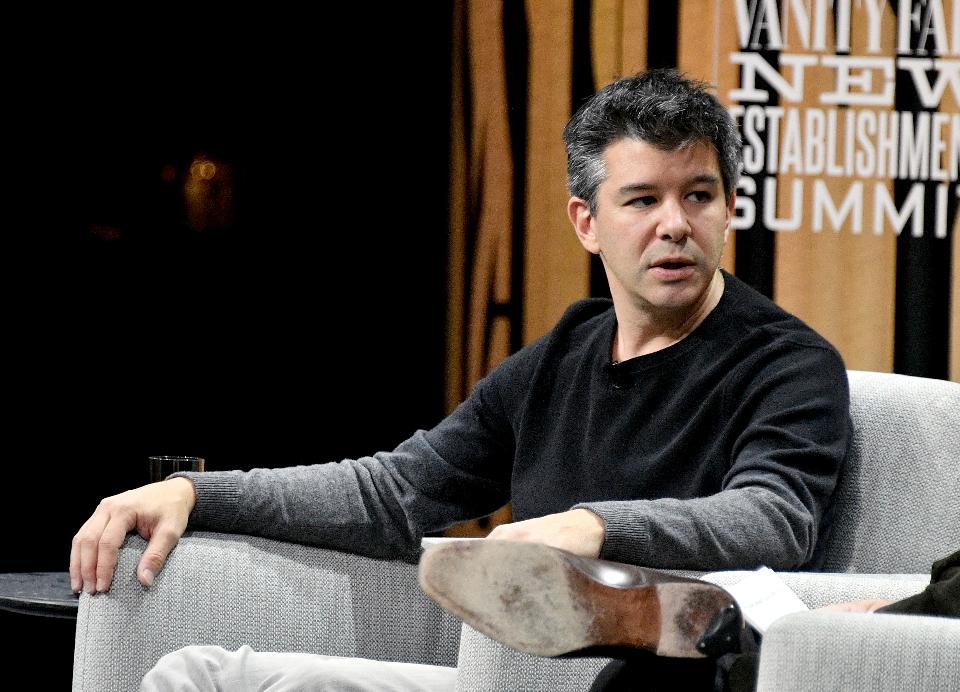
Co-founder/CEO of Uber, Travis Kalanick, speaks onstage during ‘The Übermensch’ at the Vanity Fair New Establishment Summit at Yerba Buena Center for the Arts on Oct. 19, 2016 in San Francisco, California. (Photo by Mike Windle/Getty Images for Vanity Fair)

Being an entrepreneur may seem glamorous and exciting.  But the reality can be much different. Hey, I talk to many entrepreneurs – and I often hear words like “tough,” “challenge,” “difficulties,” and so on. And these are often from those people who have had tremendous success!

So before making the decision of becoming an entrepreneur, you really need to do a gut-chuck. Are you willing to make big-time sacrifices? Ready for lots of unpredictability?

Yes, this is all inherently personal. But it is still a good idea to get some insight from those who have been in the trenches.

And one such person is Mike Smerklo, who is the co-founder and managing director of Next Coast Ventures (his firm makes venture investments in early-stage tech companies – with a focus on megatrends). But before this, Mike was a successful entrepreneur, having founded ServiceSource, which he took public. The company was a pioneer in the cloud space and grew at a hefty 40% CAGR (compound annual growth rate) for a decade. ServiceSource also returned over $100 million to investors before even becoming public.

OK then, what are some of his takeaways when thinking about making the jump?

First of all, you need to truly understand the amount of work that is required. “Think 80-hour work weeks, a ton of stress and riding a virtual roller coaster on a daily basis,” said Mike. “Starting a business is likely the hardest job in the world – so make sure you are personally ready to take this challenge on and give it 100% commitment.”

As for his own experience with ServiceSource, Mike jokes that in the early days of chasing his dream his apartment furniture consisted of one chair, a bed and a TV in the bedroom. “The apartment was strategically placed at just under a mile from the office so I could get there as early as possible and I could walk back late at night if necessary,” said Mike.  “I was 33 and ready to take on the world. I didn’t own a car, house or dog. I worked 100 hours a week. I flew around the world on a moment’s notice.”

Kind of brutal, right? Definitely. But it is what needs to be done if you want to be a successful entrepreneur.

But then again, hard work is just one part of the puzzle. You also need to think about how to most effectively spend your time. What is the best strategy?

According to Mike: “Do you have a really great business plan or just a neat idea? Given how much risk and hard work it takes to be an entrepreneur, think long and hard about how differentiated your business plan is and make sure to stress test this with as many smart people as possible.”

You do not want feedback from those who will give you mostly happy talk. Instead, you should seek out those who are dogged skeptics (if anything, this will provide good preparation for dealing with potential customers).

For example, it would be downright suicidal to try to create a rival to Uber or Airbnb. While the market opportunities are massive, it would take huge amounts of capital to get an edge.

In other words, try to focus on those categories where there is still lots of pain points and customer dissatisfaction. It also helps if you have a background in the industry. And if not, why not work for a company in the category and gain some experience? In fact, this was critical for Mike, who worked with Marc Andreessen and Ben Horowitz at LoudCloud.

And finally, Mike recommends that you need to make sure your friends, family and mentors are really behind you as you jump into this head on. You need as much support as you can get – because there will certainly be several near-death experiences for your venture.

“You need the right mindset when heading into the wide open and turbulent seas of being an entrepreneur,” said Mike.  “There is so much written about business strategy, building a team and raising capital – all of which are critical to taking your business from idea to the next great thing. But I would assert that getting yourself ready to take the daily ups and downs of running a business, both mental and physical, is equally as important and might have more to do with your success than coming up with a better mousetrap.”