
Categories
E2E: 20/20

Utilizing Your Board with Richard Lebovitz

Richard Lebovitz is the founder and CEO of LeanDNA, an Austin-based AI platform and Next Coast portfolio company. As part of our E2E: 20/20 series with our portfolio CEOs, we spoke with Richard about utilizing your board’s expertise. Read more of our E2E content on governance here.

What has been the biggest benefit of working closely with your board?

For me, the board has always been helpful because when you’re an entrepreneur, you get wrapped up in the day-to-day grind. Anybody who says it’s easy is wrong, it’s not, you have so many roadblocks. But at the board level, you have people working with a lot of different companies and it’s great because they provide a birds-eye view on what doesn’t work with other businesses. I’m a bit more conservative than other entrepreneurs and I like to get things a little more perfected before I turn up the gas and go faster. However, with a board, I’m more comfortable going faster because they’ll help us avoid bad mistakes. Without the board, we only could have learned these lessons through trial and error.

Richard Lebovitz
CEO of LeanDNA

How can you make sure board meetings are as productive as possible?

The number one thing is to make it easy for the board to give you productive advice. It’s my job to make their job easier, so before each meeting I always ask myself: How do I present things in a way that allows them to give us good advice? These guys are busy and jumping around between 10 to 15 companies, so that means not a lot of PowerPoint slides or hiding any information, because who does that help? You want to get as much useful information as you can from them so it’s up to you be transparent, know what the issues are and ask for help where you need it. Think through those questions in advance and ask for targeted advice. Specifically, I like to pick a particular theme for each board meeting and drill down with the board to really talk about how to solve that issue.

What was something you struggled with building your business that your board eventually helped solve?

Changing the sales process was a critical step that we wouldn’t have been able to do without our board. We started out with these 25-page sales proposals with details about the complexity of our product and how it compared to competitors, etc. We would cite case studies and customer reviews because when you’re pitching a new product, your instinct is to give as much information as possible to help them make a decision. And yet we were struggling with exciting clients on our new product. Then one of our board members who came from a totally different industry with a lot of experience in marketing recommended that we change our sales pitch to a quick and simple approach. Since our best edge is our product, he recommended we skip right to that. So we went from a 25-page proposal to a simple one-pager and essentially going straight into a demo during the pitch. You wouldn’t think it would make such a big difference, but it really did. Once clients realized how easy it was to use and implement the product, they were significantly more likely to purchase it.

How did your board recommend you maintain this positive change in the sale process?

We started mapping out “a day in the life” of somebody that uses our product. We looked at the challenges they faced after purchasing our technology and then instituted a very tight relationship between our sales and customer service teams. When the salespeople got to see the product through its implementation phase, and the issues our clients experienced when expanding its use, they had a lot more ammunition when they went back to cold calling and trying to close new customers. The board is great at making sure we have the right processes like these in the place to be successful. A lot of startups typically aren’t great about making sure these measurements are being monitored once you close a deal. What happens after the customer signs? A board can be great at helping pick which aspects of your business to monitor and track in order to ensure success.

About Richard

Richard is the founder and CEO of LeanDNA, an Austin-based lean technology company that focuses on the manufacturing and industrial sectors. He was previously the founder and CEO of Austin-based Factory Logic, Inc. (acquired by SAP), which he started in 1997. He is also a board member for the Association for Manufacturing Excellence (AME), and is an Entrepreneur-In-Residence and Instructor for The University of Texas at Austin.


Categories
E2E: Scale

My Board Meeting Is Over. Why Do I Feel So Bad?

The board meeting is over. The directors have gone back to their busy VC world. And you, as the entrepreneur, are heading to an email inbox that now, is even more overloaded than it was four hours ago.

As you scan through Slack, sift through Gmail or gaze at your 15 unanswered text messages, you might be left with some unsettling thoughts. Did I get what I wanted out of that board meeting? If so, why do I still feel bad

It’s a valid question for entrepreneurs to consider… Just how should I feel after a board meeting?

The above scenario happened to me so many times I lost count. As an entrepreneur, I’d walk out of most board meetings with no clue how the meeting went. If, as the CEO, I did my job in the board meeting, why then did I feel so overwhelmed, frustrated and in desperate need of a drink?

After years of experience as the co-founder and managing director of Next Coast Ventures and as the CEO of ServiceSource (SREV), I have finally realized this whirlpool of feelings is typical.

If you are an entrepreneur and you walk out of your board meeting feeling slightly unsatisfied, you are probably doing it right.

Even the most accomplished business leaders walk out of board meetings with doubts—part of the purpose of a successful board meeting is to challenge and question your ideas and to take you out of your comfort zone. Like a good workout with a personal trainer that pushes you to the limit, you should leave a board meeting feeling a mixture of exhaustion and frustration with a healthy dose of skepticism. When taken in stride, entrepreneurs can turn the following potentially toxic emotions into catalysts for next steps:

1. Mental Exhaustion

Board meetings are important and entrepreneurs need to remain fully present and focused in order to defend their recent decisions and fight for their future ideas while driving the agenda of the meeting forward—and ultimately, the business. A board meeting should be the culmination of weeks of preparation and practice in order to hone your narrative. This extreme channeling of intellectual energy can be draining, so take it as a good sign if you feel tired after you leave. This is a sign that you have put in the necessary time and effort—and you lead a constructive meeting.

2. More Than Slightly Frustrated

A good board meeting will challenge and frustrate you. At every turn, your opinions will be debated and questioned under a microscope and you may feel like you are placed in the spotlight to defend an unpopular idea. Keep focused and use the opportunity to truly consider other points of view. Remember that the board isn’t trying to give you a hard time for the fun of it or without reason, they simply are doing due diligence in ensuring that all factors are being considered. Rather than getting defensive or dismissive, which can be counterproductive, look at the situation with a positive perspective and take this time to solicit honest feedback from a group of individuals clearly vested in your success.

3. A Bout of Skepticism

Leading a board meeting is all about presenting your ideas with confidence. However, when push back comes or you are unprepared for a line of questioning, it is normal to feel skeptical about the topic at hand. In my experience, there comes an exact moment when you realize that a decision made, hire completed or strategic direction communicated might be completely wrong. That is okay. Just take a deep breath and commit to no immediate action in the moment until you have had time to examine what happened and how you can move beyond.

And Yet, It Shouldn’t Be Torture.

While every entrepreneur should expect to encounter hurdles during a board meeting, there are several signs to watch out for that may indicate larger problems are afoot. Any of the above emotions, have the ability to become toxic or demotivating. An effective board should ask hardball questions and be straightforward about their concerns—while never directly criticizing or belittling an entrepreneur, even about disappointing results or decisions they disagree with.

The boardroom should be strictly professional and drama-free; it shouldn’t be fun, but it also shouldn’t be torture. If, as an entrepreneur, you consistently feel disrespected and dismissed by your board, it may reveal an underlying chemistry problem. If your negative emotions go beyond the standards detailed above, the makeup of your board may need to be evaluated.

At the end of the day, a board meeting should help provide perspective on recent performances and practical advice concerning future challenges. CEOs should leave a meeting exhausted, frustrated and skeptical—but also enthused, accomplished and eager to get to work.

Ultimately, you are all on the same team, and the role of the board is to support you. Just like that of a personal trainer who challenges you to perform more when you think you have nothing left in the tank, keep in mind that your board really does have your—and your company’s—best interests at heart.

———————————————————-

Note this blog post was originally published via Real Leaders on May 22nd 2017.

Categories
E2E: Scale

On Board Management: Wise words from 4 Silicon Valley legends

What I learned from Bruce Dunlevie, Bill Campbell, Marc Andreessen and Al Davis about creating, building and managing a world-class board of directors.

ON BOARD-OM AND MALAISE

As an entrepreneur, how do you view your board and the importance (or lack thereof) as it relates to your business?

Throughout my entrepreneurial journey, I learned a lot, made some mistakes, and eventually developed an approach that transformed my board into a strategic weapon.

But it didn’t come naturally or happen overnight – I made some silly missteps and had to modify my mindset when it came to board management quite a bit as I went.

If you’re anything like me, you struggle with the best way to assemble, manage and interact with your board, especially given all the other things you have on your plate while scaling your business.

I expect that you are always trying to figure out how much time to devote to the board in general and why, other than their presence as a necessary evil, you should even spend time thinking about this topic. A board can really help you and even might be the difference between success and failure in your journey – so I encourage you to avoid the temptation to de-prioritize your board in lieu of other initiatives.

Rather, by learning from my three key lessons, I hope you will see your board (or the benefits of having a strong board) in a new light. And with a new perspective, you will be able to use your board as one more arrow in your quiver that will help you build an amazing business.

Here are the mistakes I made, the teachers who helped me modify my approach, and the benefits I derived from these learnings.

OF BOARD MEMBERS AND MUSHROOMS

There is an old joke about this board Management that is a good place to start for this lesson:

What do board members and mushrooms have in common? They BOTH should be treated the same – kept in the dark and covered with shit.

For the first few years I was running my company, I didn’t really engage my board in a strategic manner and kept most of the meetings high level – making sure that I had every questions answered BEFORE I walked into the board room.

Or I would fill board decks with pages and pages of details – making sure that we spent so much time in the meeting going through the materials that the opportunity for free form discussion or dialogue never materialized.

Of note, I wasn’t doing this on purpose or to hide anything – rather I just didn’t know how to get much from my board. As a result, I was either giving them too much or too little information, so by default the meetings were never really that constructive.

And while I would get through the meetings just fine, I NEVER realized I was “keeping my board in the dark and covered in shit.” AND yet I found myself feeling more and more frustrated after every meeting. I wanted more insights from the people who were most likely to help me look around the corners I hadn’t seen before. But I just didn’t know how to get what I needed from my board. 

And while I understand (FULLY!) how painful it can be to deal with annoying, boastful, arrogant, know-everything board members (I better stop now), I did ultimately learn how to get the best out of my board without wasting huge cycles to do so.

For this lesson I owe a debt of gratitude to one of my best board members, Bruce Dunlevie,  founding partner of Benchmark Capital, the preeminent Venture Capital firm in Silicon Valley. When Bruce first joined my board, I was consistently making the “too much information” mistake I described above – frankly giving my board too many details and hoping they would – from the same minutiae I had scoured – divine some nugget of information that I had not yet gleaned myself.

After one particularly frustrating board meeting, Bruce called me to give me some incredibly sage advice.

Bruce could see what was happening from a mile away – because HE HAD seen so many other Entrepreneurs fall into this trap – and he could emphasize with me and my effort to deal with a powerful board. And, like any good board member is apt to do, Bruce asked me a couple of simple questions that changed my perspective completely:

“Mike, does anyone on the board know as much as you do about your business? Seriously – how big is the gap between what you know about the operations versus what the board even understands about the business. Have you taken this gap into consideration when building the board agenda and supporting materials?”

As I reflected on this question, I quickly reminded myself that I spent close to 80 hours (at least) A WEEK thinking about my business – while my average board member thinks about the same topic for 40 hours A YEAR (at best).

This is a huge discrepancy, and noticing this delta is probably the most important realization for any entrepreneur when thinking about how to manage a board, set an appropriate agenda, or build a compelling board deck. Simply put: don’t attempt to get your board up to the same level of understanding as yours. Rather, use this gap to your advantage.

WHAT BRUCE DUNLEVIE TAUGHT ME: MIND THE GAP

The first step here is a mindset shift. Once you have made this shift and stop trying to get your board to the same level of understanding that you have about your business, you will change both the context and content you use in your board communication. By setting the right agenda and developing a board package that is good mix of key operational updates AND open-ended strategic discussion, you’ll be amazed at how much more you can get from your board in very short order.

WHAT BILL CAMPBELL TAUGHT ME: THE BOARD AIN’T YOUR BOSS

Another mistake I made along my journey was giving my board too much input on the operations of the business. This is a pretty common mistake and is more prevalent with first-time entrepreneurs, especially those who have raised institutional capital from a PE or VC firm where the relationship between capital provider and entrepreneur is still being cemented.

The mistake here is to give your board too much credit – assuming the members know more than you do – or assuming that their suggestions must be followed to a fault.

One of my early mentors was the legendary Bill Campbell. He was on the board at Loudcloud / Opsware, and I was fortunate to stay in contact with him and get his input from time to time during my journey.

Bill is simply the best in the business and has forgotten more about leadership and entrepreneurship that most of us will ever know. I was speaking to him about this very topic and he quickly noticed my attitude of giving the board “too much credit” and how this approach was causing me to miss a real opportunity. To help educate me, he asked me one simple question:

“Mike, how do you see your job, as CEO, as it relates to the board?”

After we talked openly about this question, I came to the following key realization about my role versus that of the board and it helped me immensely.

My responsibility as CEO / entrepreneur was to make decisions and give the board insight into both my decision-making process and the direction I was taking the business. The board’s job was to give me feedback that I could choose to use to inform my decision.

The bulk of my communication – say 98% – with the board was really about seeking input, with the remaining 2-ish% being major corporate decision-making that required board approval. As such, I needed to make sure my mindset and material reflected this – specifically that the lion’s share of my board interaction was really about seeking input to help me with MY decision-making.

As Bill said to me at the time (in a gruff way that is classic Bill Campbell):

“You are running the f-ing business. You are making the decisions. If you get enough right, you keep your job. If you mess too many up, then the board should fire you. It is really that damn simple.”

SO, ARE YOU IN OR ARE YOU OUT?

I then realized that the board’s job was to determine if I was making more good decisions than bad. And if my decision-making success rate dropped below an acceptable level, the board then would need to make a decision about my ability to do my job. Once I accepted this relationship, I felt more empowered as a leader and saw my relationship with my board become much more productive.

As part of this, Bill also taught me a GREAT phrase that summarized this relationship – I used it at least once a board meeting whenever a board member wanted to give really me specific advice on a problem I was trying to solve:

“That is super input. I really appreciate your point of view on X (insert detailed operating issue here). I will take your input into consideration, and if need be I might follow up with you to get more of your perspective here.”

Try it the next time a board member is espousing some action that she is certain will work for you. Trust me, you will start to use this more and more and will savor the lack of response it generates!

WHAT MARC ANDREESSEN TAUGHT ME: USE THE BOARD AS A STRATEGIC WEAPON

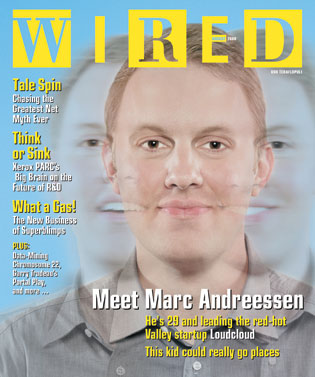
During the early days at Loudcloud (which became Opsware), I was fortunate to get to travel a great deal with one of the four founders of the business, the legendary and prolific Marc Andreessen. On one of these trips, in early 2000, I was asking Marc about how he was assembling the board for Loudcloud and why he had recently recruited Michael Ovitz to the board.

Of course I knew of Michael Ovitz, the legendary Hollywood super-agent and founder of CAA – but I wasn’t sure how this background was relevant to the technology company we were building. Marc’s response to my question was fast and clear to (and a bit dismissive, but Marc responded to most of my questions that way):

“I want every advantage I can get to build this business. And that includes the board. Michael is a great entrepreneur – he knows how to build a service business and can help us increase our profile, talent-acquisition model, and approach to client relationships. Plus, he is outside of The Valley and brings a fresh perspective that we can’t get anywhere else.”

Now Marc is a special talent and has for a long period of time played at the highest level of power and influence in the technology industry, so his ability to attract talent to his board – even back in 1999 – falls into the category of outlier.

But my point here is that Marc was both clear about what he was looking for and how it could help him build a business. And then he went out and recruited board members that fit this profile. (See a great interview between Marc and Michael here)

BOARD? GO SHOPPING

If you think about this perspective and ask yourself a few questions, I expect you will think a bit differently about who is on your board and how each member can do more to help you win in your business.

  1. Are you getting the right level of feedback from your board around key strategic issues?
  2. If you think about the 2–3 top strategic issues the business is facing, do you have expertise on your board to help you address these issues?
  3. If not, do you have a plan to develop your board in a logical, thoughtful way to change the composition for better alignment between #1 and #2?

When I was running ServiceSource, I took this learning to heart and consistently looked at my board to see if I had the best talent in the room to help the business grow and succeed.  And with each important milestone that we were looking to achieve, I would try to find a board member to help the company get there.

This helped me get board members with experience in international expansion, sales and marketing, cloud application and even financial expertise when we were getting ready to go public.

And I shared this mindset with the board openly and regularly, so they became part of the process and understood exactly where I wanted to take the board.

WHAT AL DAVIS TAUGHT ME: JUST WIN.

As an entrepreneur, you have a really, really hard job, and rarely do you have a lot free time to devote to things that are not going to help you compete and win in the marketplace.  I know firsthand just how hard it can be to deal with a board – and I can understand why a lot of entrepreneurs see little or no value in dealing with the board.

But if you think about your board – both management and composition – a bit differently, you find you’re missing a key trick.

Al Davis, the late, great and notoriously fiery owner of the Oakland Raiders was fond of summarizing his management philosophy with his head coaches in very simple terms:

As the entrepreneur, you are the head coach and your job is to win. It really is that simple.  So if you want to win, it is pretty important to think about how you can get more from your board to help you make this happen.

  • DON’T treat your board like a mushroom. It might be easier to run the business in the short term with this approach, but it isn’t sustainable and, more importantly, you are missing a real opportunity to get their input on the RIGHT issues.
  • DON’T treat your board like they are running the company. That is your job, and you have the responsibility and perspective that no one else really can understand. So keep your board in the loop, seek their input, and engage them openly. But remember my magic phrase (trust me, you will use it more than you think), and know the difference between running the show and board governance.
  • DO assemble a board that can be a strategic weapon. You need *every* advantage you can get in your fight, so think about how the right board member can help you get leg over the competition. Be clear about what needs you have and how a particular skill set on the board can help your business grow – and then aggressively recruit for a top talent to fill this spot on your board. You will be surprised by how much this can help you on the journey.

Think of your board like any weapon in your arsenal, then just win, baby. Just win!