
Categories
E2E: News

Leading Through Difficult Times

Clear Direction and Consistency with Strong Values Can Build Enduring Cultural Advantages

In 2008, I was running a travel technology company called VacationRoost when the Financial Crisis absolutely crushed the tourism market that we served. Seemingly overnight our revenues were cut in half and our break-even operation became a loss generator. Our growth ambitions and strategy were quickly shelved for the necessity of survival planning. Cutting costs through operational retrenchment, pay-cuts, and painful layoffs was miserable. It was during this challenging time, however, that we built strong cultural foundations that helped us not only survive, but thrive during the recovery and later growth stages.

I remember huddling with our management team in the war room making these difficult decisions. Many of us wondered if it was even worth it. None of us had joined the Company with the expectation of shrinking operations and the hardships that went along with it both financially and psychologically. Wouldn’t it just be easier to admit defeat and go pursue opportunities in different companies or industries? “Hey, good idea, good effort. This slowdown isn’t our fault, and there is nothing we can do to change it in the short term. Let’s cut our losses and call it a day.” Some of my more courageous team members shared these thoughts with me. I knew everyone was thinking about it – heck, even I was at times. I remember wanting to assure our team that everything would be ok. That if we pushed through these difficult times, we’d survive and thrive as a Company and everyone would do really well professionally and financially. But the truth was that we had no assurance of that. Maybe we would….but there was also a very good chance that we would not.

After many sleepless nights, I decided to focus the team on what we could control. I brought the leadership team together and shared a vision for success that was attractive while remaining honest about our chances and the things that were out of our control. Then I challenged our team to do something that was completely in our control: Let’s build a Team, a Culture and a Company that we are proud to be a part of. Win or lose in the long term, we are going to create an organization that we are proud of—one that’s worth fighting for every day. We weren’t going to wait until we got through the crisis, had more resources or had more time. We were going to do it immediately so that every day moving forward would be spent in an environment we could take pride in.

After many sleepless nights, I decided to focus the team on what we could control. I brought the leadership team together and shared a vision for success that was attractive while remaining honest about our chances and the things that were out of our control. Then I challenged our team to do something that was completely in our control: Let’s build a Team, a Culture and a Company that we are proud to be a part of. Win or lose in the long term, we are going to create an organization that we are proud of—one that’s worth fighting for every day. We weren’t going to wait until we got through the crisis, had more resources or had more time. We were going to do it immediately so that every day moving forward would be spent in an environment we could take pride in.

Formation

And so began one of the most surprising transitions of my professional career. We worked as a group to create a Vision for what we wanted to become as a Company and how we wanted to impact our industry. After a lot of debate, we agreed to the Core Values that would define how we behaved, how we would recruit team members of certain character and how we would hold each other accountable. We then inserted a Strategy element that would tie the practical plans of the Company to both the Vision and Values.

Getting Started

I can remember to this day the awkward feeling I had trotting out our new Vision-Strategy-Values framework at an all-company meeting during the downturn. We had just laid off 40%+ of our team. These were friends and colleagues that we were close to and were concerned about. Our team was scared for their own security and the future of the Company. My self-conscious “little voice” sat on my shoulder whispering in my ear saying: “Really Mr. MBA dude… people are worried about survival here and you choose now to bring out the MBA 101 Mission/Vision/Values BS??” “Really? That’s the best you’ve got? People are going to roll their eyes. They want to hear that they’re safe, that there won’t be more layoffs. A better leader might give them that assurance.” I pushed beyond the inner voice and gave the presentation. I wasn’t sure how it was received.

Consistency of Communication

One of the practices that we put in place during the downturn was more frequent and consistent communication with the entire Company. We implemented monthly company-wide meetings and weekly leadership team meetings that included a broader group beyond the executive team. I remember making a point to start every presentation with my 4 slides which included the framework and a slide on: Vision – This is Where We Want To Go- This Doesn’t Change; Values – This is How We Behave – This Also Doesn’t Change; Strategy – This is how we are going to move towards our Vision – This year, this quarter, this month – This changes based on what the world throws at us. I recall changing the order of the slides to re-position the framework as Vision-Values-Strategy as it flowed better that way. Then we would go on with our briefing.

I started making analogies comparing our journey to a trip. The Vision is our Destination. We are all going to drive from NY to CA, for example. Arriving in CA is our Vision. Our Values are the ground rules regarding how we are going to go about doing this. They represent agreed-upon behaviors like: we are going to drive, we will obey the speed limit, we will make sure to stop to see something interesting at least once per day, we won’t spend more than 8 hours driving per day, etc… The Strategy is how we navigate each stage of the journey. We are going to take Route 80, We expect it to take 8 days, We will stop in Chicago overnight, etc… This may indeed change. If we see Route 80 closed for construction, we will change the Strategy and take a different road. If the weather is bad, we may alter driving times. If we discover an incredible attraction along the way, we may stop to enjoy it and drive some additional hours the next day, etc… This helped everyone understand how our Vision and Values don’t change – we are going to arrive in CA and we are going to drive in a responsible manner to get there. Within this framework, it was logical that the Strategy might change to accommodate new information, or any new challenges, but it always provided the path towards the Vision/Destination and didn’t conflict with our Values/Ground Rules.

I eventually got more comfortable with the flow of kicking off each meeting with this 5-minute overview of our framework. A key driver to the company-wide success of the framework was asking each manager to start doing the same with their teams—both to hold weekly meetings and to start each meeting with the Vision-Values-Strategy framework. After a while it became routine, and eventually… we started working out of the economic downturn and began to grow again.

The Unexpected

As time went on, our Vision-Values-Strategy routine continued and we slowly started growing again as the market improved. The little voice on my shoulder, however, returned. “Hey, buddy…. Give this Values stuff a rest. It was a nice tool to help you get out of a jam, but we are really busy now. The team is growing again, we have tons to do, and you are starting to sound like a broken record up there. Besides, you even painted the Values and Vision on the wall! We get it already!” (What would we do without our little voices!) Well it finally got to me. I recall one meeting when we were starting late and had a packed agenda. I jumped past my first 4 pages on Vision-Values-Strategy and gave the floor to one of my colleagues to get started. As I looked on, a hand raised in the back of the room. I was annoyed. Doesn’t this person know that we are in a rush here?

“Hey, what happened to our Vision/Values discussion? Me – Ahhh… well, we are short on time today so I skipped it. Colleague – Well, I was really looking forward to it today. In fact, I wanted to share a story about our Values. One of my team members did an extraordinary thing for a client last week. They really went above and beyond to fix an issue to ensure that our client had a great experience, and they didn’t even ask me permission to spend the money doing so. When I asked them why they hadn’t come to me, they answered by reciting a couple of our Values – Customer Service and Accountability. They said – “doesn’t this mean that we’re always supposed to try to live up to these values in our day to day jobs?”

I was floored during the brief silence that followed. Here I was thinking that my team had endured enough of my MBA mumbo-jumbo and that I should give it a rest. In actuality, the consistent Vision-Values-Strategy intros might have been the most important things that I had been saying as a leader. I thanked my colleague for sharing the story, and then looked around the table and asked the question: “Does anybody else have a similar story?” 3-4 hands shot up immediately. The stories were powerful. The alignment was awesome. Then more hands went up. Everyone had a story. The impact at the table was palpable. Eyes teared up. More stories were shared. Management members started explaining how sharing the values had given them something to take pride in and lean on during the difficult times, and now was being noticed by people outside the organization. Recruits came to interviews citing our values as a reason why they wanted to work with us. Partners complimented us on it and chose to work with us because of it. It had happened, and I hadn’t even noticed it. Our team was taking pride in their workplace, their colleagues and the values of the Company. Our managers were proudly sharing the values and reporting on their stories. Our team was getting stronger and the shared values were building a powerful culture. We were in no way ”in the clear” financially, but we were well on our way towards our goal of building a company that our team was proud to be a part of.

This post focuses on building culture as a key strategy for difficult times and is the first of three blog posts on the topic of culture. Here are a few other things to consider when leading your team through difficult times.

Honesty – This is non-negotiable as a leader. Be honest with your team, even when you desperately want to make them feel better. You’ll never build trust without it.

Speed – Move quickly and take action. You may be tempted to wait for more information or to defer difficult decisions, but that costs valuable time. Bite the bullet, figure out what is best for the company and take action. Your team will appreciate it.

Create Your “Burn the Boats” Plan – You will undoubtedly be evaluating multiple scenarios and response plans. Build the worst scenario first. Rather than agonizing over layer after layer of cuts, start with nothing. Then determine what the minimum amount of resources you would need to keep the operation afloat in order to weather the storm while “burning all the other boats”. You may not need to go to this plan right away, but having it built will give you comfort that there is always a safety plan to go to in the next worst scenario.

What Can You Control – You can’t control markets and external events, but you can control your response. This is your move, make it count. Event + Response = Outcome!

Forge Your Steel in the Heat of Adversity– Like our story above, many companies develop core competitive advantages and strengths through the decisions they make during difficult times. What will yours be? Choose your Steel Weapons wisely.


Categories
E2E: Scale

On Board Management: Wise words from 4 Silicon Valley legends

What I learned from Bruce Dunlevie, Bill Campbell, Marc Andreessen and Al Davis about creating, building and managing a world-class board of directors.

ON BOARD-OM AND MALAISE

As an entrepreneur, how do you view your board and the importance (or lack thereof) as it relates to your business?

Throughout my entrepreneurial journey, I learned a lot, made some mistakes, and eventually developed an approach that transformed my board into a strategic weapon.

But it didn’t come naturally or happen overnight – I made some silly missteps and had to modify my mindset when it came to board management quite a bit as I went.

If you’re anything like me, you struggle with the best way to assemble, manage and interact with your board, especially given all the other things you have on your plate while scaling your business.

I expect that you are always trying to figure out how much time to devote to the board in general and why, other than their presence as a necessary evil, you should even spend time thinking about this topic. A board can really help you and even might be the difference between success and failure in your journey – so I encourage you to avoid the temptation to de-prioritize your board in lieu of other initiatives.

Rather, by learning from my three key lessons, I hope you will see your board (or the benefits of having a strong board) in a new light. And with a new perspective, you will be able to use your board as one more arrow in your quiver that will help you build an amazing business.

Here are the mistakes I made, the teachers who helped me modify my approach, and the benefits I derived from these learnings.

OF BOARD MEMBERS AND MUSHROOMS

There is an old joke about this board Management that is a good place to start for this lesson:

What do board members and mushrooms have in common? They BOTH should be treated the same – kept in the dark and covered with shit.

For the first few years I was running my company, I didn’t really engage my board in a strategic manner and kept most of the meetings high level – making sure that I had every questions answered BEFORE I walked into the board room.

Or I would fill board decks with pages and pages of details – making sure that we spent so much time in the meeting going through the materials that the opportunity for free form discussion or dialogue never materialized.

Of note, I wasn’t doing this on purpose or to hide anything – rather I just didn’t know how to get much from my board. As a result, I was either giving them too much or too little information, so by default the meetings were never really that constructive.

And while I would get through the meetings just fine, I NEVER realized I was “keeping my board in the dark and covered in shit.” AND yet I found myself feeling more and more frustrated after every meeting. I wanted more insights from the people who were most likely to help me look around the corners I hadn’t seen before. But I just didn’t know how to get what I needed from my board. 

And while I understand (FULLY!) how painful it can be to deal with annoying, boastful, arrogant, know-everything board members (I better stop now), I did ultimately learn how to get the best out of my board without wasting huge cycles to do so.

For this lesson I owe a debt of gratitude to one of my best board members, Bruce Dunlevie,  founding partner of Benchmark Capital, the preeminent Venture Capital firm in Silicon Valley. When Bruce first joined my board, I was consistently making the “too much information” mistake I described above – frankly giving my board too many details and hoping they would – from the same minutiae I had scoured – divine some nugget of information that I had not yet gleaned myself.

After one particularly frustrating board meeting, Bruce called me to give me some incredibly sage advice.

Bruce could see what was happening from a mile away – because HE HAD seen so many other Entrepreneurs fall into this trap – and he could emphasize with me and my effort to deal with a powerful board. And, like any good board member is apt to do, Bruce asked me a couple of simple questions that changed my perspective completely:

“Mike, does anyone on the board know as much as you do about your business? Seriously – how big is the gap between what you know about the operations versus what the board even understands about the business. Have you taken this gap into consideration when building the board agenda and supporting materials?”

As I reflected on this question, I quickly reminded myself that I spent close to 80 hours (at least) A WEEK thinking about my business – while my average board member thinks about the same topic for 40 hours A YEAR (at best).

This is a huge discrepancy, and noticing this delta is probably the most important realization for any entrepreneur when thinking about how to manage a board, set an appropriate agenda, or build a compelling board deck. Simply put: don’t attempt to get your board up to the same level of understanding as yours. Rather, use this gap to your advantage.

WHAT BRUCE DUNLEVIE TAUGHT ME: MIND THE GAP

The first step here is a mindset shift. Once you have made this shift and stop trying to get your board to the same level of understanding that you have about your business, you will change both the context and content you use in your board communication. By setting the right agenda and developing a board package that is good mix of key operational updates AND open-ended strategic discussion, you’ll be amazed at how much more you can get from your board in very short order.

WHAT BILL CAMPBELL TAUGHT ME: THE BOARD AIN’T YOUR BOSS

Another mistake I made along my journey was giving my board too much input on the operations of the business. This is a pretty common mistake and is more prevalent with first-time entrepreneurs, especially those who have raised institutional capital from a PE or VC firm where the relationship between capital provider and entrepreneur is still being cemented.

The mistake here is to give your board too much credit – assuming the members know more than you do – or assuming that their suggestions must be followed to a fault.

One of my early mentors was the legendary Bill Campbell. He was on the board at Loudcloud / Opsware, and I was fortunate to stay in contact with him and get his input from time to time during my journey.

Bill is simply the best in the business and has forgotten more about leadership and entrepreneurship that most of us will ever know. I was speaking to him about this very topic and he quickly noticed my attitude of giving the board “too much credit” and how this approach was causing me to miss a real opportunity. To help educate me, he asked me one simple question:

“Mike, how do you see your job, as CEO, as it relates to the board?”

After we talked openly about this question, I came to the following key realization about my role versus that of the board and it helped me immensely.

My responsibility as CEO / entrepreneur was to make decisions and give the board insight into both my decision-making process and the direction I was taking the business. The board’s job was to give me feedback that I could choose to use to inform my decision.

The bulk of my communication – say 98% – with the board was really about seeking input, with the remaining 2-ish% being major corporate decision-making that required board approval. As such, I needed to make sure my mindset and material reflected this – specifically that the lion’s share of my board interaction was really about seeking input to help me with MY decision-making.

As Bill said to me at the time (in a gruff way that is classic Bill Campbell):

“You are running the f-ing business. You are making the decisions. If you get enough right, you keep your job. If you mess too many up, then the board should fire you. It is really that damn simple.”

SO, ARE YOU IN OR ARE YOU OUT?

I then realized that the board’s job was to determine if I was making more good decisions than bad. And if my decision-making success rate dropped below an acceptable level, the board then would need to make a decision about my ability to do my job. Once I accepted this relationship, I felt more empowered as a leader and saw my relationship with my board become much more productive.

As part of this, Bill also taught me a GREAT phrase that summarized this relationship – I used it at least once a board meeting whenever a board member wanted to give really me specific advice on a problem I was trying to solve:

“That is super input. I really appreciate your point of view on X (insert detailed operating issue here). I will take your input into consideration, and if need be I might follow up with you to get more of your perspective here.”

Try it the next time a board member is espousing some action that she is certain will work for you. Trust me, you will start to use this more and more and will savor the lack of response it generates!

WHAT MARC ANDREESSEN TAUGHT ME: USE THE BOARD AS A STRATEGIC WEAPON

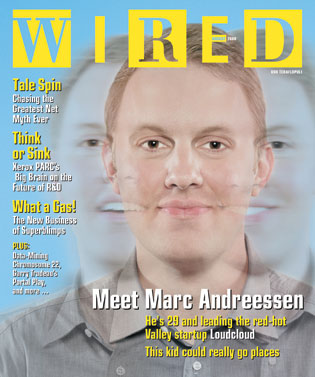
During the early days at Loudcloud (which became Opsware), I was fortunate to get to travel a great deal with one of the four founders of the business, the legendary and prolific Marc Andreessen. On one of these trips, in early 2000, I was asking Marc about how he was assembling the board for Loudcloud and why he had recently recruited Michael Ovitz to the board.

Of course I knew of Michael Ovitz, the legendary Hollywood super-agent and founder of CAA – but I wasn’t sure how this background was relevant to the technology company we were building. Marc’s response to my question was fast and clear to (and a bit dismissive, but Marc responded to most of my questions that way):

“I want every advantage I can get to build this business. And that includes the board. Michael is a great entrepreneur – he knows how to build a service business and can help us increase our profile, talent-acquisition model, and approach to client relationships. Plus, he is outside of The Valley and brings a fresh perspective that we can’t get anywhere else.”

Now Marc is a special talent and has for a long period of time played at the highest level of power and influence in the technology industry, so his ability to attract talent to his board – even back in 1999 – falls into the category of outlier.

But my point here is that Marc was both clear about what he was looking for and how it could help him build a business. And then he went out and recruited board members that fit this profile. (See a great interview between Marc and Michael here)

BOARD? GO SHOPPING

If you think about this perspective and ask yourself a few questions, I expect you will think a bit differently about who is on your board and how each member can do more to help you win in your business.

  1. Are you getting the right level of feedback from your board around key strategic issues?
  2. If you think about the 2–3 top strategic issues the business is facing, do you have expertise on your board to help you address these issues?
  3. If not, do you have a plan to develop your board in a logical, thoughtful way to change the composition for better alignment between #1 and #2?

When I was running ServiceSource, I took this learning to heart and consistently looked at my board to see if I had the best talent in the room to help the business grow and succeed.  And with each important milestone that we were looking to achieve, I would try to find a board member to help the company get there.

This helped me get board members with experience in international expansion, sales and marketing, cloud application and even financial expertise when we were getting ready to go public.

And I shared this mindset with the board openly and regularly, so they became part of the process and understood exactly where I wanted to take the board.

WHAT AL DAVIS TAUGHT ME: JUST WIN.

As an entrepreneur, you have a really, really hard job, and rarely do you have a lot free time to devote to things that are not going to help you compete and win in the marketplace.  I know firsthand just how hard it can be to deal with a board – and I can understand why a lot of entrepreneurs see little or no value in dealing with the board.

But if you think about your board – both management and composition – a bit differently, you find you’re missing a key trick.

Al Davis, the late, great and notoriously fiery owner of the Oakland Raiders was fond of summarizing his management philosophy with his head coaches in very simple terms:

As the entrepreneur, you are the head coach and your job is to win. It really is that simple.  So if you want to win, it is pretty important to think about how you can get more from your board to help you make this happen.

  • DON’T treat your board like a mushroom. It might be easier to run the business in the short term with this approach, but it isn’t sustainable and, more importantly, you are missing a real opportunity to get their input on the RIGHT issues.
  • DON’T treat your board like they are running the company. That is your job, and you have the responsibility and perspective that no one else really can understand. So keep your board in the loop, seek their input, and engage them openly. But remember my magic phrase (trust me, you will use it more than you think), and know the difference between running the show and board governance.
  • DO assemble a board that can be a strategic weapon. You need *every* advantage you can get in your fight, so think about how the right board member can help you get leg over the competition. Be clear about what needs you have and how a particular skill set on the board can help your business grow – and then aggressively recruit for a top talent to fill this spot on your board. You will be surprised by how much this can help you on the journey.

Think of your board like any weapon in your arsenal, then just win, baby. Just win!