
Categories
E2E: News

A VC, an Entrepreneur and a Serial Killer Dial Into a Virtual Sports Bar

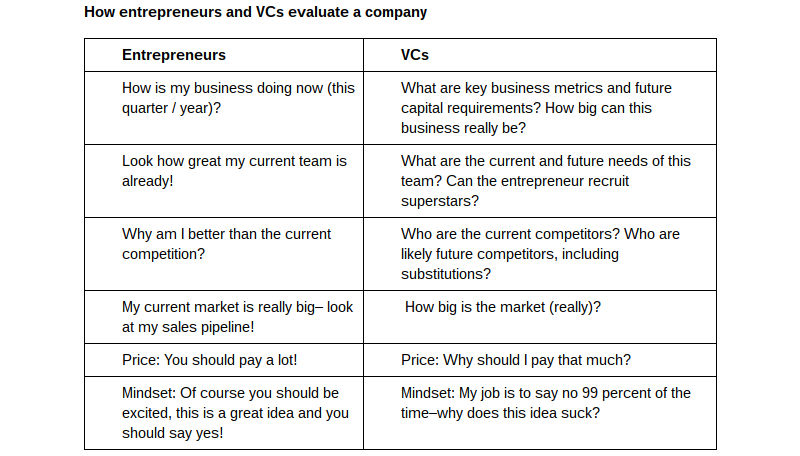
How entrepreneurs and investors can use their respective insanity to work together and drive better alignment and results

(A version of this post appeared on Forbes)

Fund-raising is always tough. I originally wrote a version of this post a month ago to help entrepreneurs navigate the always trepid waters of fund-raising. In the past few weeks, with the outbreak of the COVID-19 pandemic, the challenges entrepreneurs face raising capital (along with everything else) have been magnified a hundredfold. Yes, you can still raise capital, but in these unprecedented times, it’s going to be a lot harder. Having been on both sides of the table in good times and bad, I’d thought I’d share some insights on how investors and entrepreneurs can work together in this uncertain environment. For some perspective, let me start by recounting two recent video conference calls…

At the end of a very long day, I logged out of my Zoom account for the day and shook my head. How did two video conference meetings on the same topic produce two totally different perspectives and agendas?

We were considering leading the Series A capital raise for a seriously innovative company. The first call, with a partner in another firm who was considering joining us in investing, was business-like, almost clinical. “This is a really exciting deal,” they said, “and we would be interested in investing if the valuation and terms make sense. Given this COVID-19 thing, we could probably jam them a bit more on terms, especially valuation.” Cold, impersonal and without emotion—just like any good serial killer in the Stephen King novels that fill my sleep with nightmares.

The second call, with the company’s founder, was packed with energy and emotion. “We want to build an amazing company, and we feel like we have established product-market fit,” they said. “With some more capital, we can continue to make our life mission a reality. Yes, COVID-19 is a real consideration but should have no long-term impact on our business model.” Highly emotional, passionate and enthusiastic—just like any of the great entrepreneurs who likewise must be partially insane to deal with maddening highs and lows of starting a business.

So, which was it? Was this a “deal” or a “life mission”? The answer depends on your perspective. Now, more than ever, it is incredibly important to understand the difference between the mindsets of the entrepreneur and the investor. As we all work through the panic, troubleshooting and adjusting financial projections, it is hyper-critical to be as balanced as possible. For both sides to achieve the outcome they’re looking for, it pays to understand the other side’s perspective. We all miss sports, among other things right now, so maybe a quick analogy will help…


The Golfer and the Quarterback

Sports fans know how to appreciate different perspectives. I like watching both golf and football (or at least I used to...now I try and remember what a live sporting event is actually like). But there’s a big difference in how Rory McIlroy (currently the #1 ranked professional golfer in the world) and Patrick Mahomes (Kansas City Chiefs quarterback and Super Bowl MVP) go about their jobs.

When McIlroy is about to tee off, he considers the variables (distance, wind, club selection, etc.) and then he takes an isolated action (the swing). When the ball leaves the club, the result is already determined, and he can only watch and contemplate the outcome. Even with a bad shot, he knows he’ll get 60-70 more shots that day. Consideration, decision and action, then watching the results and knowing that while each shot is important, no single shot will make or break the match. That’s the approach and mindset of an investor with a portfolio of investments to oversee.

Contrast that to a typical play in the NFL. Patrick Mahomes calls a play based on the current down and distance. He takes the snap, and all hell breaks loose. He must make multiple decisions based on the huge number of events quickly unfurling around him. After that play, he huddles with his team and quickly calls another one, all the while knowing one bad pass could cost him the game or he could be knocked unconscious—or worse—by a 350-pound linebacker who literally is trying to kill him. Chaos, uncertainty, making decisions on the fly: That’s a day in the life of a high-growth company. Every plan feels like it could be his last—he has no “portfolio”—and tomorrow seems like a meaningless consideration.

Rising Tensions at Investment Time

The contrasting approaches of investors and entrepreneurs meet head-on when it’s time for a company to raise a funding round. And if each side isn’t careful, what should be a momentous event in a company’s history can strain relations long after the deal is done.

It begins with the process of determining a point estimate, essentially the best guess at how much the company is worth. It’s almost ridiculously difficult, building a specific business case that takes into consideration terms, price, ownership and dozens of other factors. When markets and valuations are experiencing incredible volatility - as they are now - these differences get magnified dramatically. But the process is critically important to the investors. The sad part is that 99% of an investor’s success will be determined by the investment she chooses to make and the price that is to be paid for that investment. Just about everything else is noise.

While entrepreneurs are certainly on board for any deal that maximizes their price and minimizes the dilution of their shares, they also know that the details really won’t matter that much if they execute on their vision and plan. They don’t see much point in painstakingly determining a fixed point estimate when conditions change every day. The bulk of her success will be determined by the execution during the years after the investment—and if she is successful, the valuation and price paid at the time of the investment will be largely meaningless.

See the contrast inherent here?

It’s also critically important to note that investors are dealing with a portfolio of companies. They can afford to be wrong every now and then, provided there’s a big win mixed in along the way. For entrepreneurs, the success of their business is all or nothing. There’s nothing for them to fall back on. This simple fact can magnify an already conflict-ridden environment.

A Simple Solution For Both

When we consider leading an investment, we try to do a couple of simple things to bridge the gaps between us (as investors) and the entrepreneurs we are backing. It starts with an open dialogue. We sit down with the entrepreneur before any investment and share our business plan, our perceived investment risk and our expected valuation outcome for their company.

We also ask the entrepreneur to share with us what he or she most wants to happen with the business over time: hopes, dreams, aspirations and best-case and worst-case outcomes. At the end of this discussion, my favorite thing to do is to ask the entrepreneur one simple question. “Five years from now, we are sitting in a bar, and we are either celebrating a great success or drowning our sorrows. Tell me why either happened.” This question more than any other helps both of us get a shared view on what could go right AND what could go wrong – and start the relationship from the same perspective on both.

“Five years from now, we are sitting in a bar (not watching each other sip beer on our webcams), and we are either celebrating a great success or drowning our sorrows. Tell me why either happened.”

We also ask the entrepreneur to share with us what he or she most wants to happen with the business over time: hopes, dreams, aspirations and best-case and worst-case outcomes. At the end of this discussion, my favorite thing to do is to ask the entrepreneur one simple question. “Five years from now, we are sitting in a bar, and we are either celebrating a great success or drowning our sorrows. Tell me why either happened.” This question more than any other helps both of us get a shared view on what could go right AND what could go wrong – and start the relationship from the same perspective on both.

We also write an investment memo for every deal and share it with the entrepreneur. The memo spells out our thoughts on the deal—both the upsides and downsides—so that there’s full transparency.

When we do this, we get reactions like, “Holy cow. Thank you! I never understood how this works, and this helps me plan my business and board updates accordingly.” The entrepreneur understands our perspective, risks we see in the business and the outcome we are focused on achieving. From day one, we have a shared perspective.

Both a Hole-In-One and a Touchdown Are Worth Celebrating

The very best investor-entrepreneur relationships are based on trust and openness, along with a shared vision, goals and expectations.

It’s so important for entrepreneurs to know the key assumptions, financial metrics, and risk factors that the investors are considering. It might be scary to hear, but it establishes the right level of trust and communication with the investment team.

It is equally important for investors to get into the mind of the entrepreneur and understand what she does (and does not) want to do with the business over time.

A shared perspective and understanding not only builds trust and openness from day one, but it also provides a shared viewpoint when things do and do not go as planned. Maybe, just maybe, it can also cut down on the therapy bills for both—but that concept will require a much, much longer blog post to really do it justice!


Categories
E2E: Scale

The Greatest Competitor You’ve Never Met

This post originally appeared on Michael Smerklo’s Forbes blog on May 24, 2019.

'"People are busy. There are six billion people on the planet yet none of them wake up in the morning and think: ‘Geez, I wonder if there is a new product out there I should know about.'"

-Marc Andreessen interview on Brian Koppelman’s podcast

As a venture capitalist, I’m fortunate enough to be pitched by startup companies with exciting new businesses every day, each one convinced that they are building a massive business or claiming to disrupt billion-dollar marketplaces. It’s a familiar feeling. As a former CEO, I was constantly being pitched new solutions that would claim to revolutionize our workplace efficiency or magically solve a major operational pain point. (To be fair, this unabashed determination is key to being a successful entrepreneur or salesperson).

In these meetings, almost every pitch deck has at least one slide dedicated to the 'competitive landscape' and without fail, this landscape shows up as a two-by-two grid with different variables on the X and Y axes (expensive, on premise, hard to implement, etc.). Basically, the attributes are contrived for a favorable outcome and the presenting company magically shows up in the enviable position of the upper right quadrant.

-Marc Andreessen interview on Brian Koppelman’s podcast

These charts, or at least the market research behind these charts, are required, and I encourage entrepreneurs and salespeople to include them in their decks. Because even with clear biases, they provide a framework for a debate on the various merits of the business and solution the company provides.

-Marc Andreessen interview on Brian Koppelman’s podcast

However, there is one competitor that is NEVER on the grid, which is shocking to me in today’s overfunded startup environment. I think this omission is the greatest mistake startups make when thinking about raising capital, and more importantly, the greatest mistake when they’re going to market to win new customers. I would like to introduce this ominous competitor more formally:

-Marc Andreessen interview on Brian Koppelman’s podcast

'Ladies and gentlemen, in this corner, please welcome the undisputed heavyweight champion of the world. The 800-pound gorilla in space. The meanest, nastiness, most diabolic competitor you or your sales team will ever face: STATUS QUO.'

Or, simply put: Selling against inertia (or 'do nothing,' 'no decision') is a bitch. Or, simply put: Selling against inertia (or 'do nothing,' 'no decision') is a bitch.

Most startups simply ignore this alternative, and do so at extreme peril. I see so many companies spending millions and millions of dollars on marketing, branding, sales training and various collateral pieces that all focus on known, existing alternatives in the marketplace. Look at just about any sales deck or website and you will how ABC SaaS company is so much better than XYZ SaaS company based on price, ease of use or other important differentiators.

This competitive analysis is then turned into 'features/benefits' based positioning and messaging, which drives marketing and sales efforts focused on generating leads, communicating the value proposition and determining pricing. All of these efforts are focused on displacing known alternatives. None of this effort goes to attack the real issue for most early stage companies: doing nothing.

In short, most sales – certainly in enterprise – and plenty of pitches are killed by the silent but deadly alternative: Status Quo. Why is it such a strong alternative?

1) Business leaders (buyers) are really, really busy. Per the Andreessen quote above, people are constantly overwhelmed, so doing nothing is always a viable, and almost always preferred alternative. In today’s oversaturated startup landscape, breaking through the noise is really, really hard. So naturally, change is resisted and Status Quo becomes the easy choice.

2) New means that something isn’t working. Something isn’t working means someone – usually a mid-level executive – has to raise their hand and say: 'Yes, I work really hard, I get paid a lot of money and have lots of people that work for me…but I really am not doing my job well, so I need to buy something else.' Trust me, those meetings really don’t tend to go over that well with the CFO. The saying used to go: 'No one ever got fired for buying IBM.' But in today’s world, it’s more accurate to say: 'No one ever got fired for NOT buying the latest and greatest customer analytics tool (i.e. for sticking with the Status Quo).'

3) Pretty good tends to be ok for now (or longer). Companies love to talk about how their product will be something akin to 'life changing,' but the reality is, outside of emergency situations, the current solution is adding some value and is likely keeping things afloat. In short, most of the time pretty good (Status Quo) is good enough. Personally, every time I think about spending $5k on a new Peloton bike, I look at my current alternative (old spin bike + iPhone) and think 'not perfect, but it works.'

The good news? Like most other issues, there is a simple first step to overcoming the oh-so-tempting Status Quo and it really starts with acceptance. Yes, accepting and acknowledging the competitor is the best place to start, and it goes a long, long way in addressing the downstream issues that Status Quo brings to the table. Once you accept this competitor, and the strength of acknowledging it, the following will happen:

1) Your product / solution will be seen in an entirely new light. Acknowledgement of the Status Quo is the first step towards reworking all aspects of storytelling for entrepreneurs, so call out the 800-pound gorilla in the room. You will notice an immediate change in the conversation. By simply calling out the option – 'Hey you could pass / skip this / do nothing' – your audience will naturally see you as more authentic. This acknowledgement alone will spark a much different discussion than previously experienced (even with the same customer or investor), and will set you apart from all the other pitches.

2) You will see your strategic position in an entirely new light. Once you’ve begun integrating the Status Quo into your narrative, you will find that you need to modify your message to address this alternative in all parts of your business: fundraising, marketing, sales and strategy. It might even go so far as to force you to reconsider or modify your entire product or business strategy. While this sounds daunting, it is a much easier and cost-efficient exercise to undertake as opposed to the alternative: the long, slow death of disinterest.

3) Your go-to-market strategy will never be the same. Once you start tailoring your messaging to address Status Quo, you will begin to actually strategize about ways to overcome this competitor in prospecting. Your value proposition will be stress tested and driven to be more specific. This may show up as more exact 'F/U/D' (fear / uncertainty / doubt), more detailed ROI calculations or more extreme positive outcomes from buying/investing in your solution. Whatever it is, some of the greyness will be forced out of the value proposition and it will make your pitch to prospects much more specific and sharp.

So next meeting, do something different. Call Status Quo into your leadership team meeting and give it the proper respect it deserves. Then, just like you would do when any new competitor shows up, roll up your sleeves and figure how to kick its butt. It might not be easy, but beating Status Quo might just be the most important victory that you and your team ever have on your track record.

Categories
E2E: ATXnology

What The Economist Got Wrong About the Decline of Silicon Valley

This post originally appeared on Michael’s Forbes blog on September 18, 2017. You can read the original post on his blog here.

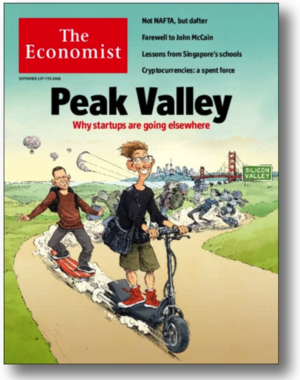
I never thought I would start a blog post with such an audacious claim about the journalistic acumen of The Economist. However, having just finished reading The Economist’s September 1st cover story on Silicon Valley titled: “a victim of its own success,” I felt compelled to note some items that the highly-regarded publication missed in its cover story.

As a quick aside added for perspective only, I worked in the tech industry in Silicon Valley for nearly 20 years, living there from 1997 to 2015. I decided to leave the Valley and relocate to Austin, Texas to start a venture capital firm called Next Coast Ventures. You might expect that I would celebrate any publication’s declaration of the “death of the Valley” as support for my own personal decision, but that’s not the case.

Many of the observations in the article about the challenges of living in Silicon Valley are dead on and support the assertion that the Valley has “peaked.” I’m going to highlight some of the more salient points in the article below because they’re noteworthy and I agree with them. However, it’s the conclusions the article drew from these assumptions that I disagree with.

Here’s what they got right:

The Valley is an extremely expensive place to start a company. As noted in the article, one founder “reckons that startups pay at least four times more to operate in the Bay Area that in most other American cities.” I am not sure it is four times more expensive, but in my experience, the engineering talent in the Valley is at least twice as expensive as it is in markets like Austin or Salt Lake City. This cost difference is not just for engineering talent in the Valley anymore – it is across the entire organization. So when an entrepreneur starts a company outside of the Valley, the capital required is lower and will last longer, allowing founders to avoid that nasty little thing called FOUNDER’S DILUTION.

New technologies are making it much, much easier to start a company just about anywhere. The article notes that “thanks to the tools that the Valley’s own firms have produced, from smartphones to video calls to messaging apps, team can work effectively from different offices and places.” Now, more than ever, talent can be sourced and located anywhere – so the need for entrepreneurs to limit their talent sourcing to one specific geography is simply irresponsible. This assertion, however, should not be seen as “anti-Valley,” but rather a great opportunity for anyone competing in the war for talent, regardless of geographic location.

The article is right about innovation happening everywhere: “Capital is becoming more widely available to bright sparks everywhere: tech investors increasingly trawl the world, not just California, for hot ideas.” At my firm, Next Coast Ventures, we are consistently amazed at the quality and quantity of great ideas from impressive entrepreneurs we see every day both in at our office in Austin and the Next Coast markets we routinely visit. The Economist article sees this as a strike against the Valley – however, I think this is the beginning of an incredibly exciting story about innovation and expansiveness, and the ability to build great businesses just about anywhere.

Per the vivid pictured painted by the article, the Valley is a tough place to live: “the nastier features of the Bay Area life: clogged traffic, discarded syringes and shocking inequality.” And don’t forget ridiculously expensive housing prices. I lived in the Valley for a long time and these factors have only gotten worse, not better, over the past 20 years. I miss the creative energy of the Valley and would argue there is no place like it on earth, but it is expensive, crowded, and in some ways, a bizarre place to live and certainly a hard place to raise a family.

Competition for talent, especially engineers, is intense: “Apple and Facebook pay their employees so generously that startups struggle to attract talent.” This is very, very important point for any entrepreneur looking to start a business. Five or ten years ago, startups in the valley could lure away talent with the promises of big equity upside thanks to low pay and stagnant equity prices at the tech behemoths like HP or IBM. But now at companies like Facebook, the median salary of an engineer is not only $240,000 (according to The Economist’s article), but Facebook’s stock has also increased 268% over the past five years. Therefore, the risk-reward equation for an employee with a hefty salary and competitive stock options to leave a large company to go to a startup is a much, much harder calculation than it has been historically in the Valley.

These are all significant, astute data points that are certainly pointing to a tangible shift in the innovation and investment ecosystem in the Valley, but the conclusions the article draws from these inflection points is where my aforementioned strong disagreement with the esteemed Economist comes in.

Here’s what they got wrong:

All of these points are compelling reasons for any entrepreneur to consider starting and growing a company outside of the Valley. However, I disagree that all of these signs point to less innovation, lower opportunity and the inevitable downfall of the Valley. I would assert, rather than “peak Valley,” this all points to the massive opportunity for “Next Coast” markets to help drive overall global innovation and entrepreneurship.

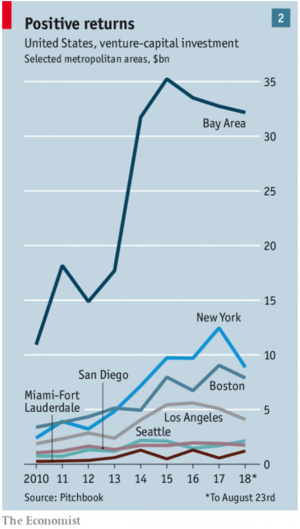
I simply do not agree that these are “signs that they Valley’s influence is peaking.” The article highlights that “in 2013 Silicon Valley investors put half their money into startups outside the Bay Area; now it is close to two-thirds.” The flow of capital into “Next Coast markets” is not a sign that Valley’s influence is waning – far from it. Ask any entrepreneur if they would turn down interest from the preeminent Ventures firms in the Valley (Benchmark, KP, A16Z, etc.) and they would say “heck no.” Rather, this flow of capital is really a good sign of what Steve Case calls “The Rise of the Rest.” That is: innovation is happening everywhere – and the Valley will always be the epicenter – but it is now ALSO happening in a much more prevalent manner in markets outside of the Valley. It is shortsighted to believe that as talent, innovation and capital spread from the Valley that its influence won’t come with it – and there is clearly enough to go around.

In summary, I would assert that the article is only half right – the data points they highlight about Silicon Valley are correct, but their assumptions about what that means for the future of innovation are wrong. What is really happening is not as the article claims a “warning that innovation everywhere is becoming harder,” but rather a timely, exciting opportunity for areas outside of Silicon Valley – what we call “Next Coast markets” – to grow and prosper as additional, rather than replacement, innovation hubs. Cities like Austin may never replicate the Valley (and that is okay), but instead are well on their way to becoming a different, but equally appealing, innovation hub for the next generation of great technology and technology-related companies – and we’re excited to be here working with those companies every day.

“It is shortsighted to believe that as talent, innovation and capital spread from the Valley that its influence won’t come with it – and there is clearly enough to go around.”

Categories
E2E: Scale

I Am the CEO, Why Am I Confused About How I Should Spend My Time?

How a simple 2 x 2 matrix can help you become a better entrepreneur by understanding the key differences between efficiency and effectiveness.

A recently published New York Times article talked about how our brain tricks us into doing less important tasks, shining a light on how complicated the delicate art of time management can be.

You’d think that, living in an era of technology-enabled efficiency like we do, it would be simple to manage our time. We have time management apps to handle deadlines, reminders, workflows and all the nitty gritty details of delegation. But most of these solutions are focused on EFFICIENCY (doing things right), not on EFFECTIVENESS (doing the right things).

As an entrepreneur, this problem is multiplied exponentially. How and where you spend your time is more valuable than anything you have in your control. Before you ever get to automated workflows and collaborative calendars, you first need to figure out the basics of delegation.

I struggled with this topic as a young entrepreneur and tried every trick imaginable. I found myself wasting hours on tasks someone else could do better, perhaps because I enjoyed doing them. Other tasks I mindlessly handed over to others in the spirit of delegation, even though I was uniquely qualified to complete the task myself.

Unless you are acting as a sole proprietor, the challenge of balancing time management, capital utilization and strategic priorities is a never ending tug of war. And as your business starts to grow and scale, this tug of war becomes increasingly complex. You are faced with countless things to do with limited capital, time and team members.

Michael Smerklo, Co-Founder and Managing Director of Next Coast Ventures

At some point along my entrepreneurial journey—about the time that I was about to either get fired or committed to a mental institute—one of my mentors shared with me a simple four-step process based on the Eisenhower Matrix that helped me with this never-ending dilemma of time management. In fact, this exercise became an annual obsession for me as I sought the optimal formula for entrepreneurial success – in a growth company, the CEO’s job changes almost every three to four months

Step One – Use a 2×2 matrix to figure out what you are uniquely qualified to do

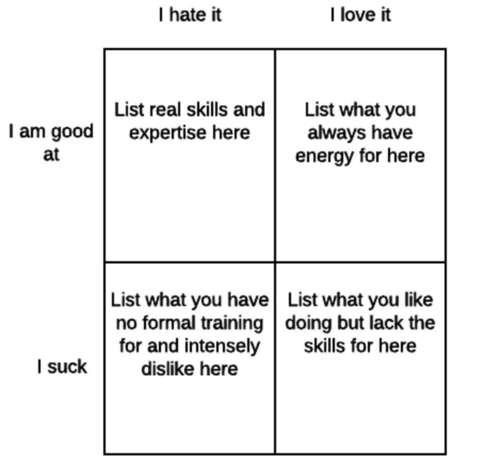
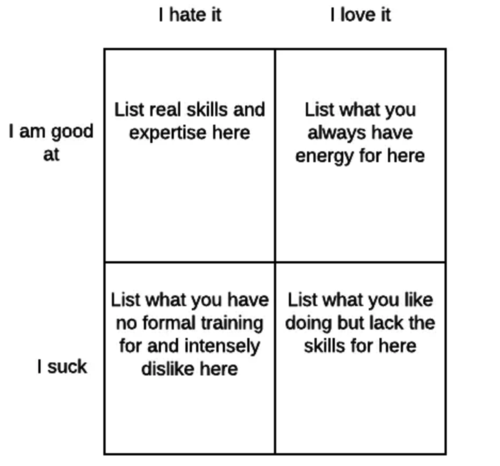
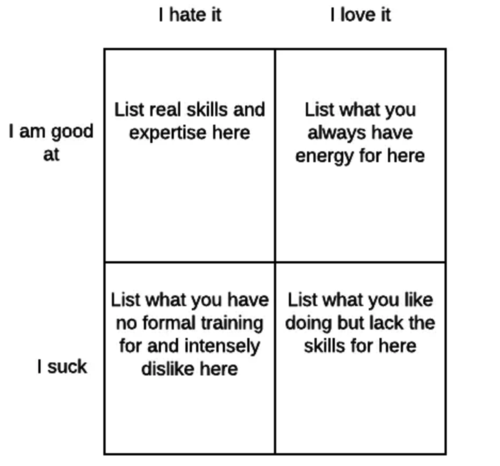
First, create the following 2×2 grid, with the y-axis describing your skill (either good or bad) and the x-axis describing your passion (love or hate) and list a couple of business functions that fit in the various boxes. The key is to figure out exactly what box a particular skill should fit in.

Here are the high level definitions in a bit more detail:

  • Upper Right – I am good / I love it: What task are you, as CEO, really good at doing? Not the things you think you are good at, but rather things that you have verifiable proof that you are uniquely qualified to complete. The key here is not only to determine what you are good at, but to assess how much you enjoy this part of your job.
  • Upper Left – I am good / I hate it: What are the tasks that you are actually quite accomplished at (naturally or from prior training) but bring you no pleasure? For example, I started my career as a CPA so I was actually very good at the financial part of the business, but I dreaded the annual budgeting process. The key here is to feel okay with this box too—not one loves every aspect of the job, not even the CEO.
  • Lower Right – I suck / I love it: This is a pretty dangerous quadrant and one that is likely the hardest to have an accurate read. Do you love engaging in deep product reviews … but flunked out of CS early on in college? Do you see yourself as a natural born sales person, but have never carried a quota in your life? Look long and hard at this box — as it is really, really is an important exercise in self awareness.
  • Lower Left – I suck / I hate it: Usually this seems to be an easy box to fill out, but this quadrant can be a real trap for a lot of entrepreneurs. The key is to make sure you really do suck at the function versus just don’t enjoy it. It is really easy to confuse these two emotions (enjoyment versus proficiency). Challenge yourself to make sure you aren’t actually quite good at something you don’t enjoy or vice versa.

Step 2 – List your company’s top priorities for the next six to twelve months

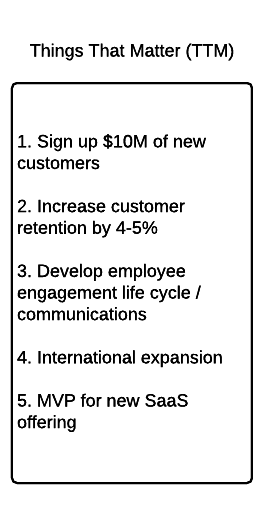
This should be pretty straight forward from your budget or business plan. Think of the four to five things that if completed will really move the needle for your business. Do you need 20 paying customers in the next 12 months? Is launching the next version of your product critical to moving the business forward? Or maybe your key outcome is centered around international expansion?

As a guide, these should be the tied to key metrics that you have shared with your board or that you have decided are critical for your next round of funding. Basically, your goal here is to list the four to five things that really are “make it or break it” for your business in the next 12 months. Here is an actual list I kept on my desk as a CEO—I called them the “Things That Matter” or TTM.

Step 3 – Compare your grid with your top priorities

Next, take a quick look at your grid. Take special note of how many of the top priorities for the business fall into the upper right quadrant of your grid. Here is an image of my grid from the early days of my CEO tenure:

By reviewing this grid against your top priorities, you can quickly determine where the gaps are and make decisions as to what you will focus on personally. You can also see where some big gaps might be and these should be your immediate focus as it relates to your team.

If your top goal is to acquire 10 new customers, but you hate selling, you better have a great sales leader on your executive team. If not, get hiring ASAP! On the other hand, if “get MVP in the market” is your key goal and you just happen to have spent five years in Product Management at Google, chances are that you can drive this outcome without a big external hire.

Step 4 – Allocate your time based on the grid

One mantra I learned early on was another simple concept: It is far easier to use the skills you already possess than to acquire new ones. In short, spend your time playing to your strengths and hire a team to overcome your weaknesses. For the grid, this means spending as much of your time in the upper right quadrant (good, love) and building out a team for the other areas of the matrix.

By using this quick four step process – and comparing it to your top business priorities – you can quickly see what areas you should engage in (even temporarily) and what areas you should quickly seek help in. This is, after all, the essence of effective delegation and time management.

NOTE: This post was originally published on Richtopia.

Categories
E2E: Scale

Advice for Entrepreneurs on Board Management: Mind the Information Gap

This post originally appeared on Forbes.com on March 28, 2018 where Michael Smerklo is a regular contributor.

This post originally appeared on Forbes.com on March 28, 2018 where Michael Smerklo is a regular contributor.

When you’re a CEO, you have countless things to do every day. You are always pressed for time, you’re being pulled in a million different directions and you’re hyper-focused on growth. So you have to prioritize these never-ending tasks, and it’s only natural that tasks with *seemingly* little value-add get pushed to the bottom of the to-do list. Frankly, that’s how I used to feel about my Board of Directors.

I felt it was a ‘necessary evil’ of my new gig as CEO: one that I knew I had to eventually deal with, but felt wasn’t going to be instrumental in helping my company. I didn’t get much insight from them when we met so why should I dedicate any of my already-sparse time investing in a relationship with them, right? Wrong. I was very wrong.

Michael Smerklo, co-founder and managing director of Next Coast Ventures

One, simple conversation with a mentor led me to realize that a Board can be the pivotal difference between success and failure during your entrepreneurial journey. You will be tempted to de-prioritize your Board in lieu of other initiatives that seem more important, and frankly are more enjoyable. Resist that temptation. You just have to take a step back and learn how to handle them and their expertise in the context of you and your company’s goals.

Before I divulge the conversation that changed my perspective on my Board, let me assure I was making classic “Founder moving to CEO” mistake.

For the first few years I was running my company, I didn’t really engage my Board in a strategic manner and kept most of the meetings high-level – making sure that I had every question answered before I even walked into the boardroom. I would fill my Board decks with pages of details on topics I knew I felt were solid, preventing any sort of critical discussion from materializing.

I wasn’t trying to hide anything, I just wanted to ‘check the box’ of my Board meeting as quickly and painlessly as possible because I didn’t understand how to get much from them – individually or collectively. I was treating my Board as an overlord that needed management instead of an arrow in my leadership quiver, and my frustration grew after every Board meeting when I realized these meetings were often interesting, but never compelling.

Although the change in how I approached my Board did not happen overnight, I owe a debt of gratitude to one of my best Board members, Bruce Dunlevie, founding partner of Benchmark Capital, the preeminent venture capital firm in Silicon Valley. Bruce could see what was happening from a mile away – he had seen so many other entrepreneurs fall into this trap – and he could empathize with me and my effort to deal with a powerful Board.

So after one particularly frustrating meeting, he pulled me aside and asked me one critical question that changed how I viewed my relationship with my Board by focusing on what I now call the: ‘Entrepreneur-Board Information Gap.’ He asked:

“Mike, does anyone on the Board know as much as you do about your business? Seriously – how big is the gap between what you know about the operations versus what the Board even understands about the business. Have you taken this gap into consideration when building the Board agenda and supporting materials?”

As I reflected on this question – keep in mind, reflecting on questions like these is not a natural exercise for most entrepreneurs – I quickly noted that I spent at MINIMUM 80 hours a WEEK thinking about my business, while my average Board member thought about the same topic for AT MOST 40 hours a YEAR. This is a HUGE discrepancy, and noticing this delta – this gap – is probably the most important realization for any entrepreneur managing their relationship with their Board, setting an appropriate agenda or building a compelling Board deck.

Simply put, the biggest mistake most entrepreneurs make when working with their Board is not minding the information gap – the Entrepreneur-Board Information Gap, let’s call it ‘EBIG.’

The EBIG dictates one, simple rule: don’t attempt to get your Board up to the same level of understanding as yours, rather, use this information gap to your advantage. That is, being aware of the EBIG and how to leverage it becomes the key to turning your Board into one more arrow in your quiver that will help you build an amazing business.

One specific way that minding the EBIG changed my approach to my Board was learning to strike a balance in my Board materials that was a good mix of key operational updates and open-ended strategic discussion. You will be amazed at how much you can get out of your Board in short order when you stop spending all your time trying to get them up to speed, or wasting time prepping abundant Powerpoint slides in an attempt to answer every question in advance of the meeting.

For instance, I used to spend 90 minutes of a four-hour Board meeting – and hours of prepping the meeting – providing an ‘executive summary’ of the current state of operations of my global business. I thought: How could they really give me any feedback if they didn’t thoroughly understand the state of the business that I worked with every day? But then I thought of the EBIG.

My Board of seasoned executives wasn’t there to dive into the details of the operations. That was a waste of their valuable time, and a waste of mine. They didn’t need those details to understand the big picture of the business and provide me with the high-level insights I was desperately seeking.

Instead, after Bruce’s invaluable feedback and direction, I modified my typical 15-page ‘executive summary’ down to one slide. This slide had three sections: 1) What’s Working, 2) What’s Not Working and 3) Implications (of both). This one-page slide served as the springboard for repeatable, meaningful and open-ended Board discussions thereafter.

So no matter how busy you get, or how much is on your plate as a CEO and an entrepreneur, remember that working with your Board is a non-negotiable part of your job description and a necessary component to making your company successful. So don’t resist their feedback. Instead, take a step back, reflect on where you could use input and present it in a way to make that easy – or as I like to say: mind the EBIG.

Bruce Dunlevie

Building these types of judgment-free relationships is an endeavor that lasts a lifetime, and like any good relationship, having a strong network takes upkeep. It’s an active exercise, not a passive one. Just as you evolve as an entrepreneur, your mentorship circle should evolve as your business and personal needs change.

For example, when I was first getting started, it was critical for me to get advice from those who were highly engaged in startups and understood all the key issues that getting a business off the ground entails. Simple suggestions about hiring, board meeting agendas or what payroll systems work best all helped me avoid mistakes others had already made and also saved me countless hours.

However, when my company was a more mature and I was working to shift my business model, I proactively shifted my mentorship circle.

Whenever I am fortunate enough to retire and look back at the ups and downs of my career, I am going to have a lot of thank you notes to write. Without my mentors, it wouldn’t have just been a dealbreaker for some investors I met along the way, it would have been a dealbreaker for my career. So do some self-reflection, check your pride at the door and seek out those who will be able to make you a better entrepreneur, and a better person. It is the weak leader who believe they need to do it all themselves.

For instance, Ben’s advice on hiring was critical to me when I was going through the startup phase and hiring the first 50 employees. However, the ‘critical’ input I needed running a 3,000 person, publicly traded business was much different. I found myself needing to recalibrate my mentorship network. So I—once again—made sure my humility was still fully intact and proactively sought out seasoned, C-suite executives to help guide me through this new phase of my career.

Categories
E2E: Scale

To Avoid An Entrepreneur’s Biggest Dealbreaker, Find A Mentor

This post originally appeared on Forbes.com on December 5, 2017 where Michael Smerklo is a regular contributor.

Entrepreneurs walking into a meeting with potential investors are usually armed to the teeth with data points about their business idea. Looking to avoid investors’ dealbreakers, most spend hours prepping for questions about their competitors and the market size for their product.

However, when entrepreneurs sit down with me to talk about investing, I ask them two seemingly unusual questions that can make or break my decision:

‘Can you tell me what mentors you have now? How do you lean on these relationships to help solve any key problem you are facing?’

Why hang so much on a question that has nothing to do with a business model? Because unlike any other profession, being an entrepreneur means fully committing to the successes and failures of an enterprise. The roller coaster of emotions that an entrepreneur faces is staggering. There are extreme highs that bring moments of euphoria and excitement, followed quickly by extreme lows—often in the same day—that breed crippling self-doubt.

Michael Smerklo, co-founder and managing director of Next Coast Ventures

It is a heavy, heavy burden and one that you should not bear on your own. In order to not only be able to pick yourself up after these roadblocks, but to move on constructively, you must have one simple thing: a mentor. There is no way around it.

It could be a loss of a major customer, a new unexpected competitor or an unfortunate series of poor judgment calls that can short circuit your confidence and leave you questioning your ability to remain as captain of the ship. Mentors give you the context, guidance and support you need when you may not know how to move forward. Without them, you are blindly riding the roller coaster instead of using the latest GPS technology to navigate the best path.

Now I have to admit, acknowledging I needed to curate a support system to give me guidance during these troubling times in my own entrepreneurial journey was one moment of realization. But being able to actually swallow my pride, ask peers for help and incorporate their advice into my business practices was a whole different obstacle to overcome.

Soliciting this type of help is not a weakness, it is a strength. Pride has no place when it comes to building your mentor-mentee relationships.

I remember early on in my career I took my first operating role with a then-unknown CEO named Ben Horowitz. I was tasked with hiring team members and was frustrated with how many interviews my star candidates were forced to go through just to get an offer. I had always thought I was great at spotting talent and didn’t understand why I was unable to get handle on the hiring process. So I complained to Ben—loudly, as usual—about this seemingly unnecessarily elongated exercise. I will never forget his response. He had seen the culture get eroded at Netscape by a failed hiring process and he was committed not to repeat it, he told me: ‘The first 10 employees are key, they hire the next 50 employees. And once that is done, the culture of the organization is largely set. That is why we are so focused on making sure we all hire great employees from the start.’

That type of advice from a mentor is invaluable and was incredibly important to me not just when I first heard it, but also a few years later when I was starting out as a first-time CEO. But taking that advice meant I had to step back, swallow my pride and recognize how little I knew about building a culture and an organization. Once you have your first powerful mentor-mentee moment like this, it becomes easier to see the value of these relationships.

So now that you’ve realized you need a mentor and you are willing to be open about your self-doubt, now what? Picking an effective mentor requires just as much self-reflection.

There are three things you should look for when tracking down a mentor:

  • Somebody who knows you and understands how you think
  • Somebody who understands the subject matter that you are dealing with
  • Somebody who has the wherewithal to give you objective advice

A mentor that encompasses these three attributes will be able to help you get to the root of the issue, empower you to regain your courage and equip you with tools to go back to doing what you do best: building an outstanding business.

Once I realized that I needed to be on the lookout for mentors like these, I naturally became more enthusiastic, self-aware and open to networking. Sure, I proactively sought out these relationships at industry events or through my existing network, but as I humbled myself and opened up to the idea of asking for help, these beneficial relationships also began to happen organically. It’s not just about blindly asking people on LinkedIn for coffee, it’s about approaching people with as much thoughtfulness and consideration as you would potential investors for your dream business.

As my mentorship network grew, I realized that each mentor offered me a different perspective and that the more data points I had, the clearer my vision was of how to move forward.

That’s why having one mentor is necessary, but having half a dozen is fantastic.

Building these types of judgment-free relationships is an endeavor that lasts a lifetime, and like any good relationship, having a strong network takes upkeep. It’s an active exercise, not a passive one. Just as you evolve as an entrepreneur, your mentorship circle should evolve as your business and personal needs change.

For example, when I was first getting started, it was critical for me to get advice from those who were highly engaged in startups and understood all the key issues that getting a business off the ground entails. Simple suggestions about hiring, board meeting agendas or what payroll systems work best all helped me avoid mistakes others had already made and also saved me countless hours.

However, when my company was a more mature and I was working to shift my business model, I proactively shifted my mentorship circle.

For instance, Ben’s advice on hiring was critical to me when I was going through the startup phase and hiring the first 50 employees. However, the ‘critical’ input I needed running a 3,000 person, publicly traded business was much different. I found myself needing to recalibrate my mentorship network. So I—once again—made sure my humility was still fully intact and proactively sought out seasoned, C-suite executives to help guide me through this new phase of my career.

Whenever I am fortunate enough to retire and look back at the ups and downs of my career, I am going to have a lot of thank you notes to write. Without my mentors, it wouldn’t have just been a dealbreaker for some investors I met along the way, it would have been a dealbreaker for my career. So do some self-reflection, check your pride at the door and seek out those who will be able to make you a better entrepreneur, and a better person. It is the weak leader who believe they need to do it all themselves.

Categories
E2E: Scale

Know Thyself, Know Thy Leader: Steps To Hiring A Successful Sales Leader

Michael Smerklo

Many parts of scaling a business are about the basics, the time-honored fundamentals that CEOs have used time and time again to grow a company. These pillars of running a successful business rarely warrant exceptions, but there are some business functions that require a leader to develop their own formula for success — unique to their product and unique to their company culture.

This is especially true when it comes to picking a sales leader.

Take it from a former CEO that has lived the pain of this personally: Sales excellence and hiring great sales leadership is the most important determinant of success for a high-growth company looking to scale.

Unlike like other business initiatives — such as choosing a CRM system or designing the company’s web site — hiring a sales leader does not allow for a generic, one-size-fits-all formula. Rather, it is a unique learning process, one that each CEO must sit down and take an introspective look at to develop — and then learn to repeat. When approaching a complex business problem like this, the key is to peel back the layers to get to ‘first principles.’ From there, you can build a great business with the right leader for your specific sales process at the helm.

Along my entrepreneurial journey, I made a ton of mistakes with this challenge before finally nailing down the formula that led to a successful, scalable solution for finding my head of sales. Let me save you from making the same mistakes by sharing those growing pains.

At first, I did what most first-time CEOs do with sales hiring — I assumed that the only thing I needed to do was “hire the right Head of Sales”.

I was convinced that scaling the sales function was entirely dependant on making a great leadership hire so that is what i focused all of my energy on. And because I never hired a Head of Sales before, I relegated my interview process to time honored sales attributes — chronological resume review and basic questions about historical results and quota obtainment. This formula led me to fall in love with candidates that fit into a quintessential salesperson mold. Alas, I was dumbfounded when these great-on-paper hires failed at selling our software.

A prime example of this was the very first vice president of sales I hired — let’s call him Fred. Fred was one of the best interviewees I had ever met. He had long track record of sales success, extolled wisdoms about sale processes and swore up and down that he would hire an amazing team of ‘his guys’ that would drive us to sales greatness.

Well, Fred failed to sell anything, and his sales team of Fred carbon copies failed to sell anything either. So I fired him and found that not only had my business not scaled from a year earlier, I had actually gone backwards. So what went wrong?

It turns out I didn’t really understand my own customers’ buying process at all. Don’t get me wrong, I was deeply involved with our customers and understood our value proposition cold. But Fred never stood a chance because I hadn’t done my own objective research on what it would take to build a repeatable, scalable sales process of our unique ‘buyer’s journey’ for the organization.

How was a sales leader supposed to optimize the sales process when we didn’t even understand what our sales process was — and what it wasn’t?

This realization brings me to the first step of this process. And step one, like most business challenges for young CEOs, starts with stepping back and reflecting. Reflecting on what is truly unique about your business and the needs of your customers.

Start with simply determining how you are winning at sales. You do that by looking at the very end — the closing of the sale — and working your way backward. Ask yourself some basic questions about your product, who closes the sale, and how they got there. If you, as CEO, are heavily involved in sales, what do you specifically do in the process to help close the sale? Are you selling a transactional, high volume solution or a large, complex enterprise product? What attributes of your solution matter most: ease of implementation, financial benefits or cutting-edge technology?

Essentially: think about what makes the ultimate buyer say ‘yes,’ and painstakingly map out every step of the process from there.

An integral part of guiding this mapping exercise entails looking at your very best sales leaders and spending time understanding what they do to be successful. Is the sales leader enlisting a team with scrappy, cold-calling tactics or is it interconnected industry veterans that are networking their way into a sale? Is depth of product or industry knowledge key to sales success, or is it more important to build compelling financial models to win the day? Nailing down these sales leaders’ strategies is when your unique formula starts to take shape.

The next step gives your formula its teeth, it does this by taking the proven sales process and mapping out what attributes are needed in a head salesperson for them to be successful — and to a lead a team that will be equally as successful.

Identify the repeatable techniques and personality traits of the sales representatives that allows them to win at selling your product. Only then can you begin building a recruiting, hiring and training program that is tailored specifically to test for these attributes in a sales leader. This is crucial, because many CEOs try and clone the first principles that the sales process and your company culture rely on. However, it is cloning the attributes and techniquesthat nourish those first principles that allow your sales leadership thrive with your specific process.

For instance, looking back at my mistake at hiring Fred, it was clear I didn’t really know why and how we were winning sales with our product. I hadn’t mapped out the attributes necessary to make our sales leader successful in our particular brand of sales. So how in the heck was good-on-paper Fred supposed to come in and champion a sales process we didn’t even understand?

When analyzing what your optimal ‘Fred’ is like, it can be just as important to know which attributes you don’t want as it is to know which attributes you do want in a sales leader. There are many ways to vet these potential executives to see if they have the personality, techniques and experience to succeed in your particular formula for proven-sales glory. We liked a case-method of interviewing, but there are others like personality assessments or role playing sales scenarios that can force interviewees out of their classic salesman routines and into your specific buying process.

Once you have decided on an interview process and appointed a successful leader, be sure to track your sales leader and their team’s success over a six, twelve and eighteen-month period. Make sure that the formula you invested so much time, energy and hard work into is still getting it right. As market conditions shift, you may need to develop a formula 2.0, but as long as you are committed to understanding the unique ways the sales team works with your product, there is no reason you can’t consistently have a thriving sales leader at the helm.

Don’t cut corners with this seemingly tedious and elongated plan — and don’t assume that scaling sales is all about making one great hire.

Getting sales right is the key to taking your idea, dream or emerging growth to the next level. Only by knowing thy self will you be able to know thy sales leader when you see them.

Categories
E2E: Scale

The 3 Mistakes I Made Learning To Manage Time

This post originally appeared on Forbes.com on January 4, 2018 where Michael Smerklo is a regular contributor.

As a CEO, smart time management is critical to success. Let me tell you a dirty little secret: It doesn’t always come naturally, especially to entrepreneurs that become executives.

When I was just starting out as an executive, I found myself struggling with a seemingly infinite to-do list and not enough hours in the day to get everything done. I was determined to break the cycle. With practice, self-awareness and a few strategic adaptations, I learned how to correct what used to be my biggest time management mistakes:

Mike Smerklo, co-founder and managing director of Next Coast Ventures

1. Wanting to spend time doing what I’m good at, when I should have been delegating.

By definition, CEOs are doers. We are committed to our company’s core purpose and are ready to work hard to advance our goals. It excites us, it invigorates us and it imbues us with a hero’s mentality: the idea that we are the only one that can bring the necessary experience and the perspective to successfully complete a task. And we’re willing to work ourselves ragged to do it.

For example, when it came to going on sales calls, I always found myself ready to jump on a plane to fly across the country to attend a sales meeting. I liked them, I was energized by them, and I felt like I was adding value to the company. After some reflection, though, I realized that just because I have that skill doesn’t mean that others don’t. I was spending a ton of time doing something that in most cases, I could have delegated to a trusted, qualified employee. My own time could be better spent elsewhere.

Now, I focus on tasks that I am uniquely qualified to do. When my instinct is to say yes to yet another commitment, I stop and question myself to determine whether it is simply something I enjoy, or whether there is someone else who is equally skilled for the job. It also means knowing when to say no, even when you may disappoint someone – or yourself.

2. Staying busy instead of staying effective.

It is easy to fall into ‘the busy trap,’ as described by Tim Kreider in his article for the New York Times. It’s where we run around talking about how busy we are, but not really putting a lot of thought into where all of our time is going and why. The temptation here is clear: as long as we’re always doing something, no matter what that something may be, we can tell ourselves that we are productive. We find comfort that we can pat ourselves on the back for ticking boxes off of our seemingly never-ending checklist.

Photo courtesy of Steve Buissinne, Pixabay.

But what if we’re ticking off the wrong boxes? Staying busy doesn’t necessarily make us productive, and it certainly doesn’t mean we’re being effective. It usually just drives us to chase tasks that are easily within reach instead of the ones that are most important.

I often used to find myself seeking that rush of instant gratification, so I’d send yet another e-mail or even decide to fly and visit some small customer just to feel like I was getting something done, even if it wasn’t necessarily the most important priority.

Lately, I’ve been able to overcome that urge for immediacy by starting my day meditating for 20 minutes. This practice allows me to clarify my thoughts and helps me to take a step back away from the hustle and bustle. After meditating, while I’m still in a clear state of mind, I write down the two or three most important things that I want to get accomplished for the day. This helps to hold me accountable, making sure that I don’t trick my mind into believing I’m productive when I’m really just busy.

3. Using procrastination to avoid tasks I didn’t like.

Even after I started sticking to my carefully crafted list of the most critical tasks to accomplish, I found that the task that I was most dreading somehow always made its way to the bottom. I’d start with the easiest or most comfortable task, and save the most uncomfortable one for last.

Sometimes, it was something I was good at, but didn’t particularly enjoy. Like budgeting, for instance. Other times, it was something that I didn’t want to face, like firing an employee who I liked, but who wasn’t producing. Either way, I realized that there’s a thin line between sensibly putting something off and procrastinating, and that I was often guilty of the latter.

I discovered a two-step process to help me overcome my own delaying tactics. First, I began to rank-order my list in terms of priority and made myself tackle the tasks in order. If something was at the top, I had to suck it up and get it done. I wouldn’t let myself make excuses. If for some reason I decided that it wasn’t suitable for me to be the one to execute one of the tasks at hand – see mistake number one – I could then make the decision to delegate. Either way, my habit now revolves around not letting myself move on without addressing the task at hand.

Time is money, and so much more

There’s an overused saying in business that ‘time is money.’

But it’s more than that. It’s sanity. It’s self-satisfaction. It’s freedom. A better, more mindful approach to time management helps us get our priorities straight, leaving us more fulfilled both in the workplace – and in life itself.

Categories
E2E: News

Announcing Our Latest Investment: AlertMedia

Today, Next Coast Ventures is proud to announce that we have led the $8mm Series B round in Austin-based AlertMedia. This is a pretty big deal for us and we get the opportunity to work with a great local company led by a very talented entrepreneur.

Brian Cruver

Founder and CEO

Brian Cruver, AlertMedia’s founder and CEO, has spent the last four years building a really intelligent company with market-leading technology, and has surrounded himself with an incredibly strong team of Austin executives.

We are always first and foremost looking for the very best entrepreneurs building disruptive businesses in big markets, and Brian and his team couldn’t fit the bill any better.

AlertMedia had interest from just about every venture capital firm – both locally and across the country – so we are very fortunate that they chose Next Coast Ventures to lead the round. We’re especially thrilled to be part of a genuinely Austin-born company that is also backed by ATX Seed Ventures and Silverton Partners. Adding Next Coast to the investment group is proof of not just how vibrant the Austin investment ecosystem is for great companies like AlertMedia, but how local investment dollars can support these businesses throughout their lifecycle.

But wait, there is more…

We got really excited about AlertMedia because the market they serve is absolutely massive, the solution they provide is simple and intuitive, and the need for their technology grows more and more important every day. The solution they provide is highly visible not only here in Texas, but across the nation and even the world.

So, what exactly does Alert Media do?

They address an issue that is tangibly affecting people in the U.S. and beyond: crucial necessity and ease of communicating in times of emergency. They provide mass communication software that is powerful, yet easy-to-use. The dashboard enables customers to send and receive critical communications via any channel (voice, app, email, text, Slack, social media, etc.) using one simple, mobile platform. In short: AlertMedia helps organizations easily communicate more effectively through multiple channels, especially in times of emergency or change. If you open Twitter or turn on any news network and see Puerto Rico, Mexico City or Las Vegas, you know this is an issue.

In fact, AlertMedia recently helped dozens of their customers communicate during Hurricane Harvey, mitigating loss and improving safety outcomes for people during this natural disaster.



But it doesn’t just stop there, over half of AlertMedia’s customers use it for important day-to-day business communication and operational activities like setting schedules, dispatching deliveries and/or HR notifications.  Their customers are in over 80 countries across all industries, and with no nation or business immune to times of change, every enterprise is a possible customer of AlertMedia.

Our excitement about AlertMedia wasn’t just about the great product they had developed. The investment opportunity was also right in the intersection of two of our investment themes: the rapidly changing future of work and full-stack business models. We believe the future of work is changing as it relates to mobile workforce, BYOD and multiple communication channels (voice, text, messenger, etc.). These changes can make all of us more effective, but they can also make communication even more challenging and overwhelming. AlertMedia provides a clean solution that enables communication across multiple devices and modalities.

We also love full-stack business models because they can offer solutions in the marketplace that are comprehensive and easy to use. AlertMedia has both a SaaS and a monitoring solution – together, these two solutions offer its customers a cutting-edge product that is second to none in the marketplace.

 But, most importantly to us and our founding mission, this opportunity was a great fit for our “Built by entrepreneurs, for entrepreneurs” motto. We look to find the very best entrepreneurs who are building disruptive business in huge markets and try and help them in any way we can. Brian truly fits the model of one of the best entrepreneurs in the market, and he and his team have worked tirelessly to build a great company the old-fashion way: by maniacal focus on the customer. At Next Coast, we look to help our entrepreneurs just like this with every tool at our disposal – and we are proud to have been selected to partner with Brian and the AlertMedia team for the next phase of their journey.

Categories
E2E: News

Announcing Our New Entrepreneur in Residence and Two Technology Venture Partners

Today, we are very excited to announce some additions to our team that echo our commitment to building out a firm with a continual thesis around how can we bring the best and brightest minds to the entrepreneurs that we serve. We are adding Paul Rogers and Jim Dunham as Technology Venture Partners, and Adam Salamon as our very first Entrepreneur in Residence.

One of the things we were adamant about when we founded Next Coast was that we leverage our network of industry experts to help our portfolio companies reach new levels of growth. Our leadership already has such diverse expertise – whether it’s bootstrapping a business or taking a company public, we’ve been there. But the people that we are bringing into our network are aren’t just company builders, they are game changers. They are going to help us provide the insight, strategy and support to give our entrepreneurs the edge they need to be successful in this competitive landscape.

Jim Dunham has been in the technology industry for over 25 years and most recently served as the president of cloud and business intelligence at ServiceSource, a San Francisco-based software company. Paul Rogers is an alumni of Google and currently serves as chief technology officer of New York-based Namely Inc., an HR data platform.

Jim Dunham

Technology Venture Partner

Paul Rogers

Technology Venture Partner

Prior to Namely, Paul served as the chief technology officer of Austin-based RetailMeNot Inc. and as the vice president of engineering and operations at Austin-based Bazaarvoice Inc.

At the highest level, Paul and Jim are going to be our technology experts deep in product management and product engineering. They are going to be able to help our portfolio companies with their technology platforms, product market fit and how they can scale their technology.

Entrepreneur in Residence Adam Salamon most recently served as the founder and chief operating officer of Perk Inc, a mobile-first rewards and engagement platform that went public on the Toronto Stock Exchange before being acquired by RhythmOne PLC earlier this year. It is important to our firm’s culture to have a strong entrepreneur in our office helping us evaluate investment opportunities and figure out what they want their next project to be. Adam is a great entrepreneur with a strong track record and we want to be part of what he does next.

Adam Salamon

Entrepreneur in Residence

All of these additions are going to be bringing more resources to our entrepreneurs. We are formalizing this commitment by launching the Game Changers section on our site, where this growing advisory network will share their expertise, insights and reflect on the current investment landscape.

Check out our most recent post by our Venture Partner and Game Changer Zeynep Young. She reflects on Austin’s entrepreneurial community aiming for the ‘sweet spot’ and how startups can set themselves apart in the hunt for investment dollars.

Categories
E2E: ATXnology

Help Us Get to SXSW’s 2018 Lineup

Wow, SXSW is coming soon and for a reasonably new resident of Austin – cheers to two years! – it is incredibly exciting time for me and for my venture firm, Next Coast Ventures. I am almost embarrassed to admit that I am a “south-by’ virgin, having only heard great things about this event, but never personally attended.

However, that is all about to change. This is also an especially exciting time because the venture firm I co-founded with long-time Austinite Tom Ball will – hopefully! – be making its first appearance at SXSW in 2018. We are thrilled to have an opportunity to host what we think will be a killer panel presentation, but we need some help (see below).

The Next Coast Mantra

For a little background, Tom and I wanted to start a firm in Austin based on a simple, but powerful, mantra: “By entrepreneurs for entrepreneurs.” That is, we look to partner with amazing entrepreneurs who are laser-focused on building disruptive businesses in massive markets, and help them by bringing our own personal experience to the table. We are thematic investors, which means that we focus on expansive themes that have the potential for disruption – and then seek out great entrepreneurs who are pursuing this disruption with passion and vigor.

We also believe that Austin is THE best place for an entrepreneur to start and build a business, or as we like to call it: The Next Coast of innovation. This is where SXSW comes in. We think that it embodies the spirit, ethos and crucial content that drives this entrepreneurial activity.


So, the good news is, we know in our gut that we have put together a panel that will be highly additive to the SXSW experience. One that we are tremendously proud to moderate. The bad news is, we can’t bring this panel to life without you. Before we solicit your help, let us whet your appetite with some insight on the genesis of our idea.

Big Themes for Big Entrepreneurs

One of our key themes is what we call “digital natives becoming digital consumers” and we think this is a really, really big theme. Like death-of-retail big. We believe that digital natives think very differently, and this mindset will not just offer, but demand the opportunity to completely remake traditional industries. In short: we don’t think any industry is safe from the power that this new mindset brings to the economy.

Old way of retail is dead. What's next?

Two great examples of this are what’s happening in e-commerce and healthcare. The old-world ways of buying goods – get in car, drive to mall, shop, purchase, drive home – are coming under attack from every direction. Healthcare is no different – go see a doctor, drive to a lab, take a test, wait for results. We think this needs a radical overhaul.

And how will this happen? Great entrepreneurs, innovative ideas, new mindsets (i.e. digital natives) and making a little capital. Now that we have piqued your interest, let me give you the details of what you can expect from our SXSW panel.

Our Panel Idea

Lucky for us, we found two of these great entrepreneurs leading two exciting Austin-based companies that are attacking these spaces.

Our first panelist is the CEO of Phlur, a digital fragrance company that is reinventing how people think about beauty. Didn’t think that people would want to buy fragrance online? Wrong. The company has proven that you can still foster a customer community selling your beauty products online, and do so in a sustainable way. Eric Korman, the founder and CEO of Phlur, is deeply committed to the brand’s ecological footprint. He is the former president of Ralph Lauren Digital and Global E-Commerce and former president of Ticketmaster Entertainment. He has experience as a CEO of a public company, and as a CEO of a rising startup. Invaluable insight for a SXSW audience, in my humble opinion.

Eric Korman

CEO of Phlur

Our second panelist is Julia Cheek, the CEO and Founder of EverlyWell, which is a next-generation health testing platform empowering consumers to order, self-collect, and understand lab tests. EverlyWell is one of the fastest-growing consumer healthcare startups in recent history. Julia is dedicated to empowering female entrepreneurs and was named the number one female entrepreneur to watch by CIO magazine for 2017. She is also a two-time world-champion equestrian. Like I said: Could these panelists be more interesting? Julia is going to be able to speak to every young female in the SXSW crowd that thinks they have the next groundbreaking idea. At a time when the female voice has come under fire in the entrepreneur community, it is crucial to give women like Julia a stage to speak about her experience.

Julia Cheek

CEO of EverlyWell

Julia and Eric aren’t just at the forefront of the digital upheaval of healthcare and beauty, they both have their fingers on the pulse of what is happening in Texas’ entrepreneurial ecosystem. Not to sound too confident, but I genuinely believe budding entrepreneurs would learn a tremendous amount about thinking outside the box, and scaling a business, while they watch a dynamic conversation between these two CEOs – moderated by yours truly.

How You Can Help

So here’s how you can help. We need you to follow the steps below to vote for our SXSW panel idea and help us bring this idea to life. We would love the chance to see you down in Austin next March and show you what the rumored Texas hospitality is all about at our new office space right in the heart of downtown.

Thank you so much in advance for your support, and remember: keep Austin weird.

  1. Go here.
  2. Set up a SXSW account.
  3. Search “Digital Natives” or click this link.
  4. Vote for our panel!
  5. Be a trooper and share our panel idea for others to vote!
Categories
E2E: Scale

My Board Meeting Is Over. Why Do I Feel So Bad?

The board meeting is over. The directors have gone back to their busy VC world. And you, as the entrepreneur, are heading to an email inbox that now, is even more overloaded than it was four hours ago.

As you scan through Slack, sift through Gmail or gaze at your 15 unanswered text messages, you might be left with some unsettling thoughts. Did I get what I wanted out of that board meeting? If so, why do I still feel bad

It’s a valid question for entrepreneurs to consider… Just how should I feel after a board meeting?

The above scenario happened to me so many times I lost count. As an entrepreneur, I’d walk out of most board meetings with no clue how the meeting went. If, as the CEO, I did my job in the board meeting, why then did I feel so overwhelmed, frustrated and in desperate need of a drink?

After years of experience as the co-founder and managing director of Next Coast Ventures and as the CEO of ServiceSource (SREV), I have finally realized this whirlpool of feelings is typical.

If you are an entrepreneur and you walk out of your board meeting feeling slightly unsatisfied, you are probably doing it right.

Even the most accomplished business leaders walk out of board meetings with doubts—part of the purpose of a successful board meeting is to challenge and question your ideas and to take you out of your comfort zone. Like a good workout with a personal trainer that pushes you to the limit, you should leave a board meeting feeling a mixture of exhaustion and frustration with a healthy dose of skepticism. When taken in stride, entrepreneurs can turn the following potentially toxic emotions into catalysts for next steps:

1. Mental Exhaustion

Board meetings are important and entrepreneurs need to remain fully present and focused in order to defend their recent decisions and fight for their future ideas while driving the agenda of the meeting forward—and ultimately, the business. A board meeting should be the culmination of weeks of preparation and practice in order to hone your narrative. This extreme channeling of intellectual energy can be draining, so take it as a good sign if you feel tired after you leave. This is a sign that you have put in the necessary time and effort—and you lead a constructive meeting.

2. More Than Slightly Frustrated

A good board meeting will challenge and frustrate you. At every turn, your opinions will be debated and questioned under a microscope and you may feel like you are placed in the spotlight to defend an unpopular idea. Keep focused and use the opportunity to truly consider other points of view. Remember that the board isn’t trying to give you a hard time for the fun of it or without reason, they simply are doing due diligence in ensuring that all factors are being considered. Rather than getting defensive or dismissive, which can be counterproductive, look at the situation with a positive perspective and take this time to solicit honest feedback from a group of individuals clearly vested in your success.

3. A Bout of Skepticism

Leading a board meeting is all about presenting your ideas with confidence. However, when push back comes or you are unprepared for a line of questioning, it is normal to feel skeptical about the topic at hand. In my experience, there comes an exact moment when you realize that a decision made, hire completed or strategic direction communicated might be completely wrong. That is okay. Just take a deep breath and commit to no immediate action in the moment until you have had time to examine what happened and how you can move beyond.

And Yet, It Shouldn’t Be Torture.

While every entrepreneur should expect to encounter hurdles during a board meeting, there are several signs to watch out for that may indicate larger problems are afoot. Any of the above emotions, have the ability to become toxic or demotivating. An effective board should ask hardball questions and be straightforward about their concerns—while never directly criticizing or belittling an entrepreneur, even about disappointing results or decisions they disagree with.

The boardroom should be strictly professional and drama-free; it shouldn’t be fun, but it also shouldn’t be torture. If, as an entrepreneur, you consistently feel disrespected and dismissed by your board, it may reveal an underlying chemistry problem. If your negative emotions go beyond the standards detailed above, the makeup of your board may need to be evaluated.

At the end of the day, a board meeting should help provide perspective on recent performances and practical advice concerning future challenges. CEOs should leave a meeting exhausted, frustrated and skeptical—but also enthused, accomplished and eager to get to work.

Ultimately, you are all on the same team, and the role of the board is to support you. Just like that of a personal trainer who challenges you to perform more when you think you have nothing left in the tank, keep in mind that your board really does have your—and your company’s—best interests at heart.

———————————————————-

Note this blog post was originally published via Real Leaders on May 22nd 2017.

Categories
E2SHE: Podcast

Next Coast Ventures Welcomes Zeynep Young as a Venture Partner

When we set out to build Next Coast Ventures, one theme omnipresent throughout every discussion persisted—we wanted to create a firm “built by entrepreneurs for entrepreneurs.”

Because we all have actually been entrepreneurs ourselves, we know full well the breathtaking peaks and despondent valleys the journey can entail. It is this experience that has inspired us to think a bit outside the box in all aspects of our firm. Everything we do at Next Coast is to serve the entrepreneurs in our portfolio.

Now, as we start to build out our team, we utilized this very lens to recruit talent to our organization. Today, we are thrilled to announce that Zeynep Young, an accomplished Austin entrepreneur, is joining Next Coast as our very first venture partner. Zeynep brings a wealth of experience, knowledge and a diversity of thought to our firm. As an entrepreneur who founded a business, grew it successfully and sold it (realized exit!), she will be a great resource to the entrepreneurs in our portfolio throughout the various stages of their own journeys.

Several fun facts about Zeynep:

  • She immigrated from Turkey at the age of 11.
  • Upon arrival in Houston, she spoke NO English and learned the language by watching TV sitcoms.
  • She went to college at Rice University and received her MBA from Northwestern.
  • Worked at McKinsey for eight years (just long enough to have great analytical horsepower, but not long enough to believe she knows everything).
  • She was founder of the Austin-based software company Double Line, focused on the ed-tech space, which corresponds with a Next Coast Ventures theme around the changing face of education. She grew this business from nothing to just under $20 million in revenue, before exiting to private equity.
  • She also founded Data Narrative, a consulting company focused on helping the social sector quantify outcomes.
  • Recently, she joined Milk + Honey as CEO, with the goal of learning more about consumer marketing. This ties strongly to another Next Coast Venture’s theme – The old way of retail is dead – what’s next?.
  • She was named an E&Y Entrepreneur of the Year Finalist (2013) and was on the Forbes List of Women Who Built Outstanding Businesses.
  • She lives in Austin with her husband and two children.
  • She is active in the community and sits on the boards of the Texas Book Festival, Austin Speech Labs and St. Stephen’s.

Suffice to say, we are thrilled to have her on our team! Her hire marks the first of many steps Next Coast will take to ensure our entrepreneur’s success. We expect Zeynep to help Next Coast in many ways including:

  • Bringing additional expertise (notably around sales, marketing and go-to-market strategies).
  • Helping recruit talent.
  • Being a sounding board for key topics, including overall corporate strategy.

And, last but not least, she is a heck of a lot of fun to be around. Please join us in welcoming Zeynep to the Next Coast team!

Categories
E2E: Scale

What entrepreneurs can learn about public speaking from Donald Trump

Love him or hate him, his formula for public speaking won him the election..

Wait!

Don’t scroll past this post just yet!

Let me be clear: I am not here to make a political statement or endorsement. Rather, I want to help you be a better public speaker by thinking about how Donald Trump succeeds behind the podium—regardless of what you think of his message.

First, a little background.

I’m a huge believer in open communication with employees. When I was a young entrepreneur, I loved sharing how our company was doing, what was driving the business and why all of this was relevant. I focused my company updates through a simple lens called “WIIFM” — which stands for “What’s In It For Me” — in order to make these updates personally relevant to my employees.

I attempted to inject these updates with humor as much as possible, and was known for telling colorful stories about my childhood (let’s just say that dysfunction was the key theme).

When my company was a single-location startup with less than 50 employees, employee engagement levels were amazing. When a business grows rapidly, it is pretty easy to keep everyone motivated. As we grew however, I noticed that not everyone was listening as intently to what I had to say and I quickly became frustrated as I realized that employees were no longer as highly engaged in company updates or our all hands meetings.

Well, it happens. Organizations grow more diverse and complex, motivations change and connections fizzle. My small, intimate organization of highly engaged employees had become a multifaceted organization made up of people with different levels of motivation, engagement and interest.

What was I to do as the leader, key speaker and motivator of my employee base? Well, here’s where Donald Trump comes into play. A speaking coach with experience working with political candidates gave me one simple piece of advice: engage the believers and convert the fence sitters. Through this approach, you encourage the continued support of engaged employees while turning semi-engaged employees into believers. And once those fence sitters are converted, enthusiasm is contagious.

Here’s how it works.

1. Know your audience is made up of three groups.

These three groups are the believers, the doubters and the fence sitters. Believers have already bought into the story you are telling. They are in agreement with what you are saying and trust you implicitly. When my company was still small and growing, my audience — the ones who laughed at all my jokes — was made up mostly of believers.

The doubters are the opposite of the believers. They really don’t care about the message you are delivering and almost nothing you say will change their perspective. (Pro tip: you can usually find the doubters in the back of the room with their heads down, looking at their phones…)

The fence sitters are the key to making progress with your message. They are not sure what to think, which means they are open to persuasion, and they alone can dictate success or failure.

2. Start by thanking your believers.

First and foremost, make sure you engage the believers directly and encourage their continued support. Feeling acknowledged helps them continue to advocate for you. Don’t waste time trying to sway doubters—their minds are made up—and focusing your core message on them has the potential to undermine your support from the believers.

3. Tailor the bulk of your message to the fence sitters.

The bulk of your motivational message should focus on the fence sitters. Like it or not, this is exactly what Donald Trump does (and how he became President of the United States). When he’s on message, you can see one thing: he’s laser-focused on converting the fence sitters.

Observe how Donald Trump used these tactics in a speech he gave in Phoenix before the election:

First, he effusively thanked the believers:

Wow. Thank you. That’s a lot of people, Phoenix, that’s a lot of people.

Thank you very much.

Thank you, Phoenix. I am so glad to be back in Arizona.

The state that has a very, very special place in my heart. I love people of Arizona…

He uses almost the entire rest of the speech to address the fence sitters. First, he disarms doubts about what a “Trump rally” is by stating that he’s doing things differently for the audience. Then he addresses objections that he is not a serious candidate by saying he will give a serious speech on policy.

This will be a little bit different. This won’t be a rally speech, per se. Instead, I’m going to deliver a detailed policy address on one of the greatest challenges facing our country today…

He continues to address doubts about his lack of experience and poor global reputation by affirming that he has the political capital and prowess to meet other heads of state, and also his admiration for said politicians:

I’ve just landed having returned from a very important and special meeting with the President of Mexico, a man I like and respect very much. And a man who truly loves his country, Mexico.

And, by the way, just like I am a man who loves my country, the United States.

He then addresses any doubts about unfairness.

And, in a Trump administration we’re going to go about creating a new relationship between our two countries, but it’s going to be a fair relationship. We want fairness.

Next he establishes a common enemy, and also a sense of urgency, which builds anticipation and a sense of shared purpose. Note again — his message is biased and one-sided — he is not trying to convince the doubters to get behind him — just the fence sitters:

But to fix our immigration system, we must change our leadership in Washington and we must change it quickly.

Sadly, sadly there is no other way. The truth is our immigration system is worse than anybody ever realized. But the facts aren’t known because the media won’t report on them. The politicians won’t talk about them and the special interests spend a lot of money trying to cover them up because they are making an absolute fortune. That’s the way it is.

The speech goes on. Much has been written about the persuasive skills of Donald Trump; in the rest of his lengthy speech he addresses the fence sitters throughout by constantly restating his support for the American people, naming and elaborating upon common enemies, proving his points with examples and restating emotional messages.

Whether you agree with Donald Trump’s position or not, his tactic of swaying the undecided voters worked.

As you think about your job as an entrepreneur, it is really simple — you need to get prospects, customers, employee and investors to get behind your message. This alone is nearly 100 percent of your job. Next time you prepare a company speech or investor pitch, consider this simple recipe: thank believers to keep them on your side, don’t waste any time on the doubters and focus exhaustively on winning over the fence sitters. This formula yields amazing results.

Categories
E2E: Scale

How entrepreneurs can think like venture capitalists

This was originally posted on Ventureburn on Feb. 14, 2017. 

As an entrepreneur involved with two highly successful full-stack technology businesses, I spent fifteen years curiously wondering how venture capitalists make decisions. When I wasn’t focused on delivering value to customers and employees, I focused on how I could demonstrate that value to VCs in order to raise capital.

Often the process felt like it was shrouded in mystery—conjuring images of tribal gatherings, Shark Tank-like voting sessions and perhaps an Ouija board or two. Even after I secured capital with several of the best firms, I still felt like an element of luck was involved.

Now that I find myself on the other side of the table after founding my own VC firm, the mystery has been revealed. In short, I have discovered that successfully presenting your company is a skill that can be learned by understanding the venture capitalist point of view, and gaining clarity into the VC approach is different from understanding how to be an entrepreneur.

The biggest difference between an entrepreneur and a venture capitalist comes down to mindset. Entrepreneurs specifically tend to take an insider’s view of their business and then extrapolate that view to the market while venture capitalists do the opposite—take in the market landscape first. Understanding this difference is the key to securing critical capital necessary to keep dreams afloat.

The following chart illustrates what those views look like in practice:

The differences are subtle but important. Entrepreneurs that understand these framing devices can modify their approach to raising capital by crafting a compelling story that appeals to investors’ practical market sensibilities.

A winning story should address all of the following aspects:

1. Be conservative and detailed when you talk about the market you’re addressing.

Spend a significant amount of time thinking about who exactly will be your customers, making sure to differentiate between total available market, serviceable available market and serviceable obtainable market. Be accurate and realistic.

2. Give VCs a balanced view about potential competition.

Don’t just make a simple competitive landscape grid that magically depicts your business in the upper right quadrant. Instead, think deeply about current and future competitors, and show that your company has a plan to handle competitors as well as to discourage substitutes. Explain why you are winning today and why you will continue to win tomorrow.

3. Give VCs a view into the customer’s mindset.

Why are customers buying your product and how satisfied are they? What steps are you taking to maintain or increase that satisfaction? Explain to us what your average customer is thinking as they buy and use your product.

4. Help us understand how you are building your team.

We’ve already read your biographies and know about your past work experience but we are looking for more context. Be prepared to tell us why your current team is relevant to your strategy and talk openly about future executive needs.

5. Spend time on key business metrics, not just financials.

Financials are helpful, but at an early stage, money may not be the best indication of future success. Focus instead on spelling out the key unit economics that will be crucial to financial success as your business grows, such as gross margins, the cost of customer acquisition, and the lifetime value of a customer.

6. Be thoughtful about what could go wrong–both internally and externally.

My favourite question to ask is a simple one. Let’s say we are in a bar, two years from now, drowning our sorrows because this business failed … what happened? Think about external factors and internal factors. This isn’t being negative, it is being thoughtful and showing a critical mindset about how you will grow and expand your business and what obstacles you imagine you will have to overcome to do so.

7. Passion might not win the day, but it is incredibly important.

If you, as the entrepreneur, are not personally convinced that the idea you are pursuing is worth every waking moment of your professional life than you cannot expect others to get excited either. VCs are looking at both the idea and the entrepreneur’s personal commitment to making an idea a success. Do not underestimate how critical your passion, commitment and enthusiasm is to making your dream a reality.

An entrepreneur’s job is to educate potential investors

Any presentation that follows all of the above guidelines will help to close the massive information gap between an entrepreneur and a source of capital. Too often, entrepreneurs feel like venture capitalists “just don’t get it,” but this idea usually stems from the fact that no one has done a thorough job of explaining it to them. VCs’ tough questions or reticent attitudes are often just ways to push entrepreneurs to give a more comprehensive and outward-facing view.

An entrepreneur who gives potential investors what they want understands better how investors evaluate potential and assess risk. If you can show us that you understand and appreciate our interests and the VC point of view, we will be more eager to work with you to help you grow and improve your business in ways that appeal to the market.

Categories
E2E: 20/20

Are you truly ready to be an entrepreneur?

This article was written by Tom Taulli based on an interview with Mike Smerklo and published on Forbes.com on Nov. 5, 2016.

Co-founder/CEO of Uber, Travis Kalanick, speaks onstage during ‘The Übermensch’ at the Vanity Fair New Establishment Summit at Yerba Buena Center for the Arts on Oct. 19, 2016 in San Francisco, California. (Photo by Mike Windle/Getty Images for Vanity Fair)

Being an entrepreneur may seem glamorous and exciting.  But the reality can be much different. Hey, I talk to many entrepreneurs – and I often hear words like “tough,” “challenge,” “difficulties,” and so on. And these are often from those people who have had tremendous success!

So before making the decision of becoming an entrepreneur, you really need to do a gut-chuck. Are you willing to make big-time sacrifices? Ready for lots of unpredictability?

Yes, this is all inherently personal. But it is still a good idea to get some insight from those who have been in the trenches.

And one such person is Mike Smerklo, who is the co-founder and managing director of Next Coast Ventures (his firm makes venture investments in early-stage tech companies – with a focus on megatrends). But before this, Mike was a successful entrepreneur, having founded ServiceSource, which he took public. The company was a pioneer in the cloud space and grew at a hefty 40% CAGR (compound annual growth rate) for a decade. ServiceSource also returned over $100 million to investors before even becoming public.

OK then, what are some of his takeaways when thinking about making the jump?

First of all, you need to truly understand the amount of work that is required. “Think 80-hour work weeks, a ton of stress and riding a virtual roller coaster on a daily basis,” said Mike. “Starting a business is likely the hardest job in the world – so make sure you are personally ready to take this challenge on and give it 100% commitment.”

As for his own experience with ServiceSource, Mike jokes that in the early days of chasing his dream his apartment furniture consisted of one chair, a bed and a TV in the bedroom. “The apartment was strategically placed at just under a mile from the office so I could get there as early as possible and I could walk back late at night if necessary,” said Mike.  “I was 33 and ready to take on the world. I didn’t own a car, house or dog. I worked 100 hours a week. I flew around the world on a moment’s notice.”

Kind of brutal, right? Definitely. But it is what needs to be done if you want to be a successful entrepreneur.

But then again, hard work is just one part of the puzzle. You also need to think about how to most effectively spend your time. What is the best strategy?

According to Mike: “Do you have a really great business plan or just a neat idea? Given how much risk and hard work it takes to be an entrepreneur, think long and hard about how differentiated your business plan is and make sure to stress test this with as many smart people as possible.”

You do not want feedback from those who will give you mostly happy talk. Instead, you should seek out those who are dogged skeptics (if anything, this will provide good preparation for dealing with potential customers).

For example, it would be downright suicidal to try to create a rival to Uber or Airbnb. While the market opportunities are massive, it would take huge amounts of capital to get an edge.

In other words, try to focus on those categories where there is still lots of pain points and customer dissatisfaction. It also helps if you have a background in the industry. And if not, why not work for a company in the category and gain some experience? In fact, this was critical for Mike, who worked with Marc Andreessen and Ben Horowitz at LoudCloud.

And finally, Mike recommends that you need to make sure your friends, family and mentors are really behind you as you jump into this head on. You need as much support as you can get – because there will certainly be several near-death experiences for your venture.

“You need the right mindset when heading into the wide open and turbulent seas of being an entrepreneur,” said Mike.  “There is so much written about business strategy, building a team and raising capital – all of which are critical to taking your business from idea to the next great thing. But I would assert that getting yourself ready to take the daily ups and downs of running a business, both mental and physical, is equally as important and might have more to do with your success than coming up with a better mousetrap.”

Categories
E2E: Scale

Should the customer success function report to the head of sales or the CEO?

For any recurring revenue business, there are seven key reasons why the Customer Success function should report directly to the CEO and NOT the Head of Sales.


Customer success has (finally) started to become an established function within SaaS companies. As a startup begins to scale and move from ideation/product creation phase into revenue generation, it quickly becomes clear that resources are needed to help manage customer relationships AFTER the initial sale.

I have been an advocate of Customer Success and the importance of both the function and mindset within SaaS/Recurring Revenue companies since dinosaurs roamed the Silicon Valley…

As recurring revenue business models have become the standard for technology companies, it has become clear that Customer Success is critical for sustaining growth, profitability and customer reference-ability. In short, if you don’t get Customer Success right, nothing else matters.

As a result of this increased importance, it has been refreshing to see most emerging-growth companies building out functions that focus on all aspects of Customer Success – from onboarding and adoption to support and eventual renewal of the subscription agreement. This function can also take on responsibility for upselling and/or cross selling of additional seats or subscriptions.

In short, this is a critical function for any SaaS/Recurring Revenue business.

But here is the question I get asked more often than not about this function – should this function report directly to the CEO?  My quick answer – why wouldn’t it?

The normal response from CEOs that I work with goes in one of two directions:

  • Well, revenue is involved (cross sell, up sell, renewal) so my Head of Sales is arguing that it should report to her.
  • I already have so many direct reports (sales, CFO, product management, engineering, HR, marketing) that I can’t imagine adding another direct report.

My response is pretty simple and direct (before making sure, of course, that I remind EVERYONE that I was once a CEO so whatever I say must be 100% accurate)….What is the ONE THING that will make or break the success of your business? Hard to answer with anything here EXCEPT Customer Success!

Here are THE seven KEY reasons why Customer Success should report to the CEO:

  1. VISIBILITY: It lets you see exactly what is happening with your most important asset besides your employees: your customers.
  2. CLARITY: Having Customer Success separate from Sales gives the organization visibility into what is really happening after a prospect becomes a customer – and takes away a lot of the typical finger pointing between sales, product management / engineering and professional services.
  3. METRICS: When the Customer Success function reports directly to the CEO, an organization can develop specific metrics that really determine the health of the customer BESIDES how much money they are spending (i.e., sales).
  4. BALANCE OF POWER: In most emerging-growth SaaS businesses, the power within the organization typically sits first with product/engineering (“we need to build something that works”) and then shifts to sales (“we are screwed if we don’t sell something”). By having Customer Success sit OUTSIDE of either of these functions, a CEO can avoid a lot of the natural power plays that happen (resource gathering, budget disputes, etc.) and stay focused on the customer.
  5. SALES FOCUS: If Customer Success reports to the Sales function, there is too much potential for either the customer getting ignored (“I have to make the quarter”) OR the customer’s needs becoming a distraction (“We missed our f#cking quarter because of these customers”). The sales team’s job is to sell – keep it that way.
  6. FEEDBACK LOOP: As a CEO, one of the hardest things to do is to get clarity on what is really happening inside and outside the business. The ultimate is to get insight into what is happening in the magic loop – Plan and Build (product management and engineering) vs. Demand and Sales (Marketing and Sales) vs. Customer Experience (Customer Success).
  7. SIGNALING: By having this function report to the CEO, it tells the world (internal and external) that the organization really does care about the customer. It’s pretty hard to say “the customer is king” when the function isn’t sitting in the Monday morning Executive Staff meeting.

The advent of the Customer Success function is refreshing to see for technology companies, and the industry has come along way from the early days of “sell now, beg for forgiveness later” mindset.

By making the Customer Success function a direct report to the CEO, the long-term health and wellbeing of a business is significantly enhanced.

And it also takes one more excuse away from those Sales Executives when they miss the F#cking quarter – that fact alone might make it all worthwhile.

Categories
E2E: Scale

Mentorship And The Monster Under The Bed

Five lessons on how mentors can help you keep moving forward on your entrepreneurial journey.


When I meet a prospective entrepreneur I have one very simple question that tells me everything I need to know. You might be surprised because it has nothing to do with business plans, strategy, market size or even future aspirations. Of course I want to know about these things, but my real “make or break” question is simple.

“Can you tell me what mentors you have now – and how you lean on these relationships to help solve any key problem you are facing?”

Why this question? Well, it really comes down to dealing with The Monster Under the Bed, which I’ll just call The Monster from now on.

When you’re an entrepreneur, The Monster shows up more often than not – and usually when you are least prepared to deal with the beast. What, exactly, am I talking about here?

I used The Monster image for what can otherwise be called “oh fuck” moments that really make you question if you, as the fearless leader, actually know what the hell you’re doing in your job.

I am not talking about the daily grind that is the entrepreneur’s journey, nor am I referring to the fact that the journey never gets easy – we all know that the ups and downs just keep coming.

Rather, The Monster represents those rock-you-to-your-core moments that can only be fully experienced in the moment. It could be a loss of a major customer, a new unexpected competitor, the departure of a key executive, or an unfortunate series of poor judgment calls that makes you doubt your own capabilities to be running the show.

And, let me be clear: if you are an entrepreneur and you claim that you have never had one of these moments – then you are either delusional or full of shit…or both.

I have had more of these moments than I can count and it is *not* a pretty mental space to occupy. Not only is the issue real, but it’s in this moment that the loneliness of the job is omnipresent. Your options are pretty limited as to where to get input – do you call your board? How about your team? Maybe go home and talk to your partner? Sure, Mom will take your call and tell you she loves you – but can she help you find a new head of sales?

MENTORSHIP AND MONSTER SLAYING

As an entrepreneur, you must push forward and keep charging even when The Monster is breathing really loud and you swear he’s sleeping under your bed. So this isn’t about courage, motivation or sticking to your guns.

Rather, this is about getting advice from someone who not only knows you but also knows enough about the subject matter in question…AND who also has the wherewithal to give you OBJECTIVE advice.

Every great entrepreneur needs a mentor. It is that simple. That’s why I ask this ONE question. Recognition of this need is the first step. Finding a group of great mentors is another step. The third step is using your mentors to help you slay The (fucking) Monster, regain your courage, and go back to building your amazing business.

Here are the five lessons I learned about mentorship during my entrepreneurial journey.

Lesson #1: Don’t go it alone – just about every great entrepreneur has a mentor.

Whenever you read about the great ones, the story is always told after the fact and when the genius of the entrepreneur is obvious. Gates, Jobs, Benioff, Schultz – amazing entrepreneurs – undoubtedly faced The Monster at some point on their journey. But the story that often isn’t told is that each of the really great ones has relied on some form of mentorship to help them fight whatever form their personal demon took. If you want proof, here’s a great photo journal of many more examples of entrepreneurs and their mentors.

The point is simple: if the best of the best of best rely on the power of mentorship, why wouldn’t you? Mentors can help you in a variety of ways, and there is no one-size-fits-all. A good relationship with a mentor will also be bidirectional, meaning that both the mentor and the mentee benefit from the relationship. Inc. Magazine published a good short interview with Daymond John of Shark Tank, who explains why all entrepreneurs – even him – need mentors to educate them on everything from fashion trends to acquiring digital skills.

“Technology is moving so fast, and it’s so vast, that having a mentor and someone who’s teaching you the fundamentals – where things are going and how to move accurately and spend your time – is essential.”

Lesson #2: Asking for help isn’t a sign of weakness; it is a sign of strength.

I can remember one of my biggest challenges as an entrepreneur when I was struggling to find an exceptional sales leader even though my business was in hyper growth mode. At one particular dark moment, after the *fourth* straight VP of Sales didn’t work out, I was at my wits’ end and was starting to question my own judgment and capabilities as a CEO. I really didn’t know what to do. It was at this very dark moment that I had lunch with one of my mentors, the former CEO of Veritas, Mark Leslie. I got to know Mark back in my banking days and had nurtured a relationship with him for several years, keeping in touch with him and updating him on my progress running ServiceSource.

I knew Mark was teaching a course at Stanford and it was focused on what he was calling The Sales Learning Curve – basically helping MBA students get prepared for managing the sales function.

But now came the hard part. Even though I knew Mark and was in somewhat regular contact with him, the only real way I was going to get what I needed was to have the courage to admit I was screwing up in my job, admit the mistakes I was making and ask for his help.

When I sought his input, I was open about the problems I was facing, the self-doubt I was feeling and the issues that I was wrestling with in detail. I left nothing out and openly admitted my mistakes. Why? Because with a mentor you *CAN* do just that – this should be a judgment-free relationship (different than your Board, by the way) – and that’s what makes it work. I will tell you more about Mark’s specific advice to me in a future post – or see his post here on mentorship – but suffice to say he is a real expert in this area. It was game changing for me and my business.

Lesson #3: Having one mentor is good. Having half a dozen is better.

I recently compiled a list of individuals whom I would consider to be my mentors – great leaders I could comfortably call upon to run an idea, question or strategic consideration by and expect both a prompt and thorough response. Not only was this a great exercise for me to express my gratitude, but it also showed me just how diverse and deep my mentor circle has become.

When I reviewed the list another point jumped out at me. There is a time component (based on relevancy of your journey) – and your mentorship circle should evolve as your business and personal needs change.

For example, when I was first getting started, it was critical for me to get advice from those who were highly engaged in startups and all the key issues that getting a business off the ground entails.

However, when my company was a more mature, public company and I was working to shift my business model, it incredibly helpful to be able to grab time with my friend Shantanu Narayen (CEO of Adobe) about what works and doesn’t when undertaking this strategic shift.

I think Reid Hoffman described it best in a recent interview:

“I think people think it’s convenient when I say my network is my mentor,” the Greylock Partners investor told attendees at Startup Grind’s annual international conference in Mountain View on Tuesday. That’s because they think he is just touting the kind of professional networking offered through LinkedIn, which he co-founded. “I’m not doing that actually,” Hoffman said. “What I find is I have had mentors for different aspects of my development.”

The key point is twofold. First, you don’t need one mentor, you need several, as Reid points out above. Second, your needs (like any other relationship) will evolve, so mentorship is an active not a passive exercise.

Lesson #4: Getting good mentors takes networking and self-awareness.

Here is a great quote from Sir Richard Branson’s the topic of mentoring:

“Mentoring was very important for me personally. For example, Sir Freddie Laker gave me invaluable advice and guidance as we set up Virgin Atlantic, while my mum has been a mentor throughout my life. Nowadays, I find mentors inside and outside of Virgin every day. If you ask any successful businessperson, they will always have had a great mentor at some point along the road. If you want success then it takes hard work, hard work and more hard work. But it also takes a little help along the way. If you are determined and enthusiastic then people will support you.”

I love his point of view, but what really jumped out for me was the last line.  As an entrepreneur, if you show up with a strong will to win and high level of commitment, this attitude will be contagious.  I have found that when I am enthusiastic, it is obvious and it opens a lot of doors because people are drawn to this enthusiasm and willing to help.  This is the first step to attracting great mentors who want to help you.

The second step comes to self-awareness and networking. By being self-aware, I can be open to what issues I am facing AND be on the lookout for people who can help me. When I do this, I show up differently and repeatedly find myself connecting with great mentors without consciously seeking them out.

It is like when you buy a new car. Ever notice that the day after you buy a new Jeep, how many *other* cool people are also driving a Jeep? Did the population of Jeep owners suddenly increase due to your new purchase? How many followers do you have on Twitter?? Or is it that your self-awareness around the coolness of Jeeps that just skyrocketed?

So it goes with mentorship. By being enthusiastic, self-aware and open to networking, you will be amazed at how many mutually beneficial relationships will materialize. If you want more tactics on finding mentors, here’s a great Fortune article on How to Find and Use a Mentor.

So, that brings me back to my original question, and why it’s so crucial.

Lesson #5: The Monster will only win if you let it. Don’t let it.

To be a great entrepreneur and leader, it takes courage, confidence and a willingness to do what others have not been able to do in the past. This is all good stuff.

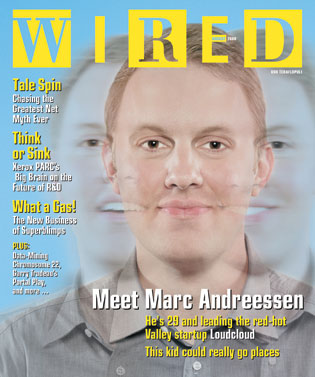
However, if you have these traits BUT DON’T have self-awareness and the willingness to ask for help, I would wager that your proclivity for success is low. It might sound counterintuitive in some ways. And it definitely shatters the myth that everything the entrepreneur touches automatically turns to gold. But sometimes being the hero really does mean asking for help – because that’s the most foolproof, expedient way of moving from point A to point B.

Being a great entrepreneur really means finding the most efficient way to get your goals accomplished – and just about everything you are trying to do has been done by someone before you.

Reid Hoffman put it well when he said:

“As entrepreneurs we are confident. We like to think we can figure things out for ourselves. But seek out intelligence. That’s really important. It’s far less costly to get intelligence in a 15- to 30-minute conversation than to spend a couple months doing something and realize that was the wrong thing to do.”

Your ability to find that someone (self-awareness), develop a relationship (network) and learn (copy) from them will help you get the results you want in a much shorter timeframe than doing it yourself.

The key is to see mentorship, advice and input as a sign of strength. It is the weak leader who believe he needs to do it all himself.

Categories
E2E: Scale

On Board Management: Wise words from 4 Silicon Valley legends

What I learned from Bruce Dunlevie, Bill Campbell, Marc Andreessen and Al Davis about creating, building and managing a world-class board of directors.

ON BOARD-OM AND MALAISE

As an entrepreneur, how do you view your board and the importance (or lack thereof) as it relates to your business?

Throughout my entrepreneurial journey, I learned a lot, made some mistakes, and eventually developed an approach that transformed my board into a strategic weapon.

But it didn’t come naturally or happen overnight – I made some silly missteps and had to modify my mindset when it came to board management quite a bit as I went.

If you’re anything like me, you struggle with the best way to assemble, manage and interact with your board, especially given all the other things you have on your plate while scaling your business.

I expect that you are always trying to figure out how much time to devote to the board in general and why, other than their presence as a necessary evil, you should even spend time thinking about this topic. A board can really help you and even might be the difference between success and failure in your journey – so I encourage you to avoid the temptation to de-prioritize your board in lieu of other initiatives.

Rather, by learning from my three key lessons, I hope you will see your board (or the benefits of having a strong board) in a new light. And with a new perspective, you will be able to use your board as one more arrow in your quiver that will help you build an amazing business.

Here are the mistakes I made, the teachers who helped me modify my approach, and the benefits I derived from these learnings.

OF BOARD MEMBERS AND MUSHROOMS

There is an old joke about this board Management that is a good place to start for this lesson:

What do board members and mushrooms have in common? They BOTH should be treated the same – kept in the dark and covered with shit.

For the first few years I was running my company, I didn’t really engage my board in a strategic manner and kept most of the meetings high level – making sure that I had every questions answered BEFORE I walked into the board room.

Or I would fill board decks with pages and pages of details – making sure that we spent so much time in the meeting going through the materials that the opportunity for free form discussion or dialogue never materialized.

Of note, I wasn’t doing this on purpose or to hide anything – rather I just didn’t know how to get much from my board. As a result, I was either giving them too much or too little information, so by default the meetings were never really that constructive.

And while I would get through the meetings just fine, I NEVER realized I was “keeping my board in the dark and covered in shit.” AND yet I found myself feeling more and more frustrated after every meeting. I wanted more insights from the people who were most likely to help me look around the corners I hadn’t seen before. But I just didn’t know how to get what I needed from my board. 

And while I understand (FULLY!) how painful it can be to deal with annoying, boastful, arrogant, know-everything board members (I better stop now), I did ultimately learn how to get the best out of my board without wasting huge cycles to do so.

For this lesson I owe a debt of gratitude to one of my best board members, Bruce Dunlevie,  founding partner of Benchmark Capital, the preeminent Venture Capital firm in Silicon Valley. When Bruce first joined my board, I was consistently making the “too much information” mistake I described above – frankly giving my board too many details and hoping they would – from the same minutiae I had scoured – divine some nugget of information that I had not yet gleaned myself.

After one particularly frustrating board meeting, Bruce called me to give me some incredibly sage advice.

Bruce could see what was happening from a mile away – because HE HAD seen so many other Entrepreneurs fall into this trap – and he could emphasize with me and my effort to deal with a powerful board. And, like any good board member is apt to do, Bruce asked me a couple of simple questions that changed my perspective completely:

“Mike, does anyone on the board know as much as you do about your business? Seriously – how big is the gap between what you know about the operations versus what the board even understands about the business. Have you taken this gap into consideration when building the board agenda and supporting materials?”

As I reflected on this question, I quickly reminded myself that I spent close to 80 hours (at least) A WEEK thinking about my business – while my average board member thinks about the same topic for 40 hours A YEAR (at best).

This is a huge discrepancy, and noticing this delta is probably the most important realization for any entrepreneur when thinking about how to manage a board, set an appropriate agenda, or build a compelling board deck. Simply put: don’t attempt to get your board up to the same level of understanding as yours. Rather, use this gap to your advantage.

WHAT BRUCE DUNLEVIE TAUGHT ME: MIND THE GAP

The first step here is a mindset shift. Once you have made this shift and stop trying to get your board to the same level of understanding that you have about your business, you will change both the context and content you use in your board communication. By setting the right agenda and developing a board package that is good mix of key operational updates AND open-ended strategic discussion, you’ll be amazed at how much more you can get from your board in very short order.

WHAT BILL CAMPBELL TAUGHT ME: THE BOARD AIN’T YOUR BOSS

Another mistake I made along my journey was giving my board too much input on the operations of the business. This is a pretty common mistake and is more prevalent with first-time entrepreneurs, especially those who have raised institutional capital from a PE or VC firm where the relationship between capital provider and entrepreneur is still being cemented.

The mistake here is to give your board too much credit – assuming the members know more than you do – or assuming that their suggestions must be followed to a fault.

One of my early mentors was the legendary Bill Campbell. He was on the board at Loudcloud / Opsware, and I was fortunate to stay in contact with him and get his input from time to time during my journey.

Bill is simply the best in the business and has forgotten more about leadership and entrepreneurship that most of us will ever know. I was speaking to him about this very topic and he quickly noticed my attitude of giving the board “too much credit” and how this approach was causing me to miss a real opportunity. To help educate me, he asked me one simple question:

“Mike, how do you see your job, as CEO, as it relates to the board?”

After we talked openly about this question, I came to the following key realization about my role versus that of the board and it helped me immensely.

My responsibility as CEO / entrepreneur was to make decisions and give the board insight into both my decision-making process and the direction I was taking the business. The board’s job was to give me feedback that I could choose to use to inform my decision.

The bulk of my communication – say 98% – with the board was really about seeking input, with the remaining 2-ish% being major corporate decision-making that required board approval. As such, I needed to make sure my mindset and material reflected this – specifically that the lion’s share of my board interaction was really about seeking input to help me with MY decision-making.

As Bill said to me at the time (in a gruff way that is classic Bill Campbell):

“You are running the f-ing business. You are making the decisions. If you get enough right, you keep your job. If you mess too many up, then the board should fire you. It is really that damn simple.”

SO, ARE YOU IN OR ARE YOU OUT?

I then realized that the board’s job was to determine if I was making more good decisions than bad. And if my decision-making success rate dropped below an acceptable level, the board then would need to make a decision about my ability to do my job. Once I accepted this relationship, I felt more empowered as a leader and saw my relationship with my board become much more productive.

As part of this, Bill also taught me a GREAT phrase that summarized this relationship – I used it at least once a board meeting whenever a board member wanted to give really me specific advice on a problem I was trying to solve:

“That is super input. I really appreciate your point of view on X (insert detailed operating issue here). I will take your input into consideration, and if need be I might follow up with you to get more of your perspective here.”

Try it the next time a board member is espousing some action that she is certain will work for you. Trust me, you will start to use this more and more and will savor the lack of response it generates!

WHAT MARC ANDREESSEN TAUGHT ME: USE THE BOARD AS A STRATEGIC WEAPON

During the early days at Loudcloud (which became Opsware), I was fortunate to get to travel a great deal with one of the four founders of the business, the legendary and prolific Marc Andreessen. On one of these trips, in early 2000, I was asking Marc about how he was assembling the board for Loudcloud and why he had recently recruited Michael Ovitz to the board.

Of course I knew of Michael Ovitz, the legendary Hollywood super-agent and founder of CAA – but I wasn’t sure how this background was relevant to the technology company we were building. Marc’s response to my question was fast and clear to (and a bit dismissive, but Marc responded to most of my questions that way):

“I want every advantage I can get to build this business. And that includes the board. Michael is a great entrepreneur – he knows how to build a service business and can help us increase our profile, talent-acquisition model, and approach to client relationships. Plus, he is outside of The Valley and brings a fresh perspective that we can’t get anywhere else.”

Now Marc is a special talent and has for a long period of time played at the highest level of power and influence in the technology industry, so his ability to attract talent to his board – even back in 1999 – falls into the category of outlier.

But my point here is that Marc was both clear about what he was looking for and how it could help him build a business. And then he went out and recruited board members that fit this profile. (See a great interview between Marc and Michael here)

BOARD? GO SHOPPING

If you think about this perspective and ask yourself a few questions, I expect you will think a bit differently about who is on your board and how each member can do more to help you win in your business.

  1. Are you getting the right level of feedback from your board around key strategic issues?
  2. If you think about the 2–3 top strategic issues the business is facing, do you have expertise on your board to help you address these issues?
  3. If not, do you have a plan to develop your board in a logical, thoughtful way to change the composition for better alignment between #1 and #2?

When I was running ServiceSource, I took this learning to heart and consistently looked at my board to see if I had the best talent in the room to help the business grow and succeed.  And with each important milestone that we were looking to achieve, I would try to find a board member to help the company get there.

This helped me get board members with experience in international expansion, sales and marketing, cloud application and even financial expertise when we were getting ready to go public.

And I shared this mindset with the board openly and regularly, so they became part of the process and understood exactly where I wanted to take the board.

WHAT AL DAVIS TAUGHT ME: JUST WIN.

As an entrepreneur, you have a really, really hard job, and rarely do you have a lot free time to devote to things that are not going to help you compete and win in the marketplace.  I know firsthand just how hard it can be to deal with a board – and I can understand why a lot of entrepreneurs see little or no value in dealing with the board.

But if you think about your board – both management and composition – a bit differently, you find you’re missing a key trick.

Al Davis, the late, great and notoriously fiery owner of the Oakland Raiders was fond of summarizing his management philosophy with his head coaches in very simple terms:

As the entrepreneur, you are the head coach and your job is to win. It really is that simple.  So if you want to win, it is pretty important to think about how you can get more from your board to help you make this happen.

  • DON’T treat your board like a mushroom. It might be easier to run the business in the short term with this approach, but it isn’t sustainable and, more importantly, you are missing a real opportunity to get their input on the RIGHT issues.
  • DON’T treat your board like they are running the company. That is your job, and you have the responsibility and perspective that no one else really can understand. So keep your board in the loop, seek their input, and engage them openly. But remember my magic phrase (trust me, you will use it more than you think), and know the difference between running the show and board governance.
  • DO assemble a board that can be a strategic weapon. You need *every* advantage you can get in your fight, so think about how the right board member can help you get leg over the competition. Be clear about what needs you have and how a particular skill set on the board can help your business grow – and then aggressively recruit for a top talent to fill this spot on your board. You will be surprised by how much this can help you on the journey.

Think of your board like any weapon in your arsenal, then just win, baby. Just win!