Categories
E2E: Scale

Advice for Entrepreneurs on Board Management: Mind the Information Gap

This post originally appeared on Forbes.com on March 28, 2018 where Michael Smerklo is a regular contributor.

This post originally appeared on Forbes.com on March 28, 2018 where Michael Smerklo is a regular contributor.

When you’re a CEO, you have countless things to do every day. You are always pressed for time, you’re being pulled in a million different directions and you’re hyper-focused on growth. So you have to prioritize these never-ending tasks, and it’s only natural that tasks with *seemingly* little value-add get pushed to the bottom of the to-do list. Frankly, that’s how I used to feel about my Board of Directors.

I felt it was a ‘necessary evil’ of my new gig as CEO: one that I knew I had to eventually deal with, but felt wasn’t going to be instrumental in helping my company. I didn’t get much insight from them when we met so why should I dedicate any of my already-sparse time investing in a relationship with them, right? Wrong. I was very wrong.
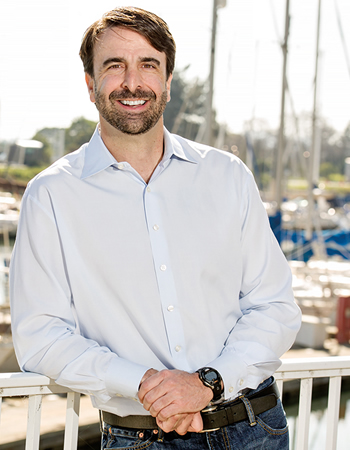
Michael Smerklo, co-founder and managing director of Next Coast Ventures

One, simple conversation with a mentor led me to realize that a Board can be the pivotal difference between success and failure during your entrepreneurial journey. You will be tempted to de-prioritize your Board in lieu of other initiatives that seem more important, and frankly are more enjoyable. Resist that temptation. You just have to take a step back and learn how to handle them and their expertise in the context of you and your company’s goals.

Before I divulge the conversation that changed my perspective on my Board, let me assure I was making classic “Founder moving to CEO” mistake.

For the first few years I was running my company, I didn’t really engage my Board in a strategic manner and kept most of the meetings high-level – making sure that I had every question answered before I even walked into the boardroom. I would fill my Board decks with pages of details on topics I knew I felt were solid, preventing any sort of critical discussion from materializing.

I wasn’t trying to hide anything, I just wanted to ‘check the box’ of my Board meeting as quickly and painlessly as possible because I didn’t understand how to get much from them – individually or collectively. I was treating my Board as an overlord that needed management instead of an arrow in my leadership quiver, and my frustration grew after every Board meeting when I realized these meetings were often interesting, but never compelling.

Although the change in how I approached my Board did not happen overnight, I owe a debt of gratitude to one of my best Board members, Bruce Dunlevie, founding partner of Benchmark Capital, the preeminent venture capital firm in Silicon Valley. Bruce could see what was happening from a mile away – he had seen so many other entrepreneurs fall into this trap – and he could empathize with me and my effort to deal with a powerful Board.

So after one particularly frustrating meeting, he pulled me aside and asked me one critical question that changed how I viewed my relationship with my Board by focusing on what I now call the: ‘Entrepreneur-Board Information Gap.’ He asked:

“Mike, does anyone on the Board know as much as you do about your business? Seriously – how big is the gap between what you know about the operations versus what the Board even understands about the business. Have you taken this gap into consideration when building the Board agenda and supporting materials?”

As I reflected on this question – keep in mind, reflecting on questions like these is not a natural exercise for most entrepreneurs – I quickly noted that I spent at MINIMUM 80 hours a WEEK thinking about my business, while my average Board member thought about the same topic for AT MOST 40 hours a YEAR. This is a HUGE discrepancy, and noticing this delta – this gap – is probably the most important realization for any entrepreneur managing their relationship with their Board, setting an appropriate agenda or building a compelling Board deck.

Simply put, the biggest mistake most entrepreneurs make when working with their Board is not minding the information gap – the Entrepreneur-Board Information Gap, let’s call it ‘EBIG.’

The EBIG dictates one, simple rule: don’t attempt to get your Board up to the same level of understanding as yours, rather, use this information gap to your advantage. That is, being aware of the EBIG and how to leverage it becomes the key to turning your Board into one more arrow in your quiver that will help you build an amazing business.

One specific way that minding the EBIG changed my approach to my Board was learning to strike a balance in my Board materials that was a good mix of key operational updates and open-ended strategic discussion. You will be amazed at how much you can get out of your Board in short order when you stop spending all your time trying to get them up to speed, or wasting time prepping abundant Powerpoint slides in an attempt to answer every question in advance of the meeting.

For instance, I used to spend 90 minutes of a four-hour Board meeting – and hours of prepping the meeting – providing an ‘executive summary’ of the current state of operations of my global business. I thought: How could they really give me any feedback if they didn’t thoroughly understand the state of the business that I worked with every day? But then I thought of the EBIG.

My Board of seasoned executives wasn’t there to dive into the details of the operations. That was a waste of their valuable time, and a waste of mine. They didn’t need those details to understand the big picture of the business and provide me with the high-level insights I was desperately seeking.

Instead, after Bruce’s invaluable feedback and direction, I modified my typical 15-page ‘executive summary’ down to one slide. This slide had three sections: 1) What’s Working, 2) What’s Not Working and 3) Implications (of both). This one-page slide served as the springboard for repeatable, meaningful and open-ended Board discussions thereafter.

So no matter how busy you get, or how much is on your plate as a CEO and an entrepreneur, remember that working with your Board is a non-negotiable part of your job description and a necessary component to making your company successful. So don’t resist their feedback. Instead, take a step back, reflect on where you could use input and present it in a way to make that easy – or as I like to say: mind the EBIG.

Bruce Dunlevie

Building these types of judgment-free relationships is an endeavor that lasts a lifetime, and like any good relationship, having a strong network takes upkeep. It’s an active exercise, not a passive one. Just as you evolve as an entrepreneur, your mentorship circle should evolve as your business and personal needs change.

For example, when I was first getting started, it was critical for me to get advice from those who were highly engaged in startups and understood all the key issues that getting a business off the ground entails. Simple suggestions about hiring, board meeting agendas or what payroll systems work best all helped me avoid mistakes others had already made and also saved me countless hours.

However, when my company was a more mature and I was working to shift my business model, I proactively shifted my mentorship circle.

Whenever I am fortunate enough to retire and look back at the ups and downs of my career, I am going to have a lot of thank you notes to write. Without my mentors, it wouldn’t have just been a dealbreaker for some investors I met along the way, it would have been a dealbreaker for my career. So do some self-reflection, check your pride at the door and seek out those who will be able to make you a better entrepreneur, and a better person. It is the weak leader who believe they need to do it all themselves.

For instance, Ben’s advice on hiring was critical to me when I was going through the startup phase and hiring the first 50 employees. However, the ‘critical’ input I needed running a 3,000 person, publicly traded business was much different. I found myself needing to recalibrate my mentorship network. So I—once again—made sure my humility was still fully intact and proactively sought out seasoned, C-suite executives to help guide me through this new phase of my career.

Categories
E2E: Scale

To Avoid An Entrepreneur’s Biggest Dealbreaker, Find A Mentor

This post originally appeared on Forbes.com on December 5, 2017 where Michael Smerklo is a regular contributor.

Entrepreneurs walking into a meeting with potential investors are usually armed to the teeth with data points about their business idea. Looking to avoid investors’ dealbreakers, most spend hours prepping for questions about their competitors and the market size for their product.

However, when entrepreneurs sit down with me to talk about investing, I ask them two seemingly unusual questions that can make or break my decision:

‘Can you tell me what mentors you have now? How do you lean on these relationships to help solve any key problem you are facing?’

Why hang so much on a question that has nothing to do with a business model? Because unlike any other profession, being an entrepreneur means fully committing to the successes and failures of an enterprise. The roller coaster of emotions that an entrepreneur faces is staggering. There are extreme highs that bring moments of euphoria and excitement, followed quickly by extreme lows—often in the same day—that breed crippling self-doubt.

Michael Smerklo, co-founder and managing director of Next Coast Ventures

It is a heavy, heavy burden and one that you should not bear on your own. In order to not only be able to pick yourself up after these roadblocks, but to move on constructively, you must have one simple thing: a mentor. There is no way around it.

It could be a loss of a major customer, a new unexpected competitor or an unfortunate series of poor judgment calls that can short circuit your confidence and leave you questioning your ability to remain as captain of the ship. Mentors give you the context, guidance and support you need when you may not know how to move forward. Without them, you are blindly riding the roller coaster instead of using the latest GPS technology to navigate the best path.

Now I have to admit, acknowledging I needed to curate a support system to give me guidance during these troubling times in my own entrepreneurial journey was one moment of realization. But being able to actually swallow my pride, ask peers for help and incorporate their advice into my business practices was a whole different obstacle to overcome.

Soliciting this type of help is not a weakness, it is a strength. Pride has no place when it comes to building your mentor-mentee relationships.

I remember early on in my career I took my first operating role with a then-unknown CEO named Ben Horowitz. I was tasked with hiring team members and was frustrated with how many interviews my star candidates were forced to go through just to get an offer. I had always thought I was great at spotting talent and didn’t understand why I was unable to get handle on the hiring process. So I complained to Ben—loudly, as usual—about this seemingly unnecessarily elongated exercise. I will never forget his response. He had seen the culture get eroded at Netscape by a failed hiring process and he was committed not to repeat it, he told me: ‘The first 10 employees are key, they hire the next 50 employees. And once that is done, the culture of the organization is largely set. That is why we are so focused on making sure we all hire great employees from the start.’

That type of advice from a mentor is invaluable and was incredibly important to me not just when I first heard it, but also a few years later when I was starting out as a first-time CEO. But taking that advice meant I had to step back, swallow my pride and recognize how little I knew about building a culture and an organization. Once you have your first powerful mentor-mentee moment like this, it becomes easier to see the value of these relationships.

So now that you’ve realized you need a mentor and you are willing to be open about your self-doubt, now what? Picking an effective mentor requires just as much self-reflection.

There are three things you should look for when tracking down a mentor:

  • Somebody who knows you and understands how you think
  • Somebody who understands the subject matter that you are dealing with
  • Somebody who has the wherewithal to give you objective advice

A mentor that encompasses these three attributes will be able to help you get to the root of the issue, empower you to regain your courage and equip you with tools to go back to doing what you do best: building an outstanding business.

Once I realized that I needed to be on the lookout for mentors like these, I naturally became more enthusiastic, self-aware and open to networking. Sure, I proactively sought out these relationships at industry events or through my existing network, but as I humbled myself and opened up to the idea of asking for help, these beneficial relationships also began to happen organically. It’s not just about blindly asking people on LinkedIn for coffee, it’s about approaching people with as much thoughtfulness and consideration as you would potential investors for your dream business.

As my mentorship network grew, I realized that each mentor offered me a different perspective and that the more data points I had, the clearer my vision was of how to move forward.

That’s why having one mentor is necessary, but having half a dozen is fantastic.

Building these types of judgment-free relationships is an endeavor that lasts a lifetime, and like any good relationship, having a strong network takes upkeep. It’s an active exercise, not a passive one. Just as you evolve as an entrepreneur, your mentorship circle should evolve as your business and personal needs change.

For example, when I was first getting started, it was critical for me to get advice from those who were highly engaged in startups and understood all the key issues that getting a business off the ground entails. Simple suggestions about hiring, board meeting agendas or what payroll systems work best all helped me avoid mistakes others had already made and also saved me countless hours.

However, when my company was a more mature and I was working to shift my business model, I proactively shifted my mentorship circle.

For instance, Ben’s advice on hiring was critical to me when I was going through the startup phase and hiring the first 50 employees. However, the ‘critical’ input I needed running a 3,000 person, publicly traded business was much different. I found myself needing to recalibrate my mentorship network. So I—once again—made sure my humility was still fully intact and proactively sought out seasoned, C-suite executives to help guide me through this new phase of my career.
Whenever I am fortunate enough to retire and look back at the ups and downs of my career, I am going to have a lot of thank you notes to write. Without my mentors, it wouldn’t have just been a dealbreaker for some investors I met along the way, it would have been a dealbreaker for my career. So do some self-reflection, check your pride at the door and seek out those who will be able to make you a better entrepreneur, and a better person. It is the weak leader who believe they need to do it all themselves.

Categories
E2E: ATXnology

November Dose of ATXnology

As entrepreneurs, we like to share all the content we can’t seem to put down. We send you this content in our Quarterly Dose of ATXnology newsletter, but here’s some monthly content we’re loving as well. This is what we can’t stop obsessing over this month.

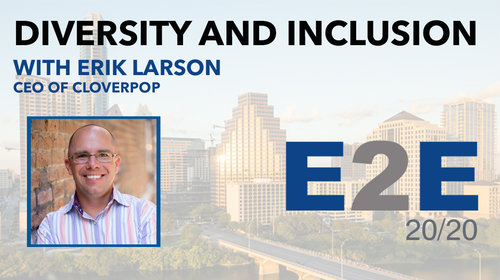
Diversity and Inclusion with Erik Larson

As we continue to roll out our new original content platform: E2E, check out one of our latest posts with one of our portfolio CEOs on the effect diversity and inclusion, or lack thereof, can have on ROI.

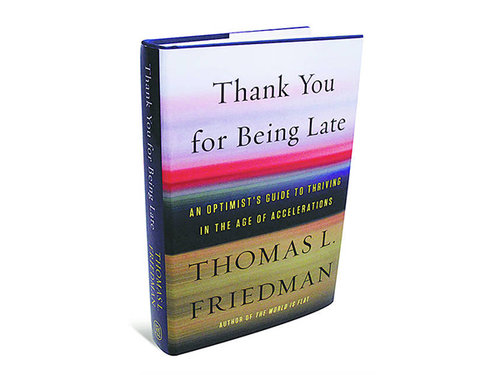
Thank You for Being Late

Pulitzer Prize-winning author Thomas Friedman writes his “optimist’s guide to thriving in the age of accelerations,” one of the greatest books we’ve read in years. How did we get to where we are? This book seeks to explain.

Know Thyself, Know Thy Leader: Steps To Hiring A Successful Sales Leader

Our co-founder Mike Smerklo writes a piece for Forbes about his experience as a CEO trying to build a well-oiled sales team – and all the roadblocks he hit along the way.

As Silicon Valley Gets ‘Crazy,’ Midwest Beckons Tech Investors

The New York Times wrote a great article that hits on something we already knew to be true: the tech scenes in Texas and the Midwest are booming, and investors are taking note.

Why I Decided to Leave Silicon Valley for Austin

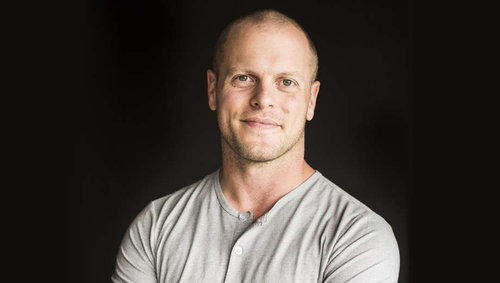
In his ‘Ask Me Anything’ on Reddit, thought leader Tim Ferriss goes through the thought-provoking reasons why he relocated to Austin, sparking a conversation among Reddit users on the trend.

Don't want to miss any of the content we're obsessing over each month?

Categories
E2E: ATXnology

October Dose of ATXnology

Next Coast Ventures

As entrepreneurs, we like to share all the content we can’t seem to put down. We send you this content in our Quarterly Dose of ATXnology newsletter, but we’re going to start sharing some monthly content we’re loving as well. Here’s what we can’t stop obsessing over this month.

The Defiant Ones

A true portrait of what it takes to be a creative genius and a revolutionary businessman – and how it’s a result of hard work, not of genius.

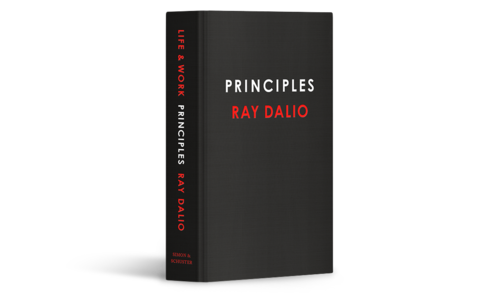
Principles: Life and Work

Narrated by Ray Dalio himself, the entrepreneur shares the unconventional principles he has developed and utilized over his career to make him a successful investor – and a happy human.

On the Shoulders of Giants

The Atlantic started very powerful series on mentorship in the workplace and the crucial role it plays. We especially liked: building mentorship out of trauma and the importance of women mentoring women.

After the End of the Startup Era

Does Silicon Valley think the era of golden startups is dead? “We live in a new world now, and it favors the big, not the small,” says TechCrunch.

Don’t want to miss any of the content we’re obsessing over each month?
Categories
E2E: Scale

Mentorship And The Monster Under The Bed

Five lessons on how mentors can help you keep moving forward on your entrepreneurial journey.


When I meet a prospective entrepreneur I have one very simple question that tells me everything I need to know. You might be surprised because it has nothing to do with business plans, strategy, market size or even future aspirations. Of course I want to know about these things, but my real “make or break” question is simple.

“Can you tell me what mentors you have now – and how you lean on these relationships to help solve any key problem you are facing?”

Why this question? Well, it really comes down to dealing with The Monster Under the Bed, which I’ll just call The Monster from now on.

When you’re an entrepreneur, The Monster shows up more often than not – and usually when you are least prepared to deal with the beast. What, exactly, am I talking about here?

I used The Monster image for what can otherwise be called “oh fuck” moments that really make you question if you, as the fearless leader, actually know what the hell you’re doing in your job.

I am not talking about the daily grind that is the entrepreneur’s journey, nor am I referring to the fact that the journey never gets easy – we all know that the ups and downs just keep coming.

Rather, The Monster represents those rock-you-to-your-core moments that can only be fully experienced in the moment. It could be a loss of a major customer, a new unexpected competitor, the departure of a key executive, or an unfortunate series of poor judgment calls that makes you doubt your own capabilities to be running the show.

And, let me be clear: if you are an entrepreneur and you claim that you have never had one of these moments – then you are either delusional or full of shit…or both.

I have had more of these moments than I can count and it is *not* a pretty mental space to occupy. Not only is the issue real, but it’s in this moment that the loneliness of the job is omnipresent. Your options are pretty limited as to where to get input – do you call your board? How about your team? Maybe go home and talk to your partner? Sure, Mom will take your call and tell you she loves you – but can she help you find a new head of sales?

MENTORSHIP AND MONSTER SLAYING

As an entrepreneur, you must push forward and keep charging even when The Monster is breathing really loud and you swear he’s sleeping under your bed. So this isn’t about courage, motivation or sticking to your guns.

Rather, this is about getting advice from someone who not only knows you but also knows enough about the subject matter in question…AND who also has the wherewithal to give you OBJECTIVE advice.

Every great entrepreneur needs a mentor. It is that simple. That’s why I ask this ONE question. Recognition of this need is the first step. Finding a group of great mentors is another step. The third step is using your mentors to help you slay The (fucking) Monster, regain your courage, and go back to building your amazing business.

Here are the five lessons I learned about mentorship during my entrepreneurial journey.

Lesson #1: Don’t go it alone – just about every great entrepreneur has a mentor.

Whenever you read about the great ones, the story is always told after the fact and when the genius of the entrepreneur is obvious. Gates, Jobs, Benioff, Schultz – amazing entrepreneurs – undoubtedly faced The Monster at some point on their journey. But the story that often isn’t told is that each of the really great ones has relied on some form of mentorship to help them fight whatever form their personal demon took. If you want proof, here’s a great photo journal of many more examples of entrepreneurs and their mentors.

The point is simple: if the best of the best of best rely on the power of mentorship, why wouldn’t you? Mentors can help you in a variety of ways, and there is no one-size-fits-all. A good relationship with a mentor will also be bidirectional, meaning that both the mentor and the mentee benefit from the relationship. Inc. Magazine published a good short interview with Daymond John of Shark Tank, who explains why all entrepreneurs – even him – need mentors to educate them on everything from fashion trends to acquiring digital skills.

“Technology is moving so fast, and it’s so vast, that having a mentor and someone who’s teaching you the fundamentals – where things are going and how to move accurately and spend your time – is essential.”

Lesson #2: Asking for help isn’t a sign of weakness; it is a sign of strength.

I can remember one of my biggest challenges as an entrepreneur when I was struggling to find an exceptional sales leader even though my business was in hyper growth mode. At one particular dark moment, after the *fourth* straight VP of Sales didn’t work out, I was at my wits’ end and was starting to question my own judgment and capabilities as a CEO. I really didn’t know what to do. It was at this very dark moment that I had lunch with one of my mentors, the former CEO of Veritas, Mark Leslie. I got to know Mark back in my banking days and had nurtured a relationship with him for several years, keeping in touch with him and updating him on my progress running ServiceSource.

I knew Mark was teaching a course at Stanford and it was focused on what he was calling The Sales Learning Curve – basically helping MBA students get prepared for managing the sales function.

But now came the hard part. Even though I knew Mark and was in somewhat regular contact with him, the only real way I was going to get what I needed was to have the courage to admit I was screwing up in my job, admit the mistakes I was making and ask for his help.

When I sought his input, I was open about the problems I was facing, the self-doubt I was feeling and the issues that I was wrestling with in detail. I left nothing out and openly admitted my mistakes. Why? Because with a mentor you *CAN* do just that – this should be a judgment-free relationship (different than your Board, by the way) – and that’s what makes it work. I will tell you more about Mark’s specific advice to me in a future post – or see his post here on mentorship – but suffice to say he is a real expert in this area. It was game changing for me and my business.

Lesson #3: Having one mentor is good. Having half a dozen is better.

I recently compiled a list of individuals whom I would consider to be my mentors – great leaders I could comfortably call upon to run an idea, question or strategic consideration by and expect both a prompt and thorough response. Not only was this a great exercise for me to express my gratitude, but it also showed me just how diverse and deep my mentor circle has become.

When I reviewed the list another point jumped out at me. There is a time component (based on relevancy of your journey) – and your mentorship circle should evolve as your business and personal needs change.

For example, when I was first getting started, it was critical for me to get advice from those who were highly engaged in startups and all the key issues that getting a business off the ground entails.

However, when my company was a more mature, public company and I was working to shift my business model, it incredibly helpful to be able to grab time with my friend Shantanu Narayen (CEO of Adobe) about what works and doesn’t when undertaking this strategic shift.

I think Reid Hoffman described it best in a recent interview:

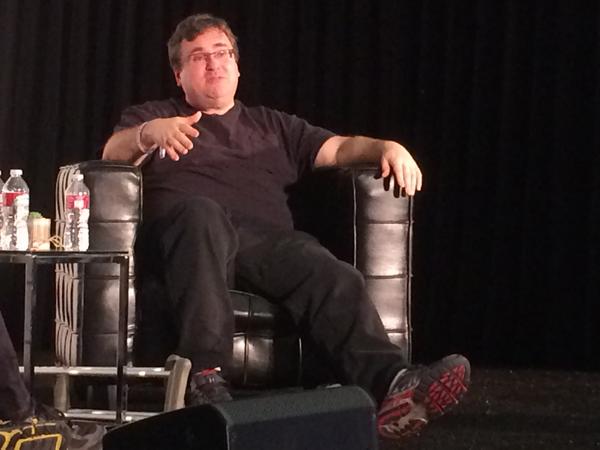
“I think people think it’s convenient when I say my network is my mentor,” the Greylock Partners investor told attendees at Startup Grind’s annual international conference in Mountain View on Tuesday. That’s because they think he is just touting the kind of professional networking offered through LinkedIn, which he co-founded. “I’m not doing that actually,” Hoffman said. “What I find is I have had mentors for different aspects of my development.”

The key point is twofold. First, you don’t need one mentor, you need several, as Reid points out above. Second, your needs (like any other relationship) will evolve, so mentorship is an active not a passive exercise.

Lesson #4: Getting good mentors takes networking and self-awareness.

Here is a great quote from Sir Richard Branson’s the topic of mentoring:

“Mentoring was very important for me personally. For example, Sir Freddie Laker gave me invaluable advice and guidance as we set up Virgin Atlantic, while my mum has been a mentor throughout my life. Nowadays, I find mentors inside and outside of Virgin every day. If you ask any successful businessperson, they will always have had a great mentor at some point along the road. If you want success then it takes hard work, hard work and more hard work. But it also takes a little help along the way. If you are determined and enthusiastic then people will support you.”

I love his point of view, but what really jumped out for me was the last line.  As an entrepreneur, if you show up with a strong will to win and high level of commitment, this attitude will be contagious.  I have found that when I am enthusiastic, it is obvious and it opens a lot of doors because people are drawn to this enthusiasm and willing to help.  This is the first step to attracting great mentors who want to help you.

The second step comes to self-awareness and networking. By being self-aware, I can be open to what issues I am facing AND be on the lookout for people who can help me. When I do this, I show up differently and repeatedly find myself connecting with great mentors without consciously seeking them out.

It is like when you buy a new car. Ever notice that the day after you buy a new Jeep, how many *other* cool people are also driving a Jeep? Did the population of Jeep owners suddenly increase due to your new purchase? How many followers do you have on Twitter?? Or is it that your self-awareness around the coolness of Jeeps that just skyrocketed?

So it goes with mentorship. By being enthusiastic, self-aware and open to networking, you will be amazed at how many mutually beneficial relationships will materialize. If you want more tactics on finding mentors, here’s a great Fortune article on How to Find and Use a Mentor.

So, that brings me back to my original question, and why it’s so crucial.

Lesson #5: The Monster will only win if you let it. Don’t let it.

To be a great entrepreneur and leader, it takes courage, confidence and a willingness to do what others have not been able to do in the past. This is all good stuff.

However, if you have these traits BUT DON’T have self-awareness and the willingness to ask for help, I would wager that your proclivity for success is low. It might sound counterintuitive in some ways. And it definitely shatters the myth that everything the entrepreneur touches automatically turns to gold. But sometimes being the hero really does mean asking for help – because that’s the most foolproof, expedient way of moving from point A to point B.

Being a great entrepreneur really means finding the most efficient way to get your goals accomplished – and just about everything you are trying to do has been done by someone before you.

Reid Hoffman put it well when he said:

“As entrepreneurs we are confident. We like to think we can figure things out for ourselves. But seek out intelligence. That’s really important. It’s far less costly to get intelligence in a 15- to 30-minute conversation than to spend a couple months doing something and realize that was the wrong thing to do.”

Your ability to find that someone (self-awareness), develop a relationship (network) and learn (copy) from them will help you get the results you want in a much shorter timeframe than doing it yourself.

The key is to see mentorship, advice and input as a sign of strength. It is the weak leader who believe he needs to do it all himself.